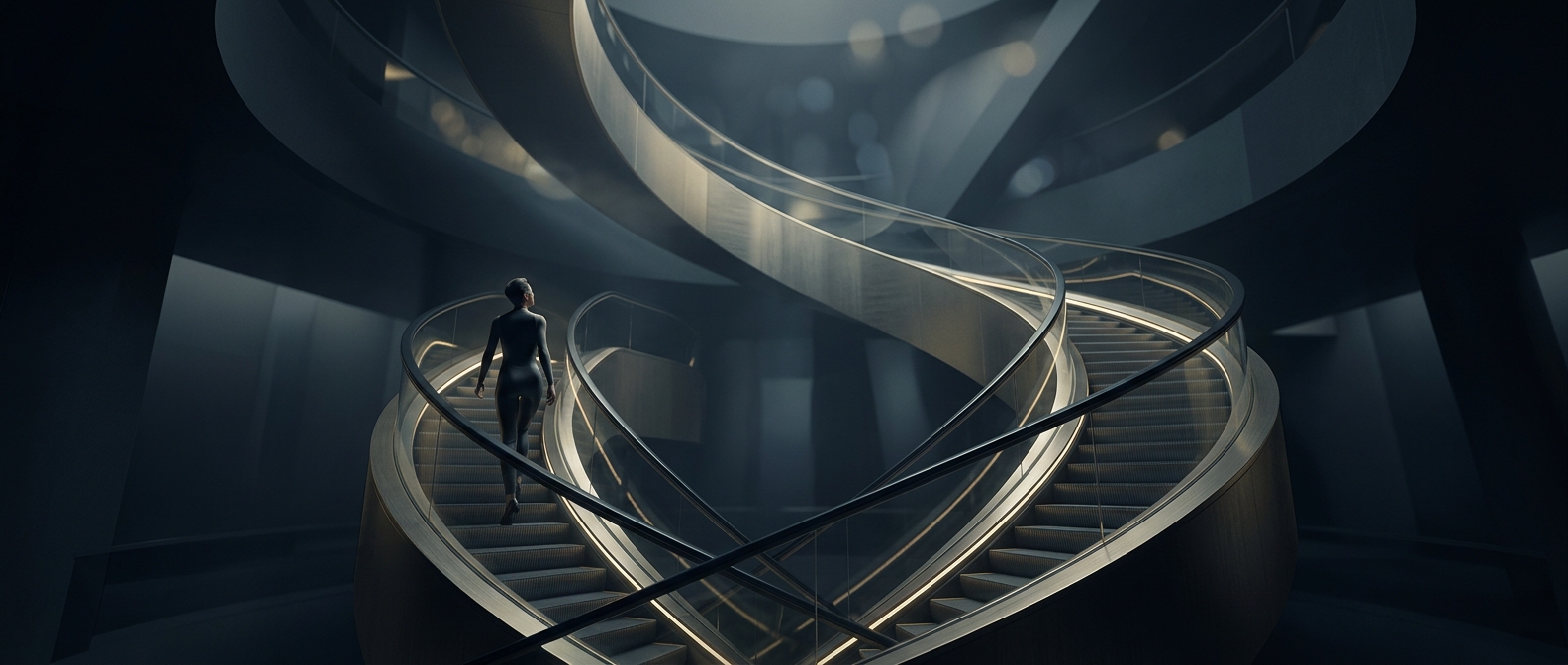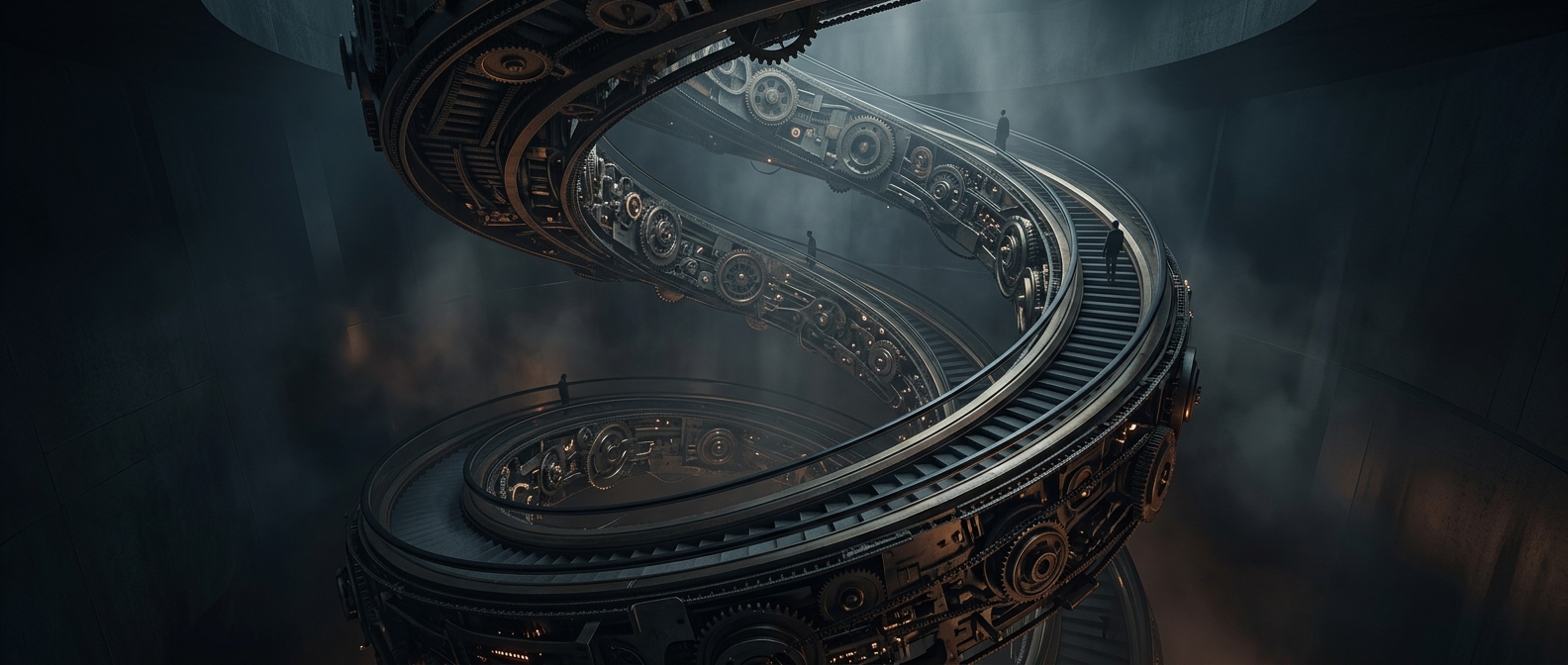
The problem is keeping each step square
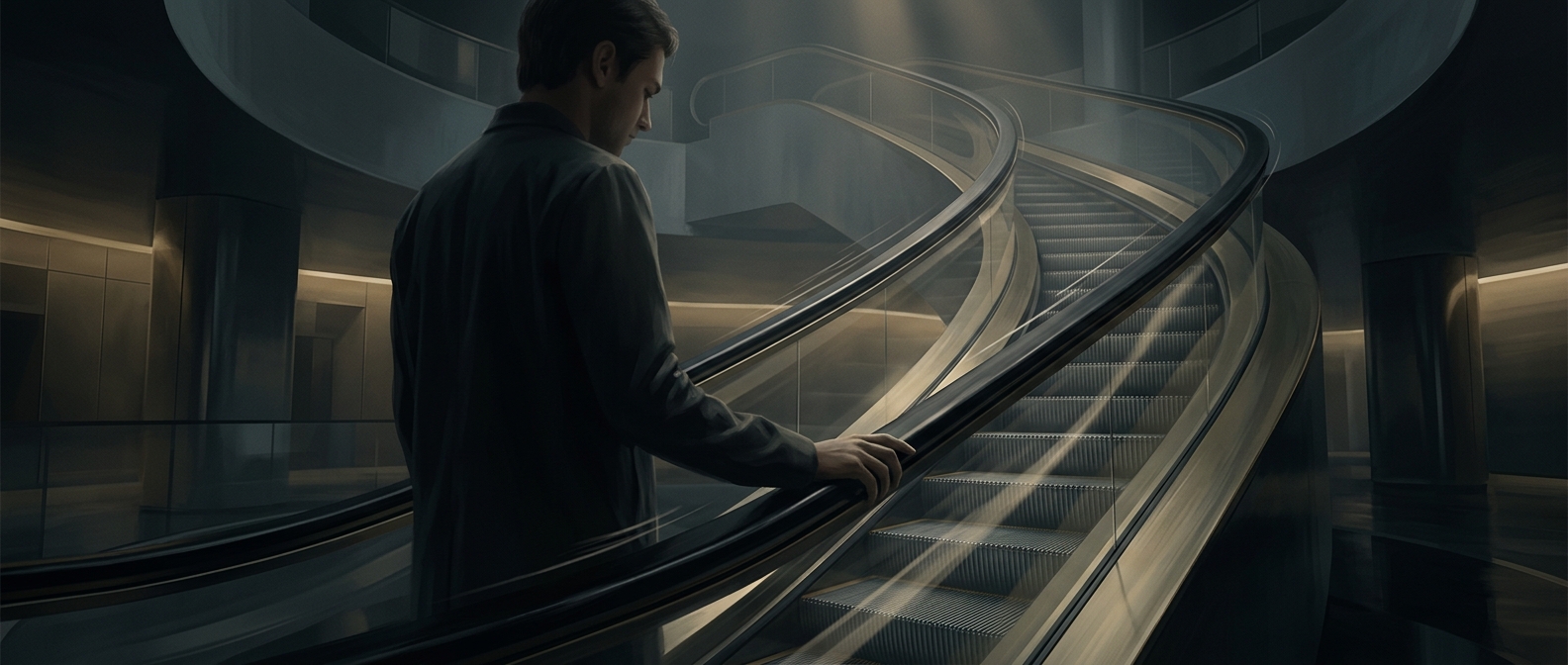
On a straight escalator, a step rides on tracks that guide it forward and keep its surface horizontal. A spiral route adds a geometric problem: the step’s outer edge travels farther than its inner edge. If the step simply followed the curve like a rigid plank, it would swing or skew, leaving uneven gaps and an awkward surface for passengers.
A spiral escalator must guide the step through the bend while keeping it level and properly aligned with the steps ahead and behind. That calls for carefully coordinated tracks, wheels, and step shapes. The steps also have to transition smoothly between the curved section and the ordinary straight runs at the top and bottom.
A costly solution to a narrow problem
The engineering challenge is only part of the tradeoff. A curved installation needs specialized components and fitting, while a straight escalator can use a simpler, standard layout. The spiral version is most useful where a building wants to move people between floors while wrapping the route around a particular space; it does not make the basic trip faster or solve a problem that straight escalators cannot.
That makes the design a choice about the building as much as the machinery. Its distinctive curve can fit a constrained plan or create a striking route, but the payoff must justify custom equipment and more involved upkeep. In effect, the escalator turns a geometric flourish into a working passenger surface—one that has to stay level at every point along the bend.