How a Spiral Escalator Turns While It Climbs
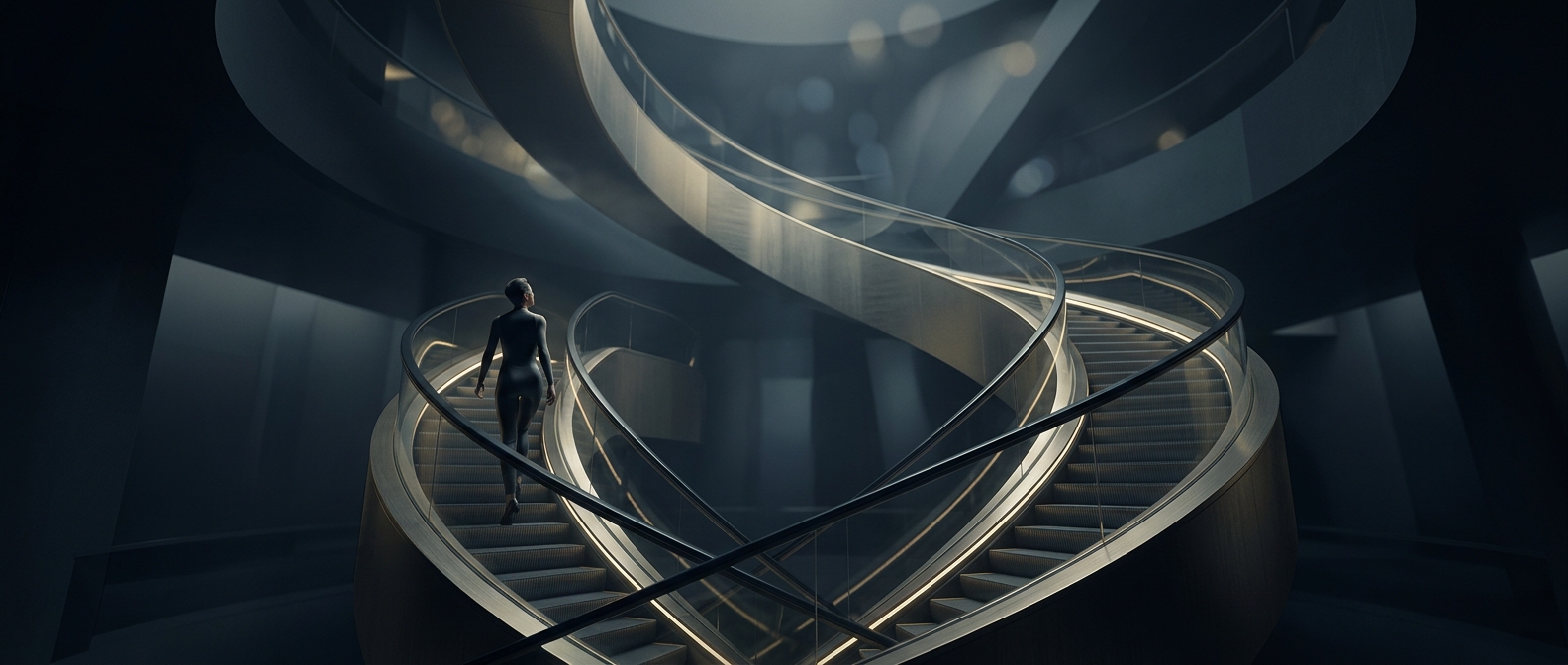
A spiral escalator has to do two jobs at once: lift riders and steer each step around a curve. On a straight escalator, the steps follow matching tracks on either side. In a spiral, those tracks take different routes: the outside edge travels farther around the bend than the inside edge. The step chain and guide system must accommodate that difference while keeping the treads level enough for passengers to stand safely.
The visible steps are only part of the mechanism. Beneath them, rollers follow carefully shaped guide rails that control each step’s position as it curves upward. At the top and bottom, the steps must also line up with the landing plates—the flat surfaces where riders step on or off—and fold into the return path without jamming. A spiral therefore demands more than simply bending an ordinary escalator’s frame.
Why They’re Uncommon
A spiral design needs specialized steps, tracks, and supporting structure, all fitted into a limited space. It also has to preserve the familiar escalator rhythm: a stable tread underfoot, a moving handrail alongside it, and a smooth transition at each landing. Those requirements make the machinery more complicated than a straight escalator, while a conventional escalator or elevator can often move people through the same building more simply.
That tradeoff helps explain why spiral escalators are unusual. Their route can turn a vertical journey into a continuous curve, making the machinery itself part of the building’s design. But the striking effect depends on precise coordination beneath the floor: every step has to take a slightly different path around the bend and still arrive level at the next one.