Why Escalator Steps Keep the Same Shape
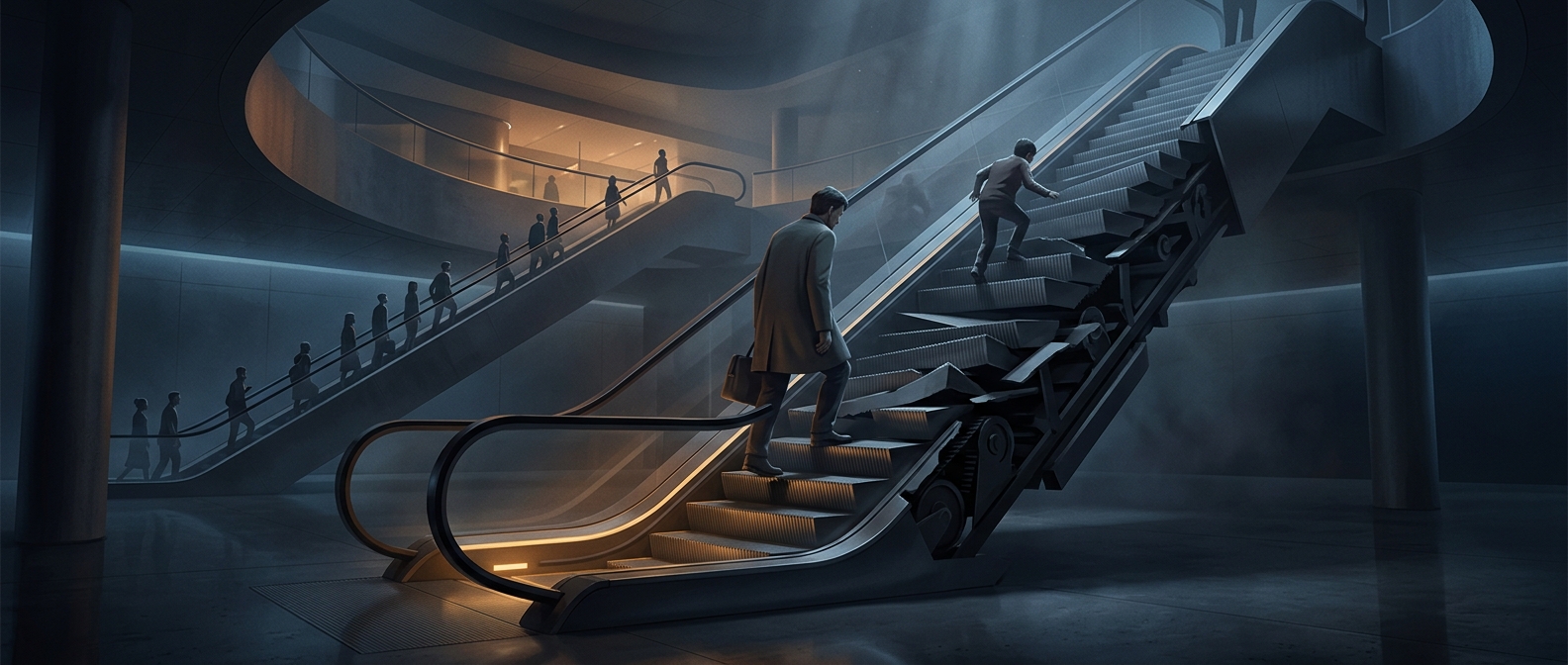
An escalator is not a sloping belt with treads attached. It is a chain of rigid steps carried by wheels along tracks. The tracks guide each step so it stays level while climbing, then folds into a compact return path beneath the stairs. Because the steps must travel through this repeating route and fit closely together, their height and depth are fixed rather than changing from one step to the next.
That consistency also makes the staircase predictable: each tread—the surface underfoot—and each riser, the upright face between treads, meet in the same way as the steps move. A changing step size would disrupt that regular pattern and could create unexpected gaps or edges for passengers.
The Comb at Each End
At the top and bottom, the steps flatten out as they pass onto the landing. Their grooved surfaces meet a comb plate, the stationary metal plate whose toothlike fingers fit into the grooves. The teeth help clear debris from the moving steps and, crucially, bridge the small space between the steps and the landing.
The grooves and comb teeth must align closely, so the step shape cannot vary casually. The transition is designed as a repeated, controlled fit: each step reaches the comb in the same orientation, and its grooves pass the teeth as it moves away. The regular dimensions make the escalator’s moving staircase and its fixed landings work as one continuous path.