The stairs are a loop, not a one-way track
An escalator’s steps are linked into a continuous chain. At the top, each step folds down and travels underneath the staircase before rising again at the bottom. A motor turns the chain around; changing the motor’s direction sends the steps the other way. The steps themselves do not need to be turned around.
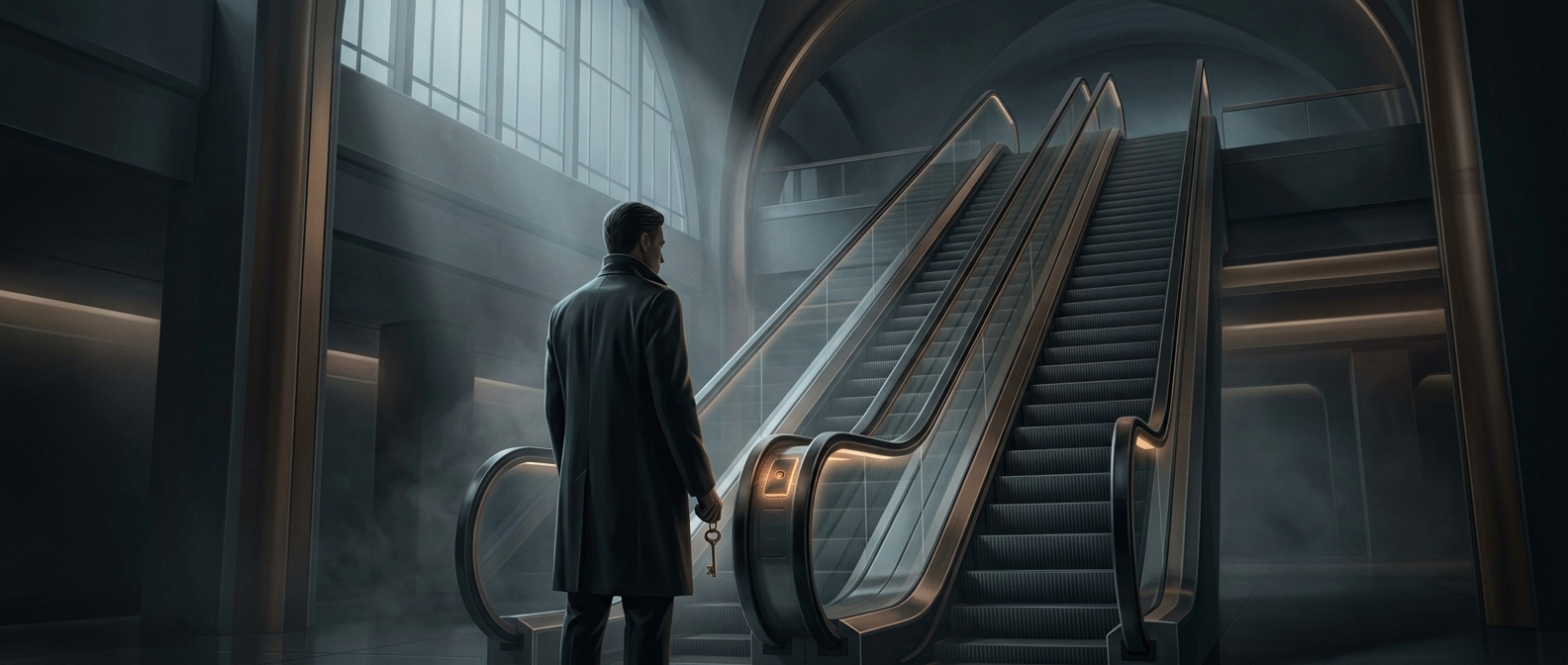
That makes an escalator useful for shifting capacity between floors. At a station, for example, staff can direct more people upward during one part of the day and downward during another. A keyed control helps limit who can change that setting; it is an operating control, not a passenger-facing button.
Reversing takes more than turning a key
The direction change has to happen with the escalator clear of riders. Staff stop it, make sure nobody is on the steps, and then set the direction using the controls. The exact controls and procedure vary by installation, and safety systems are designed to prevent hazardous operation.
The practical tradeoff is simple: reversible stairs can match the flow of a crowd, but changing direction while people are riding would put them on a moving staircase that suddenly behaves differently. The key stays out of sight because direction is a decision for staff to manage—not a surprise for passengers.