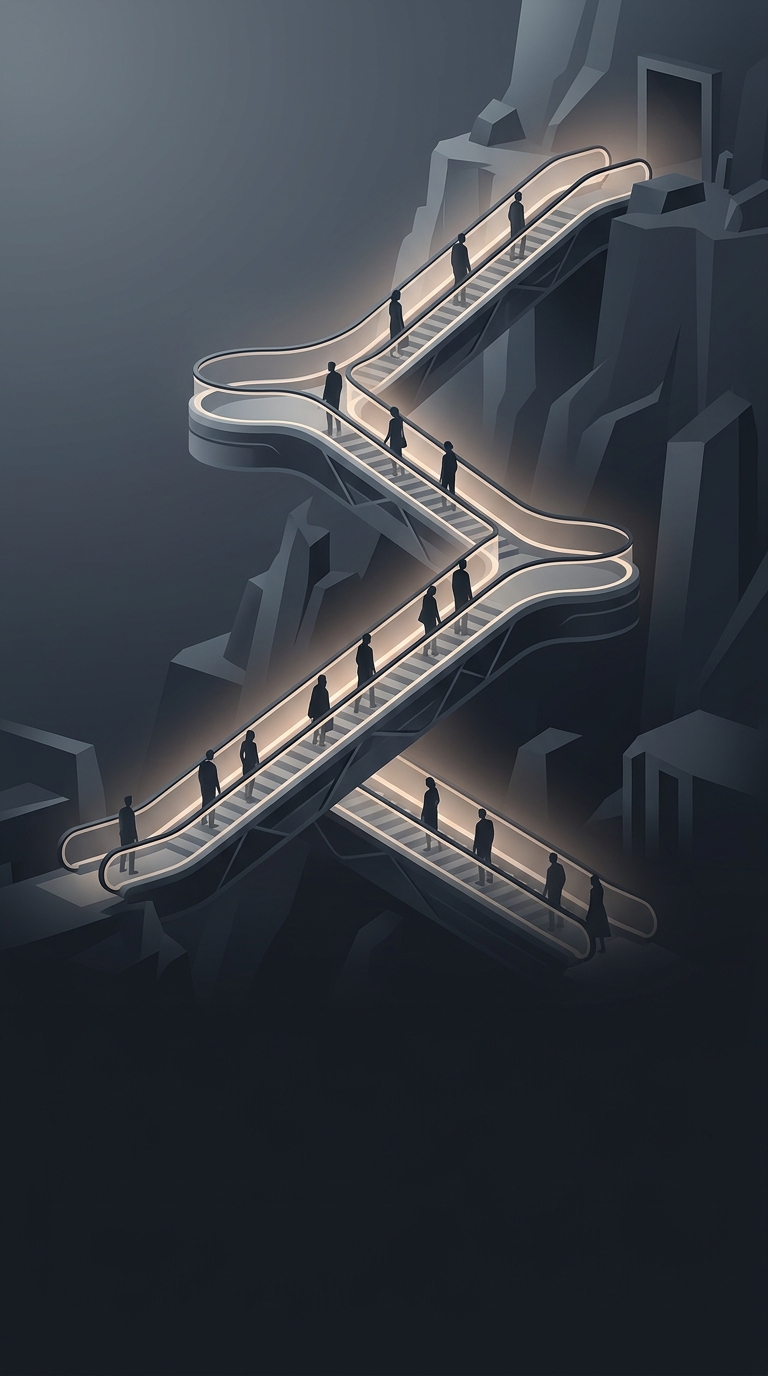
A One-Way Commute on Hong Kong’s Hillside
The Mid-Levels escalator system is less a single machine than a chain of covered escalators and moving walkways threaded through the steep streets above Central. Its route carries people between the business district below and residential neighborhoods higher on the slope, where a journey on foot would mean a long climb or descent.
The system solves an awkward city-planning problem: the buildings and streets already occupy a mountainside, so making every route comfortably flat is not an option. Instead, the escalators provide a continuous uphill ride through the gaps between blocks, with street-level entrances and exits allowing passengers to join or leave along the way.
Why the Direction Changes
Most escalators can carry people only one way at a time. To favor the largest flow of commuters, the system runs downhill during the morning rush, when many residents are heading toward Central, then switches to carry people uphill afterward. The change makes the route more useful at the busiest times, but it also means travelers going against the main flow may need to use stairs or another route.
Because the escalators are elevated and covered, they do more than replace a strenuous walk: they create a pedestrian corridor across a hillside where ordinary streets rise sharply. Shops and entrances remain close to the route, so a ride can be broken into short trips rather than treated as one uninterrupted journey. The result is a rare urban conveyor belt that keeps people moving through the mountain without flattening it.