Why an open lane changes the ride
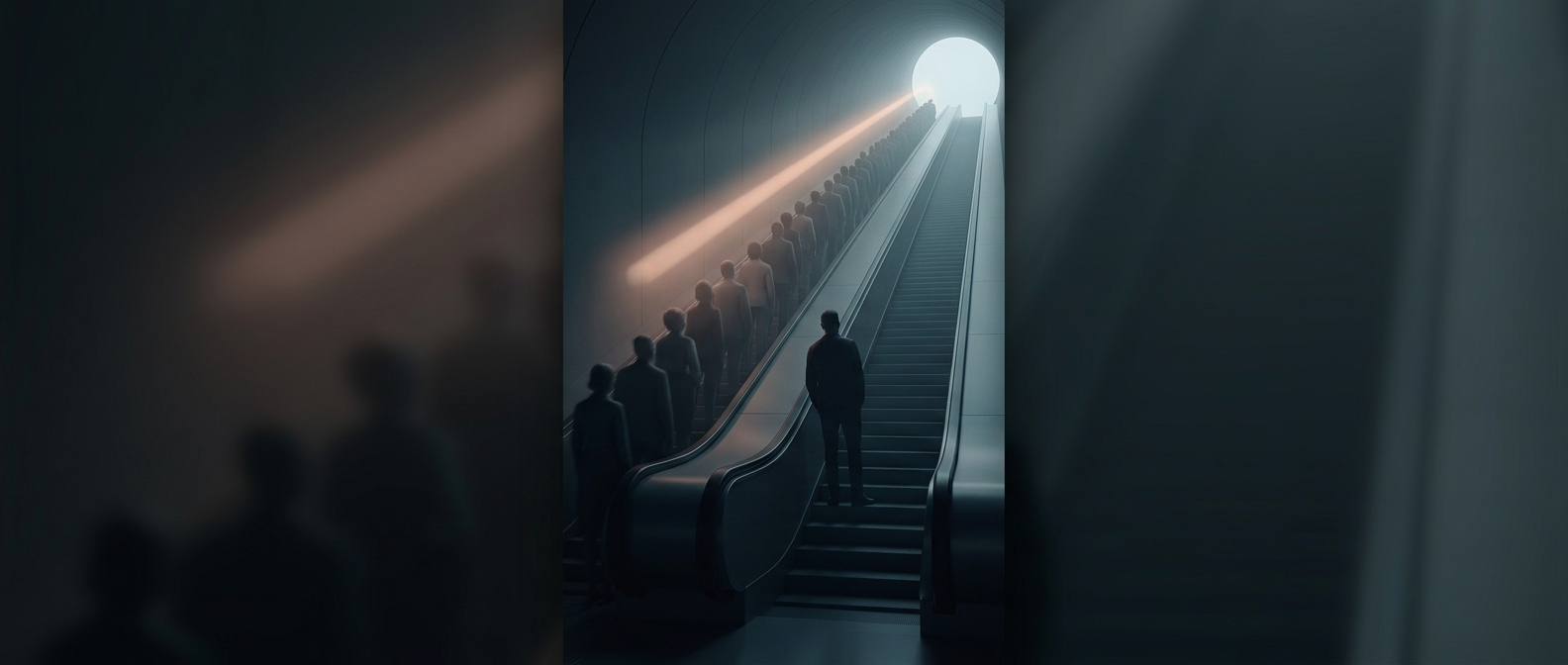
An escalator moves its steps at a steady speed, but passengers can add their own walking speed. Someone walking upward therefore gains ground on someone standing still. The open side functions as a passing lane: it lets faster riders move past without forcing anyone on the standing side to change places.
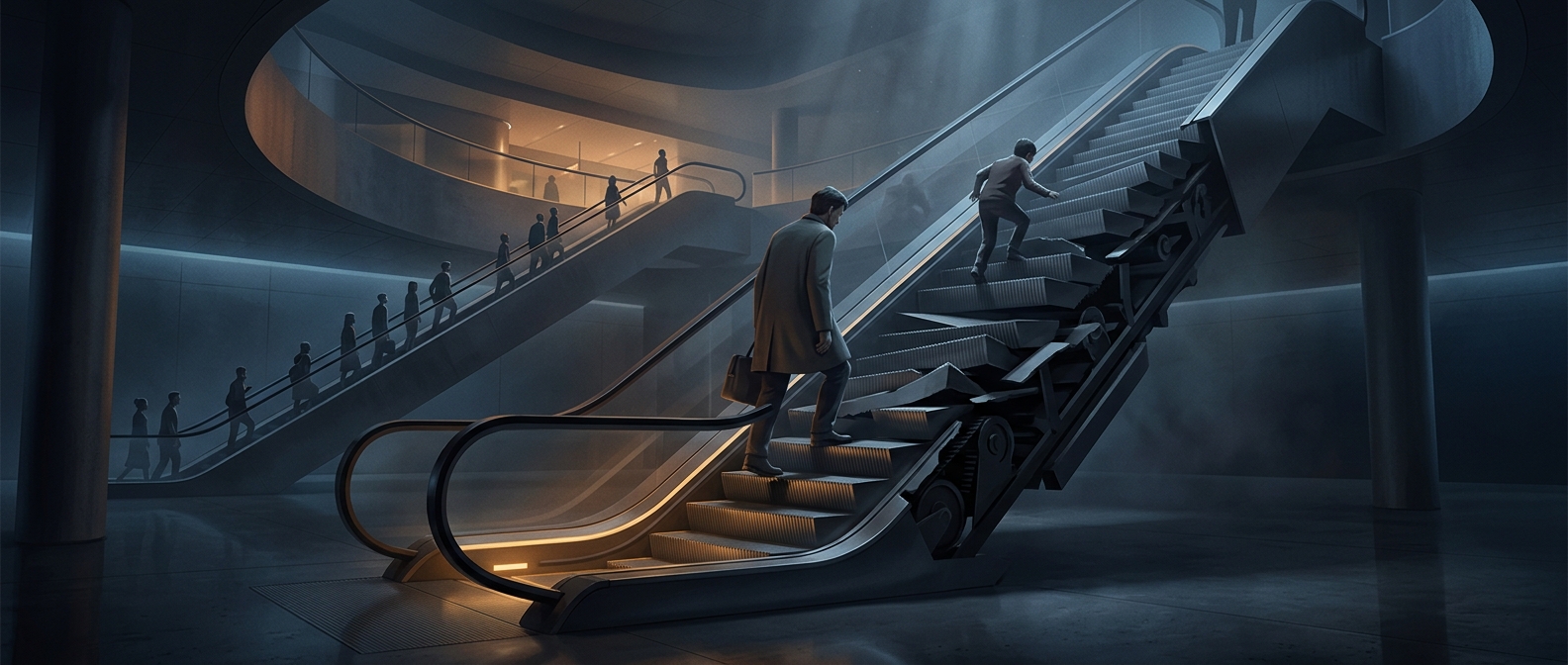
When people stand across both sides, the escalator keeps moving, but passing stops. A rider who wants to move faster must wait behind the people ahead or try to squeeze around them. The result feels like a traffic jam because the limit is no longer the moving steps alone; it is also the crowd’s decision to occupy the full width.
A narrow lane has limits
An escalator is not a road, and its steps are not a separate stream of traffic. Each step carries a person, and walking requires balance on a moving surface. Passing can be awkward when riders have bags, are traveling with children, or need the handrail, so an open lane does not guarantee that everyone can move freely.
The familiar stand-on-one-side, walk-on-the-other arrangement is a way to organize different speeds in a confined space. Its practical consequence is simple: leaving room to pass gives moving riders somewhere to go; filling the width removes that option, even while the escalator continues carrying the crowd forward.