Why Inline Skates Demand So Much Balance
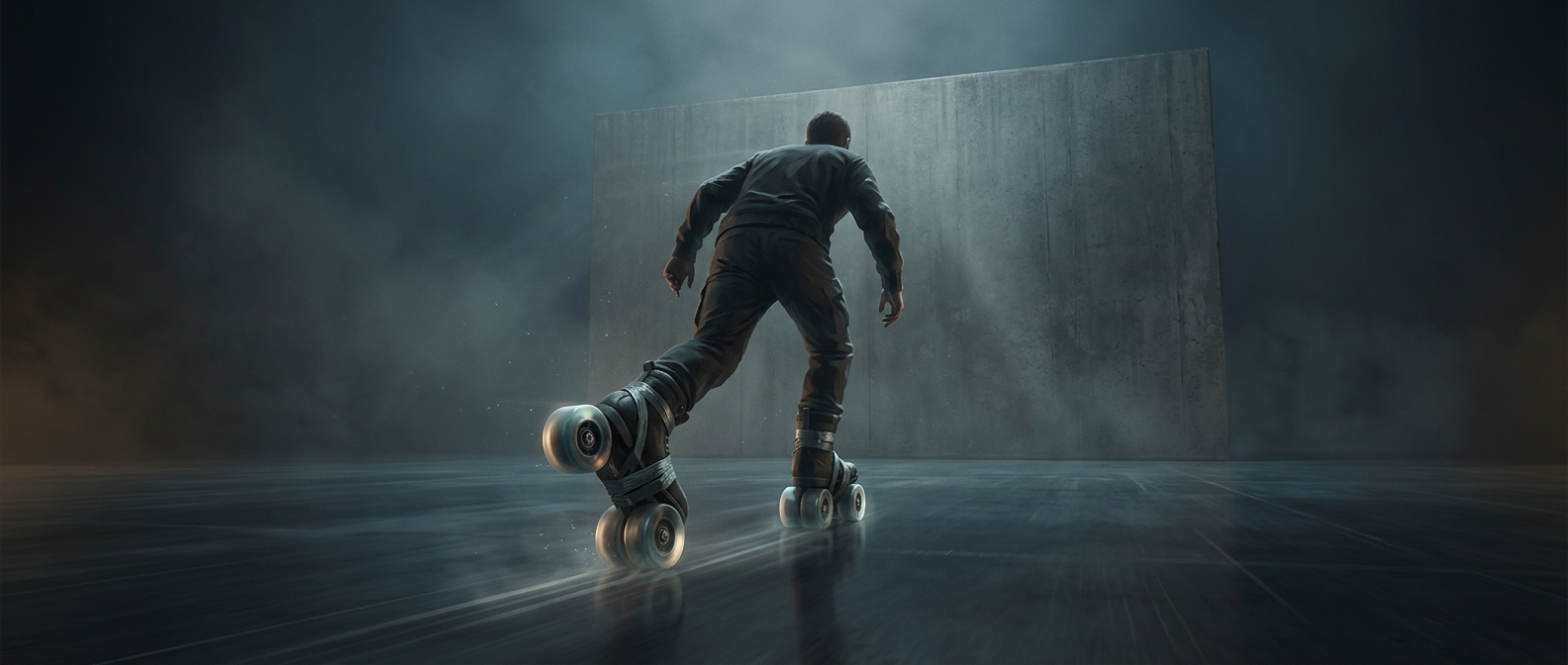
A skate does not steer like a car: its wheels are fixed in a line, with no axle that pivots to point them in a new direction. To turn, the skater tilts the skate onto an edge and shifts body weight, guiding the wheels along a curved path. A small lean can change direction; an abrupt one can make the skate slip or send the skater off balance.
That narrow line of support is the central tradeoff. It lets the skates roll efficiently, but gives the body little side-to-side room to recover. The ankles and legs must keep the skates aligned beneath the body while the upper body stays centered over them. Even standing still takes constant small corrections.
Speed Makes Small Errors Matter
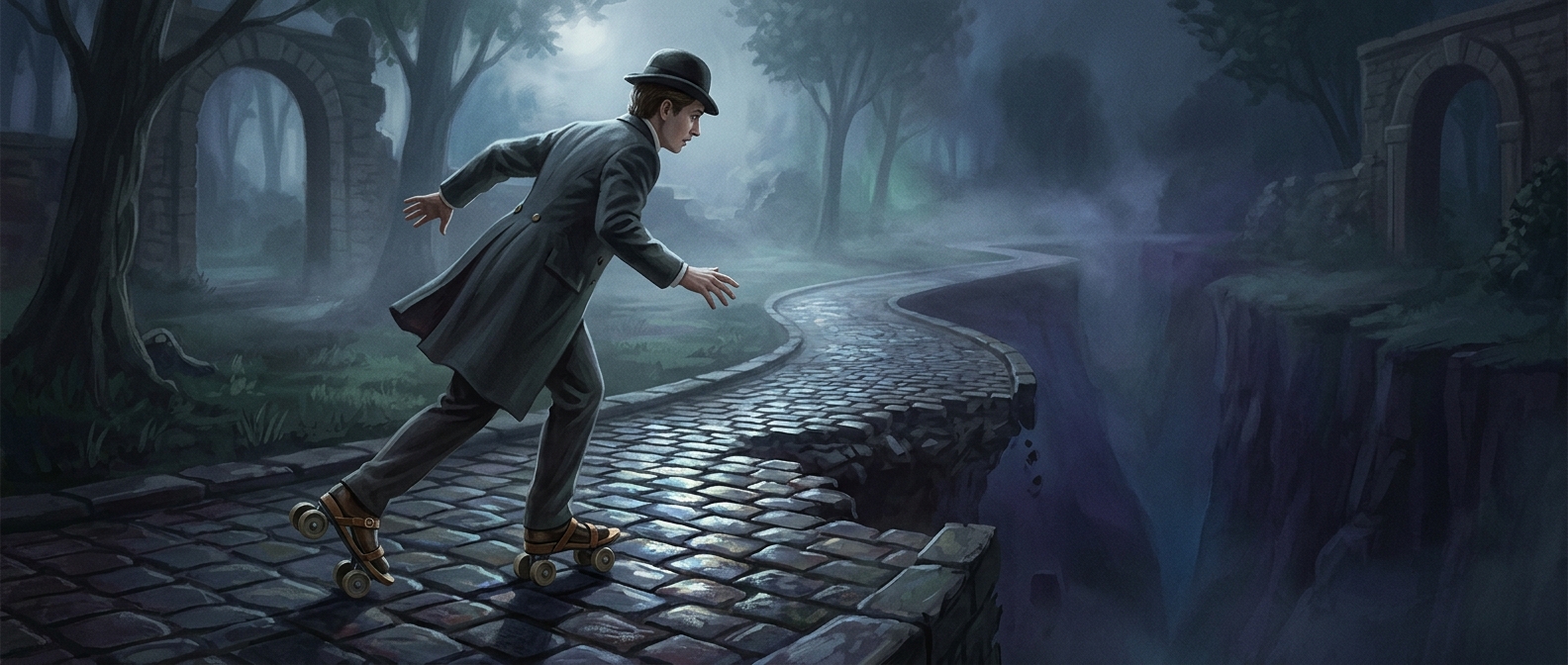
Once the skates are moving, momentum helps carry the skater forward—but it also means a stumble cannot be stopped instantly. A sudden turn, rough patch, or collision can redirect the wheels while the body keeps traveling, which is why falls often happen when balance and skate direction stop matching.
Stopping requires a separate action, such as pressing a heel brake where one is fitted or using a controlled turn to shed speed. The practical lesson is that the wheels make motion easy; managing that motion—especially slowing down before a crowded or obstructed stretch—is the real skill.