How a Small Cam Clamps a Bicycle Wheel
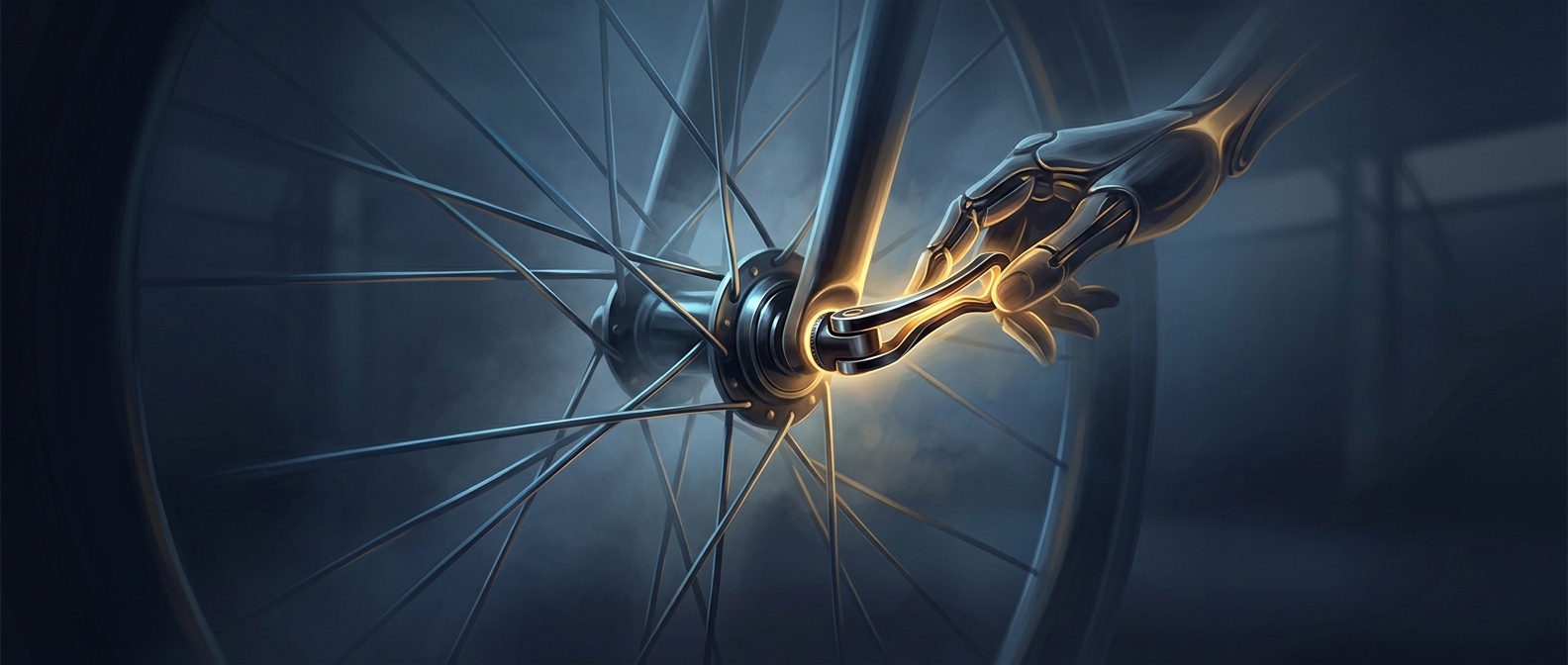
A quick-release skewer is a thin rod that runs through the hollow axle at the center of the wheel. A nut on one end sets the clamping distance; the lever on the other end operates a cam, a shaped surface that converts the lever’s rotation into a short, forceful push.
As the lever closes, the cam bears against the fork end, or dropout. The skewer pulls against the nut on the far side, squeezing the fork dropouts against the hub assembly. That clamping force holds the wheel in place without a wrench or a nut that must be spun repeatedly.
Why the Lever Takes Force
The cam’s surface is not a perfect circle: as it turns, its effective radius changes, pressing the parts together. Near the end of the lever’s travel, the cam passes its tightest point and settles into the closed position. That helps keep the lever from simply springing back open, while the lever’s length gives a hand enough leverage to create substantial tension.
The mechanism is quick, but it depends on adjustment. The nut must be set so the lever closes firmly; a lever that swings shut too easily may not clamp the wheel securely. When properly adjusted, the action is a single controlled turn—not a screw being tightened through many rotations—and the wheel is held by pressure at the fork, not by the lever acting as a lock by itself.