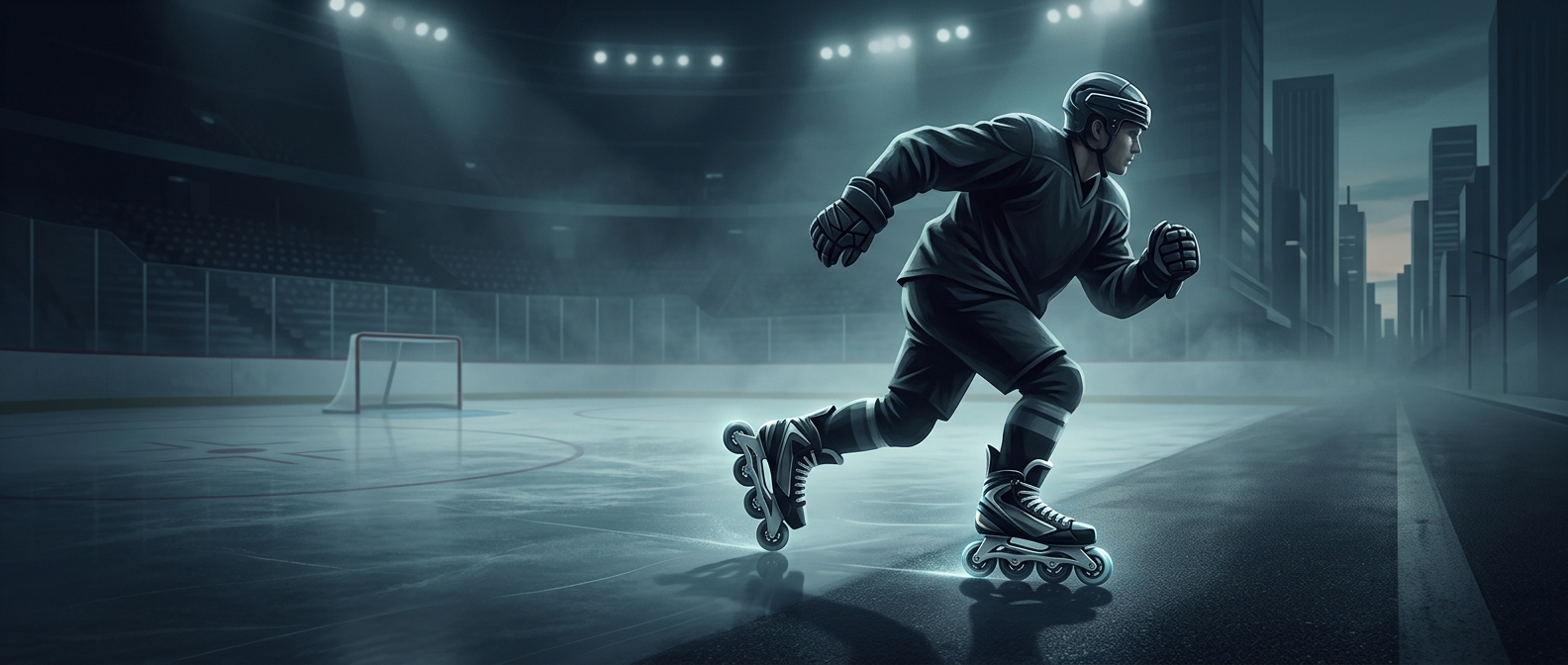
Off-ice practice shaped the inline skate
Hockey players needed a way to rehearse skating movements when an ice rink was unavailable. The key was not simply putting wheels on a boot: the skate had to support the familiar forward-and-back stride and let players balance over a narrow track beneath each foot.
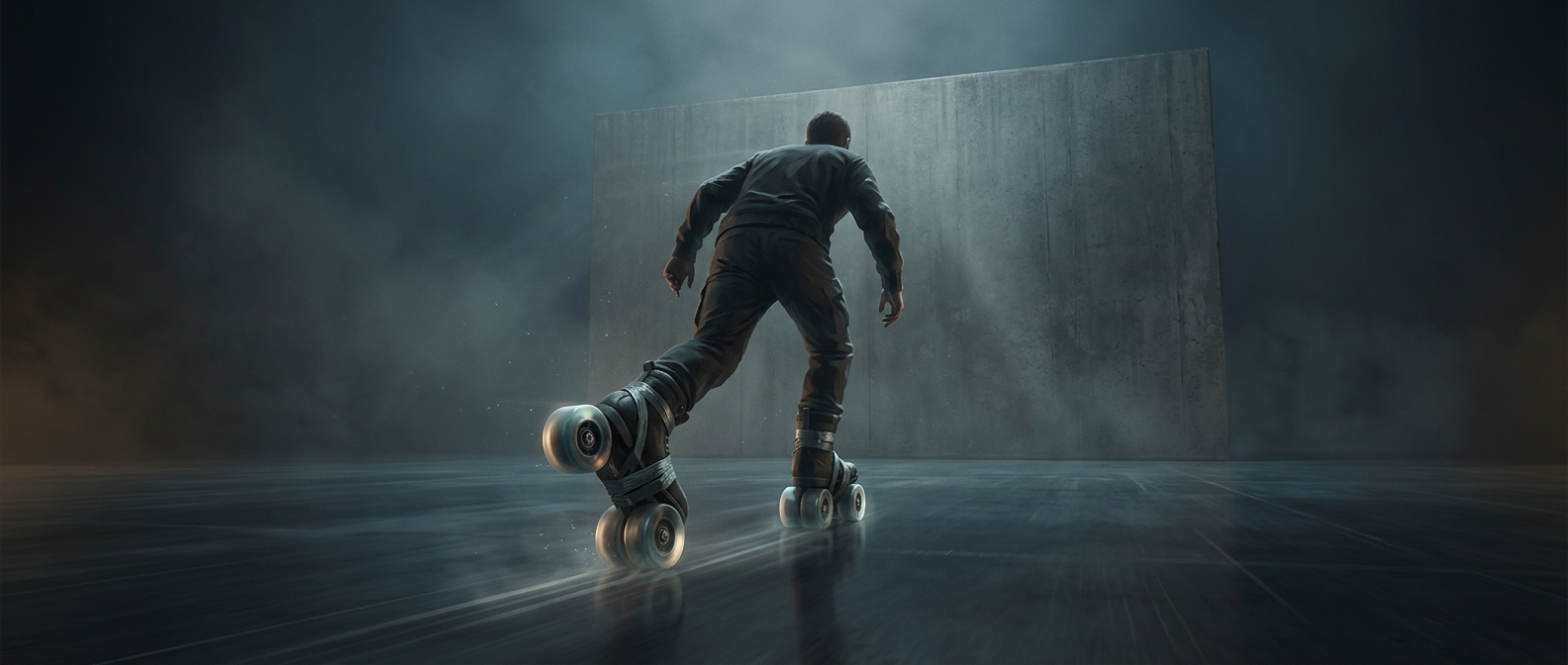
With inline wheels arranged front to back, a skater can push sideways against the ground and roll forward, practicing weight shifts, crossovers, and turns. That makes the skates useful for keeping skating skills active away from the rink, rather than just for ordinary rolling around.
Similar motions, different surface
The resemblance to ice has limits. A hockey blade glides over ice while also allowing a player to carve and change direction; wheels roll on pavement, where grip and roughness affect how a turn feels. Stopping is different, too, so off-ice drills cannot reproduce every response of a blade on ice.
That tradeoff explains the design’s appeal: inline skates preserve enough of skating’s balance and stride to make practice transferable, without requiring a sheet of ice. A parking lot or smooth path can become a place to work on movements that would otherwise wait for rink time.