The heel becomes a tiny chassis
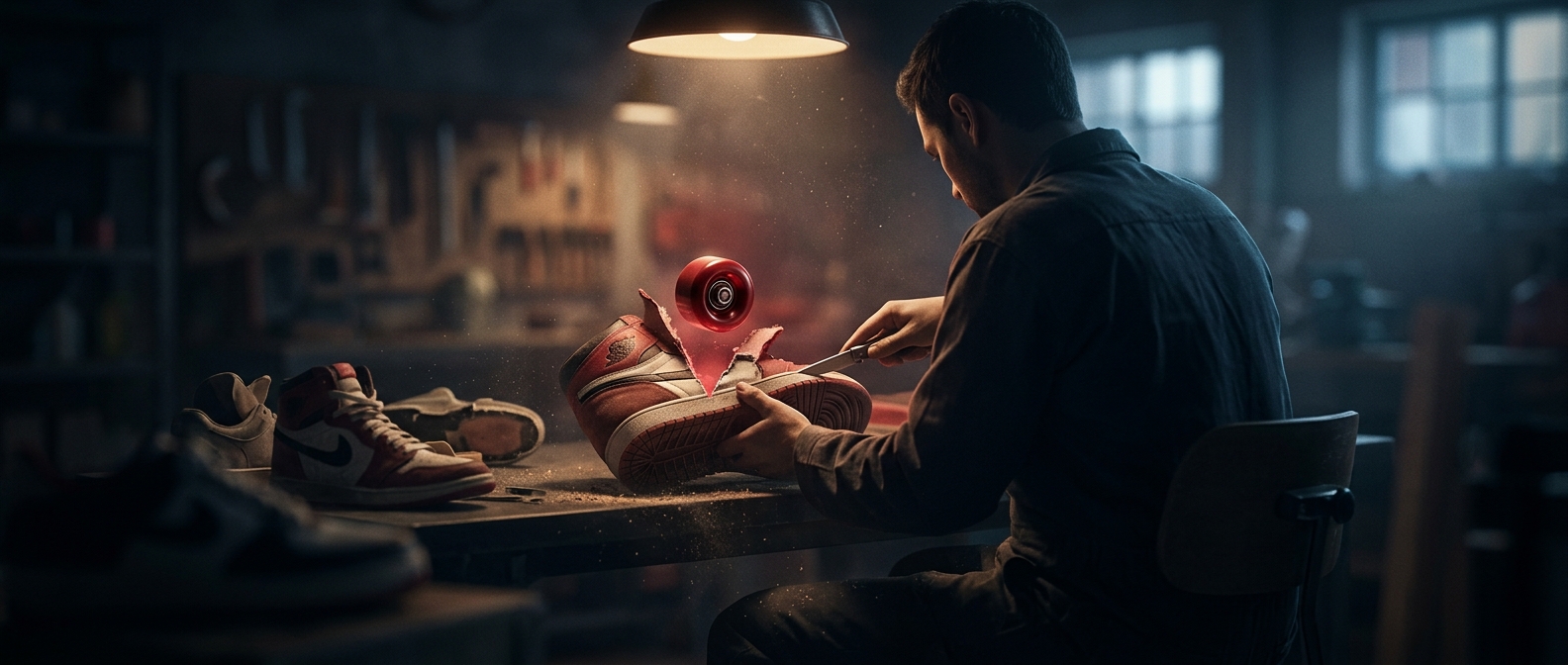
A Heelys shoe has a small wheel seated in a socket at the heel. With the wheel installed, the shoe can roll when the wearer shifts weight onto it. The rest of the sole still works like an ordinary shoe, so walking and rolling use the same footwear—but different parts of it meet the ground.
The design’s central challenge is making that change feel controllable. A wheel under the heel creates a pivot: the wearer must move weight back enough to roll, while keeping the front of the shoe from catching the ground. To walk, the wearer shifts forward so the wheel lifts clear and the sole takes over. In effect, a subtle change in posture switches the shoe between two modes.
Why the wheel sits at the back
Putting the wheel in the heel makes the transition possible without a full set of skate wheels beneath the foot. The wearer can take a step, settle onto the rear wheel, and glide, then bring the front of the shoe down to stop rolling and walk again. The shoe is not a conventional skate: it offers a single rolling point at each heel, so balance and steering depend heavily on body position.
That arrangement also concentrates the balancing task at the back of the foot. A beginner has to learn how far to lean, how to keep the other foot steady, and how to return to a walking stance without stumbling. The wheel is built into the shoe, but the control system is the wearer’s shifting weight. That is what makes Heelys feel less like putting on skates and more like discovering that an ordinary step can become a glide.