Why a skating stride moves you forward
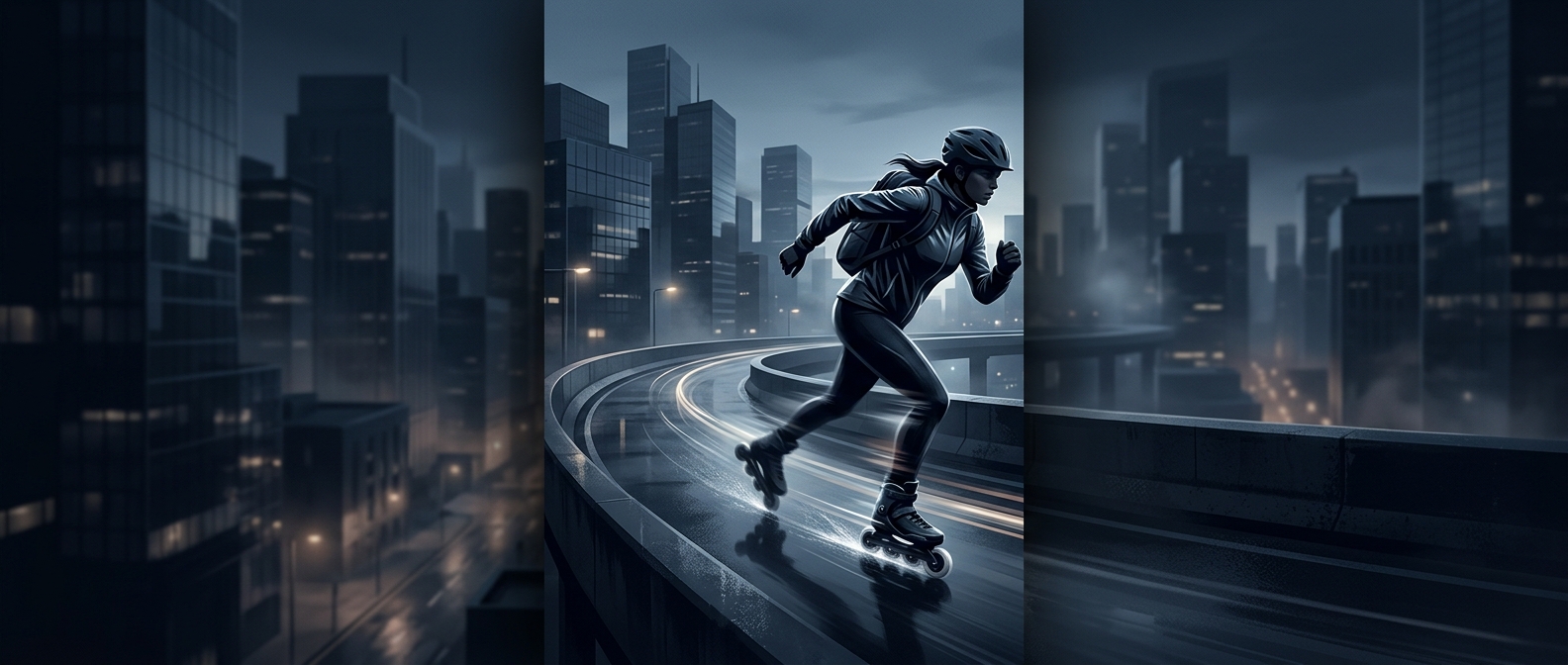
An inline skate’s wheels roll with far less resistance than a shoe sliding against pavement, so each push can carry the skater through a glide. The push does the work of accelerating; the other leg supports the body and rolls ahead. As the skater shifts weight, the legs alternate roles, turning separate pushes into nearly continuous motion.
The sideways-looking stride is not wasted effort. A skater presses a foot outward and slightly backward against the ground. The ground pushes back, sending the skater forward. Bending the knees and keeping the body low helps maintain balance while the legs travel apart and return beneath the body.
The pavement becomes part of the vehicle
That rolling efficiency comes with a tradeoff: skates have small wheels and no suspension, so cracks, gravel, and abrupt pavement seams can interrupt a glide or unsettle the skater. Smooth paths make it easier to build speed and conserve effort; rough surfaces demand more balance and careful foot placement.
Stopping also takes planning. A commuter must control speed before reaching crossings, crowds, or obstacles, using a brake if the skate has one or another practiced stopping technique. The same wheels that make a long glide possible also make a sudden stop less like planting a foot and more like managing a moving vehicle.