The Small Wheel That Changes Jobs
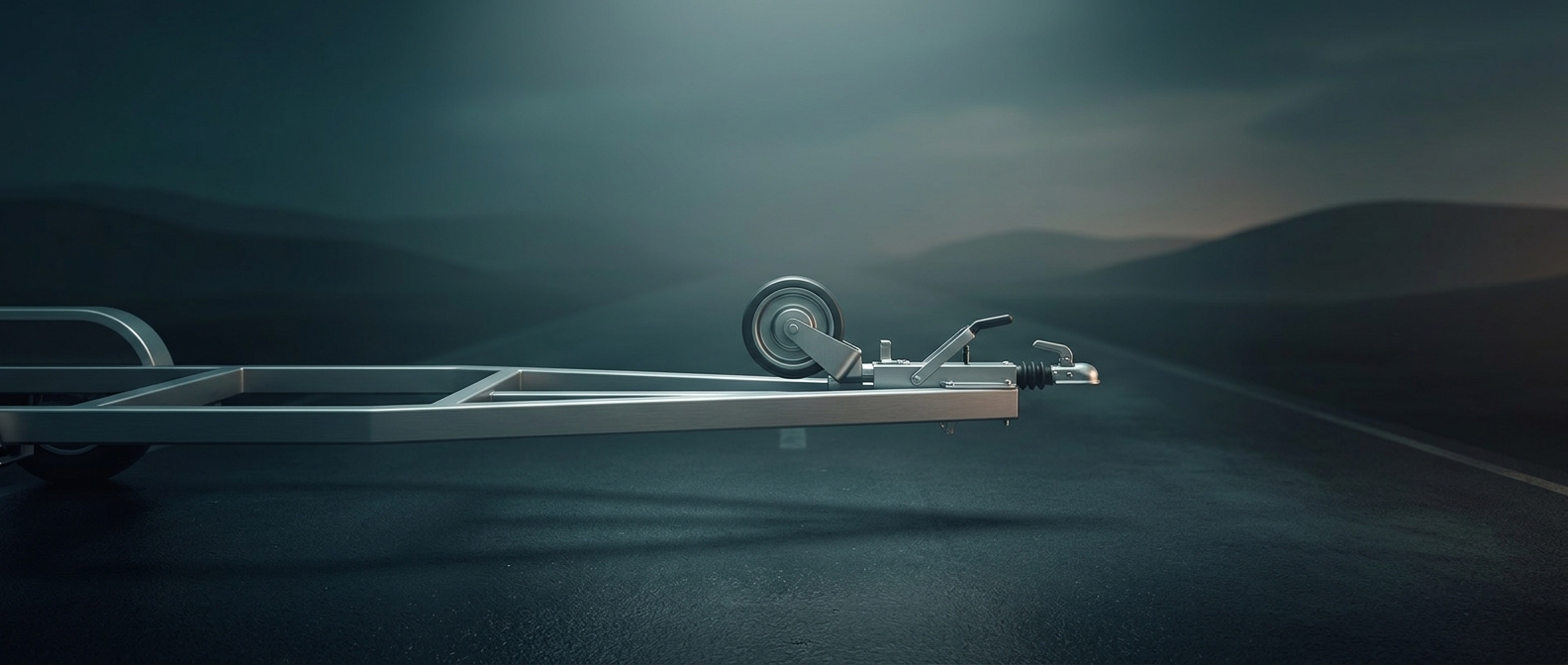
A jockey wheel is useful only while the trailer is standing still. When the trailer is unhitched, it supports the front of the trailer and lets a person move or position it over short distances. But on the road, a wheel hanging beneath the trailer tongue—the forward beam that connects to the towing vehicle—would be exposed to bumps, debris, and the ground.
So the assembly pivots out of its working position. A clamp holds its vertical support tube to the tongue; loosening the clamp lets the tube and wheel swing upward, where a pin, latch, or tightened clamp secures them for travel. The wheel is not meant to roll along behind the moving trailer. It is taken out of the way.
Why It Must Lock in Both Positions
When parked, the jockey wheel carries some of the trailer’s front-end load, allowing the trailer to remain supported after the tow vehicle is disconnected. Its height can usually be adjusted with a screw mechanism, much like a jack. That adjustment makes it easier to bring the coupling—the part that attaches to the vehicle’s hitch—to the right height.
Stowing the wheel is more than tidiness: the assembly needs to stay clear of the road and remain firmly attached while the trailer moves. A loose or partly raised wheel can swing down, strike the ground, and damage the wheel, bracket, or trailer tongue. In effect, the same fitting has two distinct jobs: provide a rolling support during low-speed positioning, then become a secured piece of hardware during transit. Its hinge and lock make that change possible without removing the assembly.