A rival to the tower, built to move
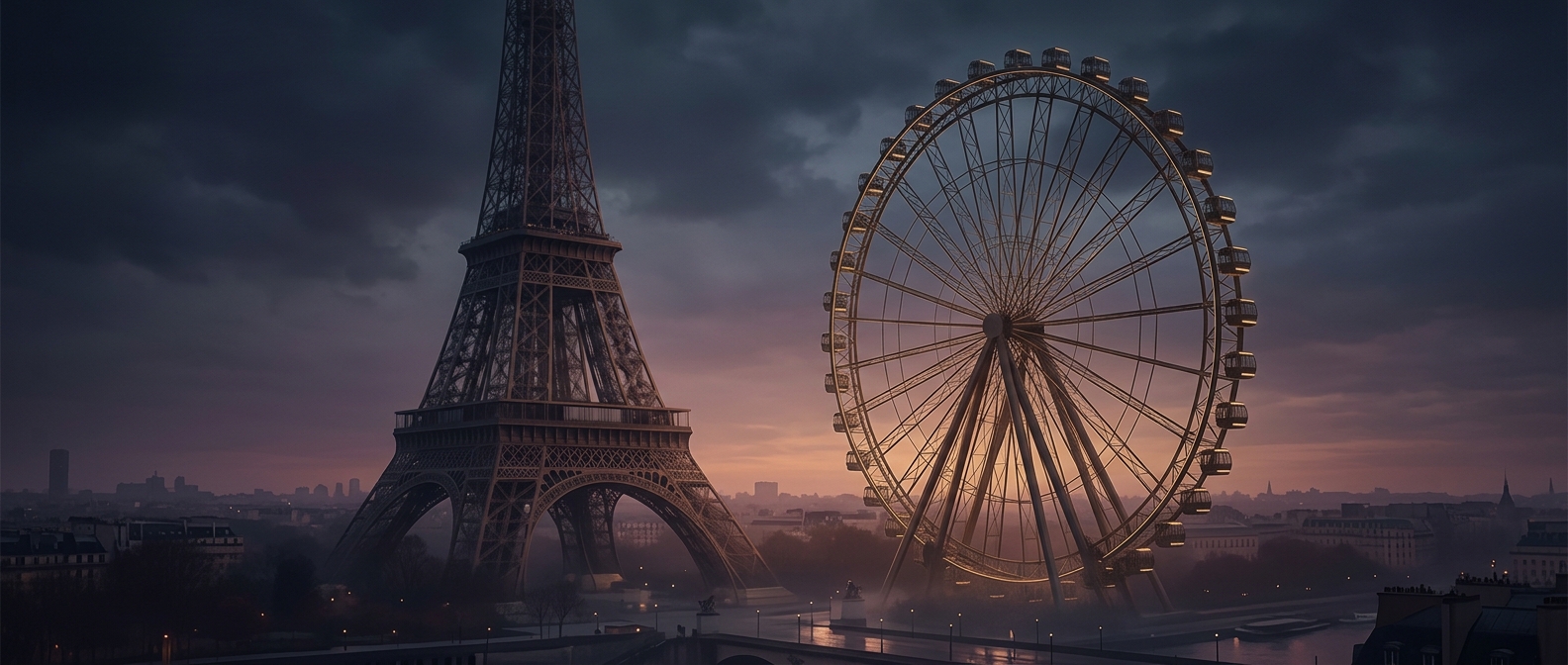
When Chicago prepared its 1893 World’s Columbian Exposition, the Eiffel Tower—raised for Paris’s 1889 fair—had set a conspicuous standard for what a world’s fair landmark could be. Engineer George Ferris answered with a different kind of spectacle: not a structure visitors looked up at, but a machine that carried them high above the fairgrounds.
The wheel’s 264-foot height made it a rival in scale, but its motion changed the experience. A tower offers a fixed view; a wheel slowly sweeps riders through changing angles over the exposition.
How a hanging car stays upright
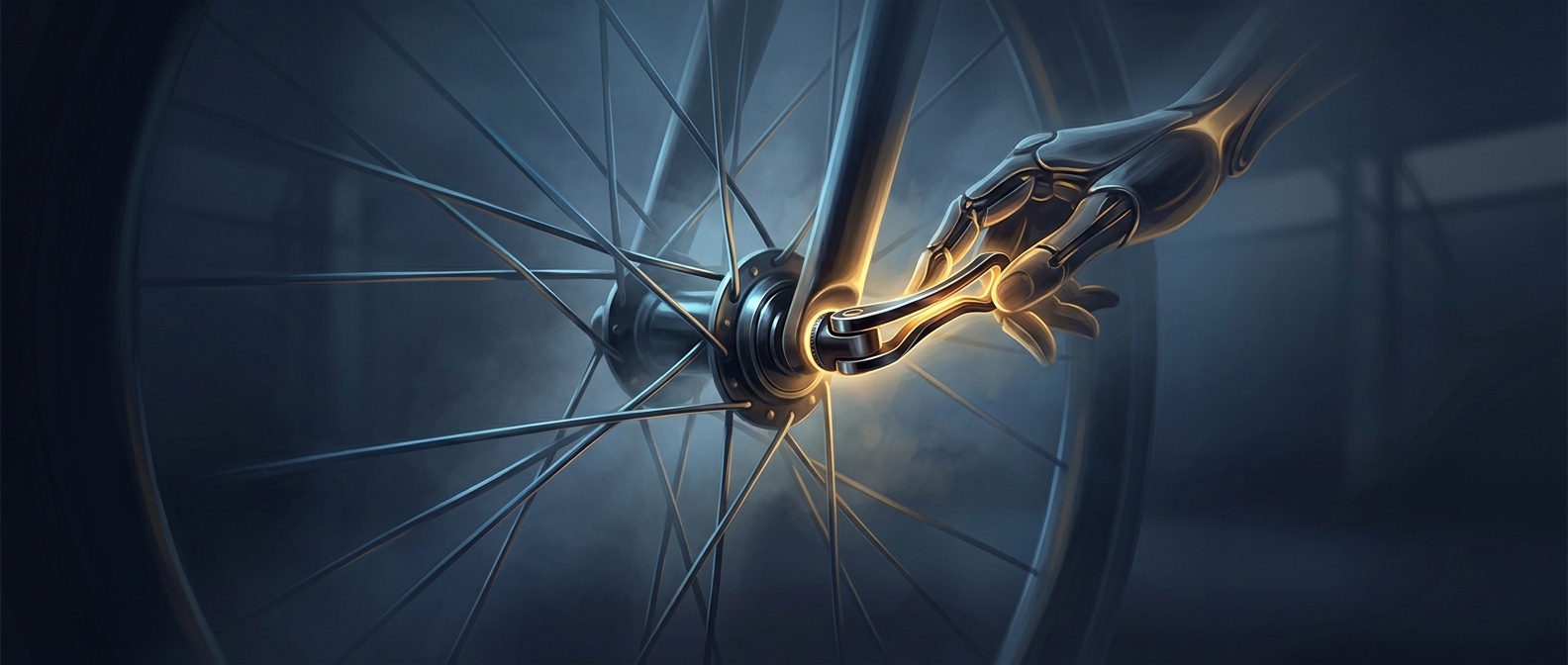
The wheel’s rim turned around a central axle, supported by enormous steel framework. Passenger cars hung from pivots at the rim. As each car rose, crossed the top, and descended, gravity kept its floor approximately level, much like a bucket hanging from a handle. The wheel rotated beneath the cars; the riders did not simply turn upside down with it.
That arrangement made the ride possible, but it also made the structure a serious engineering task. The wheel had to carry the weight of its cars and passengers while its framework and axle supported the rotating rim. Its appeal depended on both parts working together: a structure sturdy enough to turn, and cars that could hang freely as it did.
A new way to make a landmark
Ferris’s answer to the Eiffel Tower was therefore not just another tall silhouette. It was a public attraction whose height could be experienced from inside. The design turned engineering into the spectacle: visitors watched the fair recede below them, then returned to ground level as the same hanging car completed its circuit.