Why a Coaster’s Drop Feels So Much Bigger Than It Is
A roller coaster does not need to make riders fall freely to create the sensation of falling. It needs to change their speed and direction faster than their bodies can comfortably anticipate. The track guides the train through those changes; the riders’ bodies, with their own mass and momentum, lag behind for a split second.
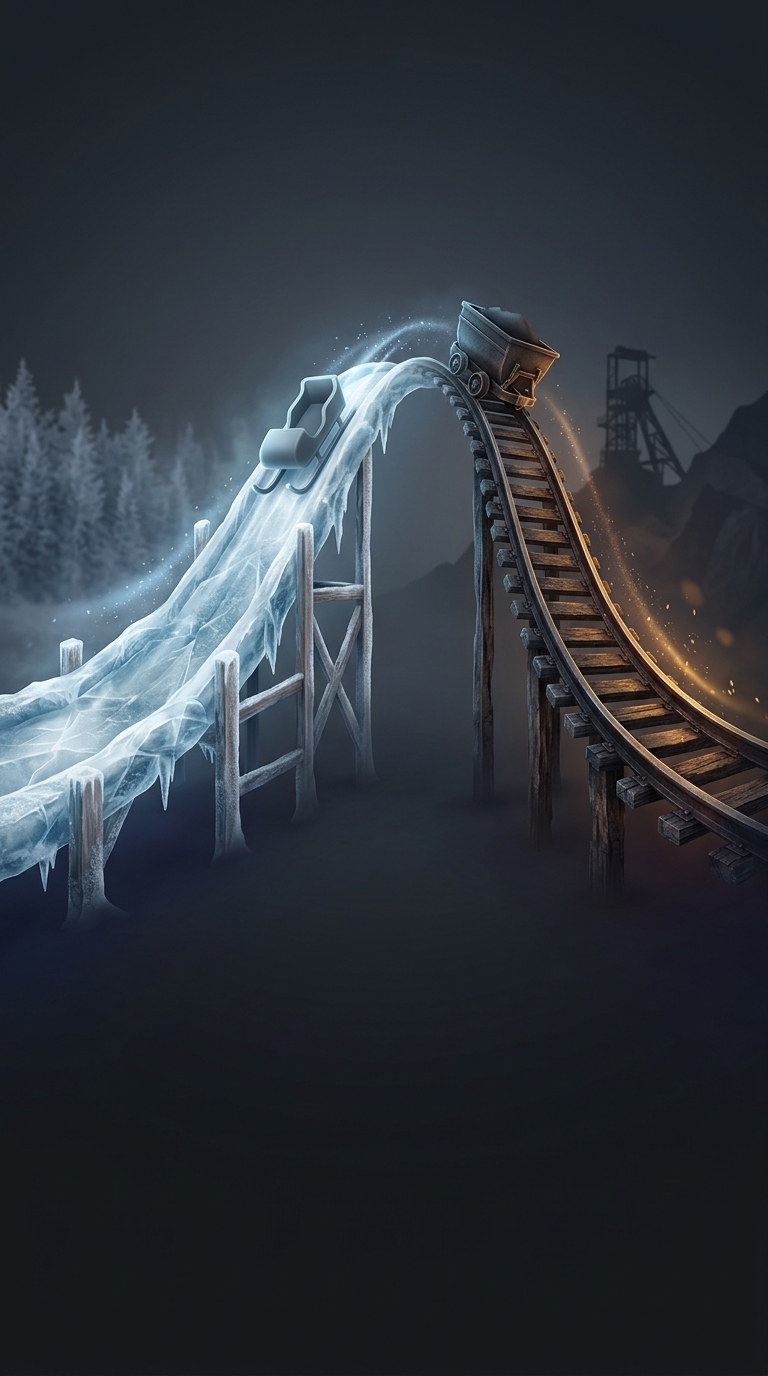
At the top of a hill, the train slows as it climbs, then gravity pulls it downhill and its height becomes speed. The drop can feel especially intense because the horizon tilts away and the train accelerates before the body has time to settle into the new motion. The stomach’s contents and other internal tissues shift slightly too, contributing to the familiar swooping sensation.
The Curve Is Where the Seat Pushes Back
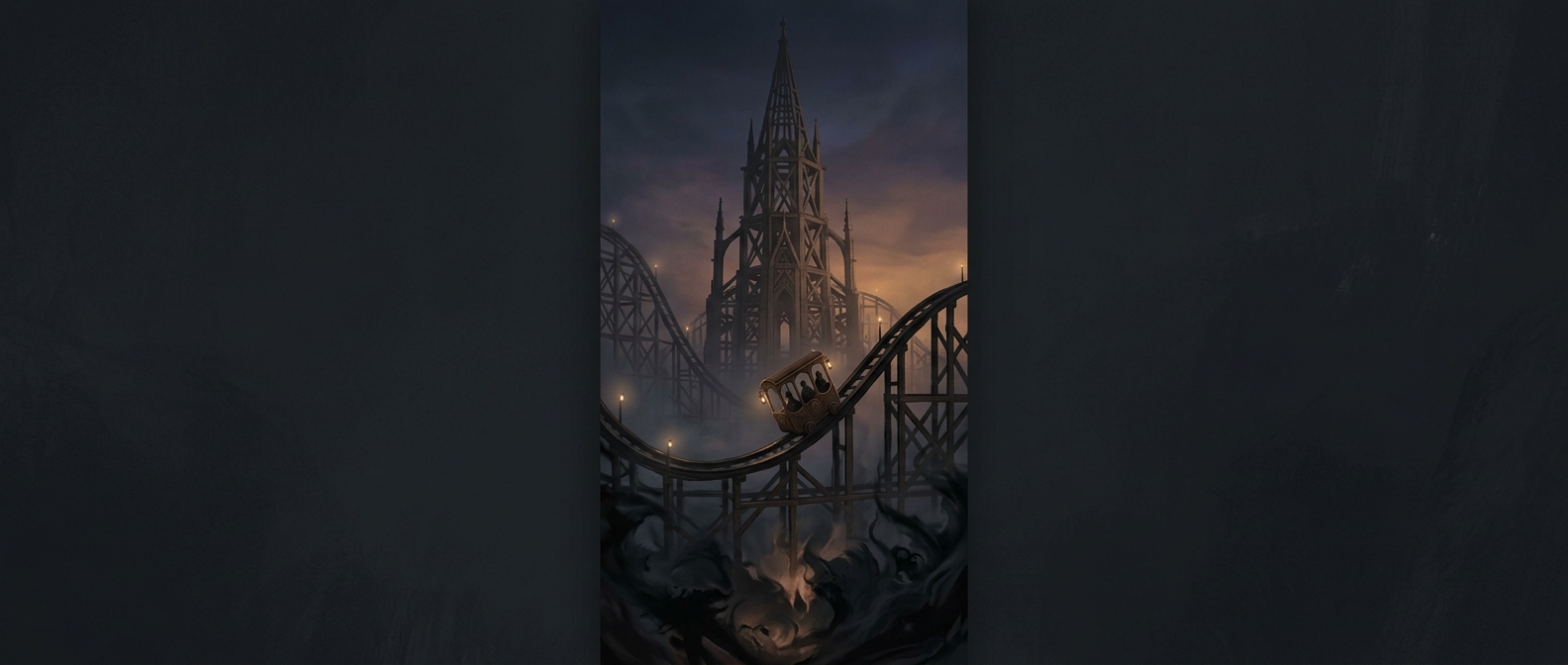
At the bottom of a drop, the track must turn the train from downward travel toward level ground. That bend changes the train’s direction, and the seat pushes upward on riders to make their bodies follow the curve. The push can make them feel heavier than usual—a force often described as “G” load, meaning acceleration measured relative to gravity.
Designers shape the curve so that this force builds and eases rather than arriving as an abrupt jolt. A sharp turn would create a harsher change in motion; a broader, carefully profiled curve can still feel powerful while keeping the ride within intended limits. Restraints help keep riders in position through the changing forces.
The Brief Lift From the Seat
Some hills are designed to produce “airtime”: a moment when the track drops away beneath the train quickly enough that the seat presses less firmly against the rider. The body feels light, even though the train remains guided by the rails. It is a controlled near-weightless sensation, not necessarily true free fall.
That contrast—feeling pinned into the seat at one moment and nearly lifted from it at the next—is a central part of the coaster’s illusion. The track turns ordinary changes in speed and direction into a bodily surprise, while the train’s path remains precisely constrained.