From an icy slope to a guided ride
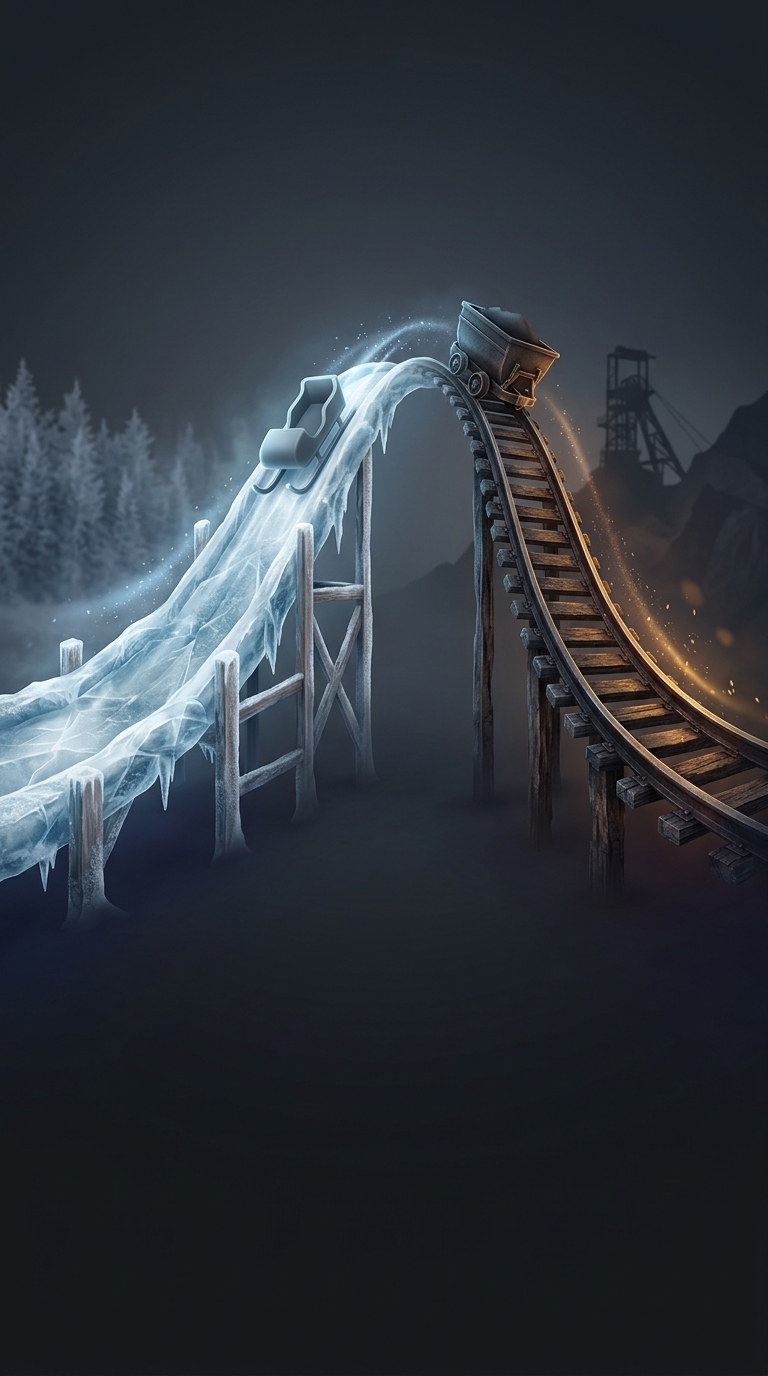
The key change in the early roller coaster was not simply replacing ice with wood or metal. It was changing how the rider’s path was controlled. On an ice-covered slide, a sled could move quickly downhill, but its route and stability depended on the shape and condition of the surface. A wheeled car running on a track was constrained to a set course, making the ride more repeatable—and giving builders more control over its turns and drops.
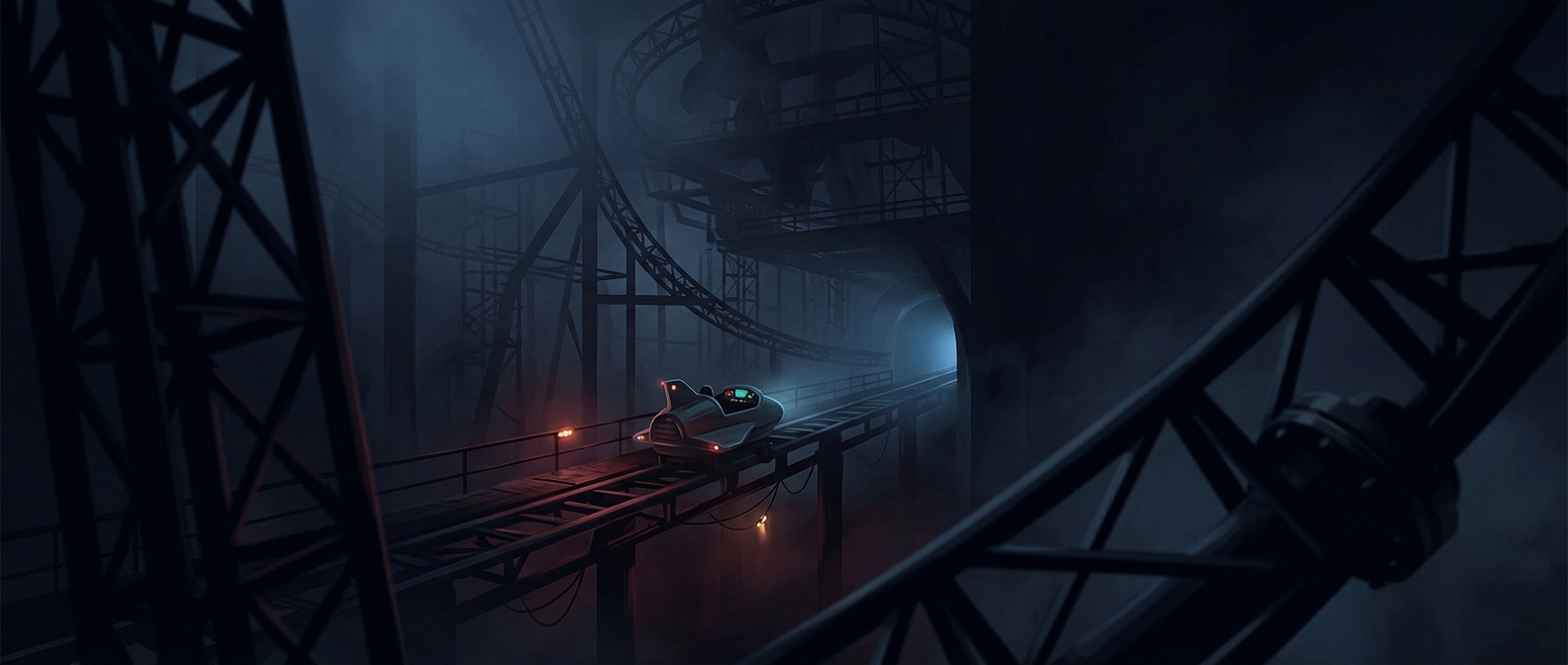
That shift turned a seasonal stunt into a transport problem. Designers had to make a car follow the route rather than slide wherever the surface took it. Rails supplied a continuous guide, while wheels let the vehicle roll without needing a sheet of ice. The basic source of motion stayed familiar: a car released from a height gains speed as gravity pulls it downward.
Gravity does the work
A coaster does not need an engine to keep accelerating throughout a ride. Its first climb stores gravitational potential energy—the energy an object has because it is elevated. As the car descends, that stored energy becomes motion. Some is lost to friction and air resistance, so a later hill generally has to be lower than the first unless the car receives another lift.
Tracks also make the experience less dependent on weather. Ice can melt, soften, or vary from one day to the next; a fixed rail-and-wheel system can carry riders along the same designed route in different seasons. The lasting innovation was turning a slippery downhill thrill into a guided course whose speed comes chiefly from gravity.