Why a Missing Lens Could Turn Stop Into Go
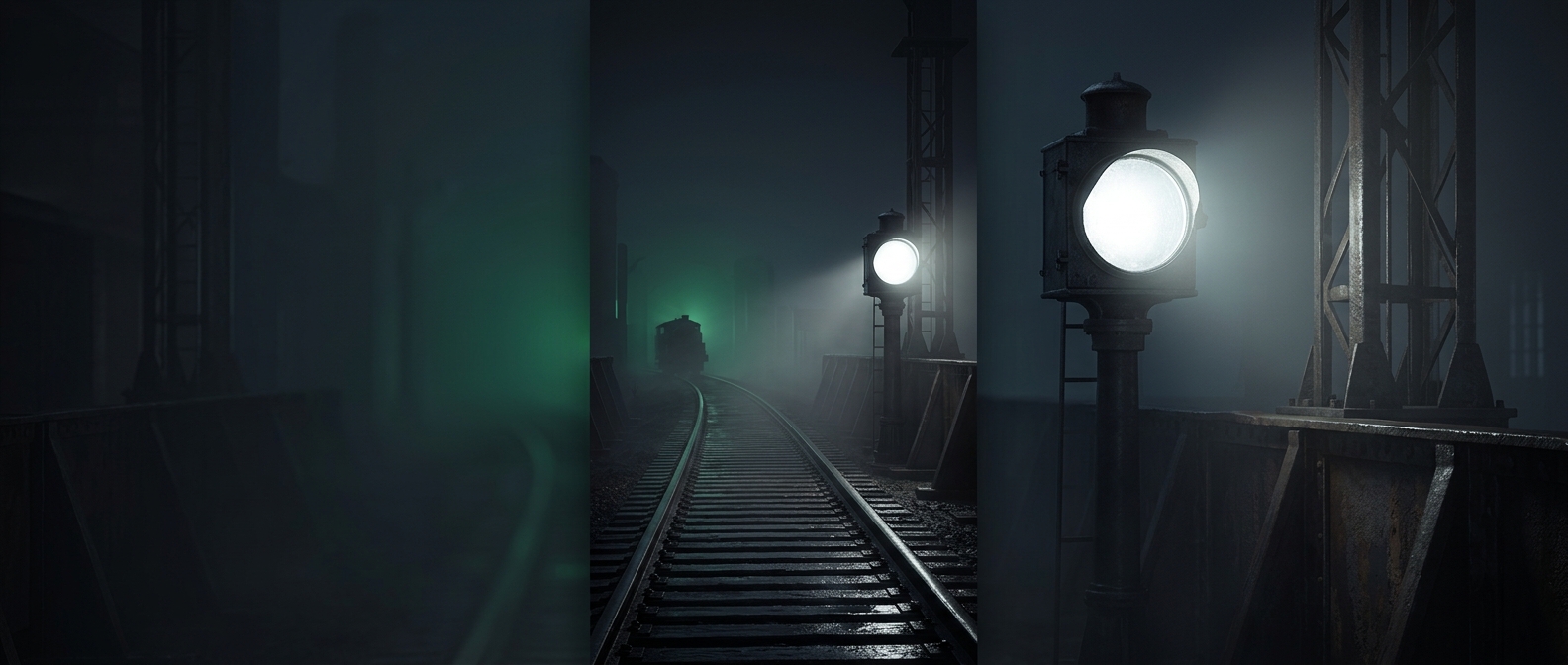
Early railway signals often made their colors with a simple arrangement: a lamp shone through colored glass. The lamp’s light was naturally white; the lens supplied the red or other color seen by a train crew. That made white an easy choice for a proceed signal—no colored lens was needed.
But the same simplicity created a dangerous failure. If the red lens in a stop signal cracked, slipped out, or went missing, the lamp behind it could shine through as white. A driver might see what looked like permission to continue when the signal was actually meant to say stop.
Green Made the Bare Lamp Less Misleading
Railways shifted to green for proceed and kept red for stop. Now a signal showing unfiltered white light did not match the normal proceed indication. The change mattered because it made the meaning depend less on a single piece of colored glass remaining intact: a missing red lens was less likely to turn a stop signal into an apparent go signal.
The underlying engineering lesson is simple: a safety signal should not make its most permissive meaning look like the default state of the equipment. When the colored lens failed, the lamp could still shine—but the system needed that unfiltered light to be treated as a warning, not an invitation onto the track.