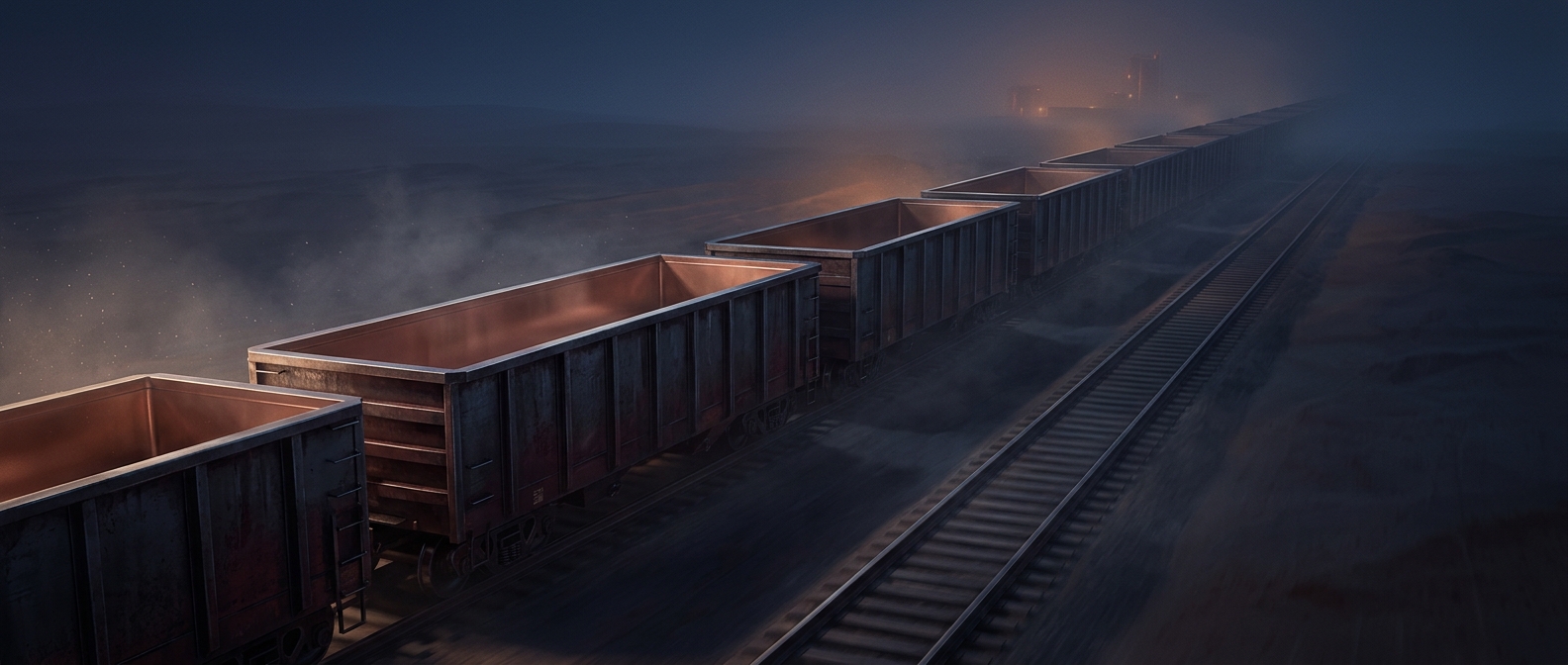
A Freight Car Built Like a Large, Open Tray
A gondola’s open top turns the whole car into a loading surface. A loader can lower bulky freight straight into the car rather than threading it through a doorway or fitting it beneath a roof. The sidewalls hold the load in place during the trip, while leaving the space above it clear for cranes and other lifting equipment.
That matters especially for cargo that is awkward to handle as a neat, enclosed load. A crane can place pieces from above; a grab—often a clamshell bucket that closes around loose material—can lift cargo back out. With a roof in the way, both operations would require extra clearance, more maneuvering, or a different way to load and unload.
The Open Top Is a Tradeoff
The same design that makes access easy also leaves freight exposed to weather and debris. Gondolas therefore suit cargo that can tolerate an open ride better than goods that need a sealed, protected space. When the train reaches its destination, workers or machinery can approach the freight from above instead of relying on a roofed car’s doors.
In practical terms, the missing roof saves a step at both ends of the journey: the equipment can reach the cargo directly, rather than having to work around the car.