How a Lashing Rod Holds a Container in Place
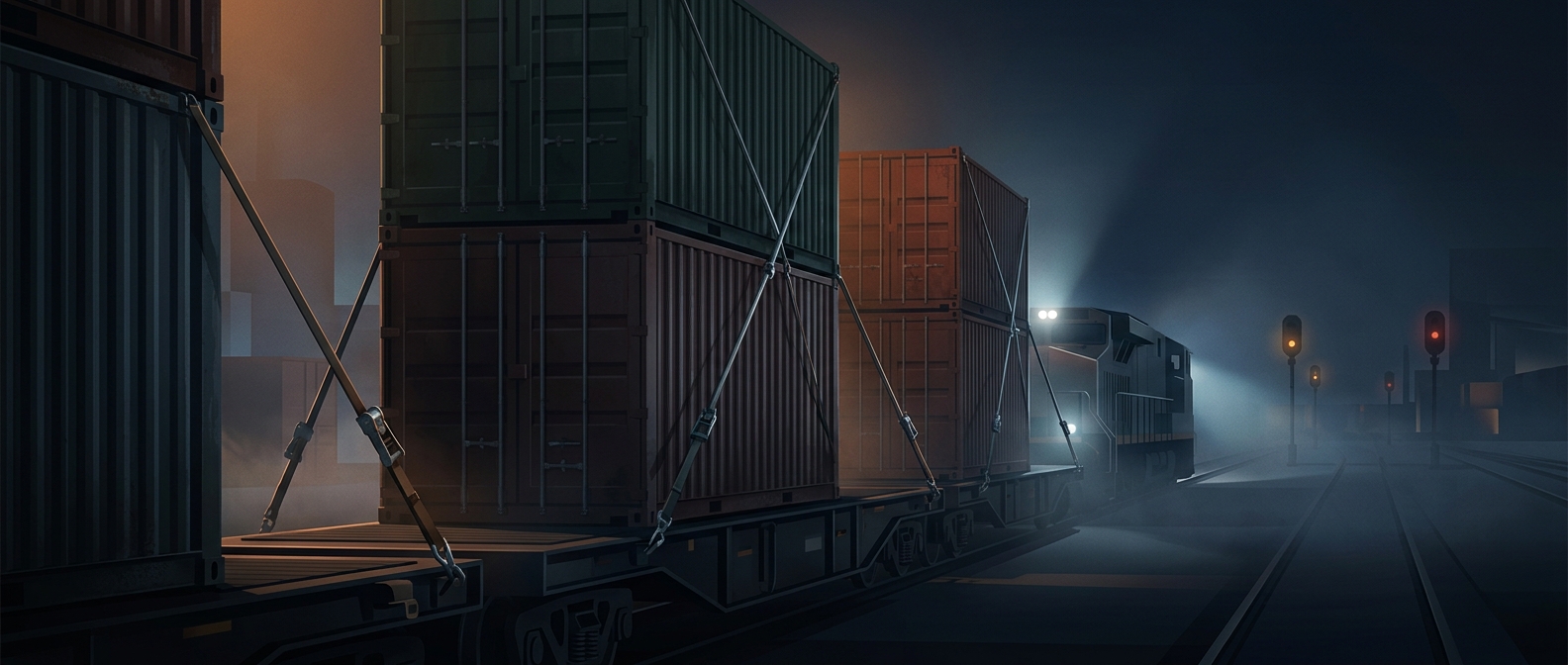
A shipping container rests on a flatcar at a few reinforced corner points. Those points carry the container’s weight, but weight alone does not keep it from sliding or tipping when a train accelerates, brakes, or rounds a curve. Lashing rods add a direct mechanical restraint: each rod hooks between a container fitting and an anchor on the railcar, then is tightened to pull the box down against its supports.
Turning Motion Into Tension
The rod works by resisting movement before the container can build momentum. If the train sways sideways, the container pushes against its restraints; if it jolts or brakes, the rods and their attachment points help keep it seated. The tightened connection also limits the small shifts that could otherwise loosen a load over a long trip.
The rods are part of a larger securing system, not a substitute for the flatcar’s supporting structure. Their hooks must engage the intended fittings, and the restraint must be tightened correctly. A loose or poorly connected rod cannot provide the same control, while the forces are ultimately passed from the container into the railcar.
Why Securement Matters
A container is a large, heavy load exposed to repeated changes in direction and speed. Keeping it fixed helps protect the cargo and prevents a shifted load from becoming a danger to the train or nearby tracks. The simple rod is doing more than tying down a box: it creates a taut link that makes the container and flatcar move together through the train’s jolts and turns.