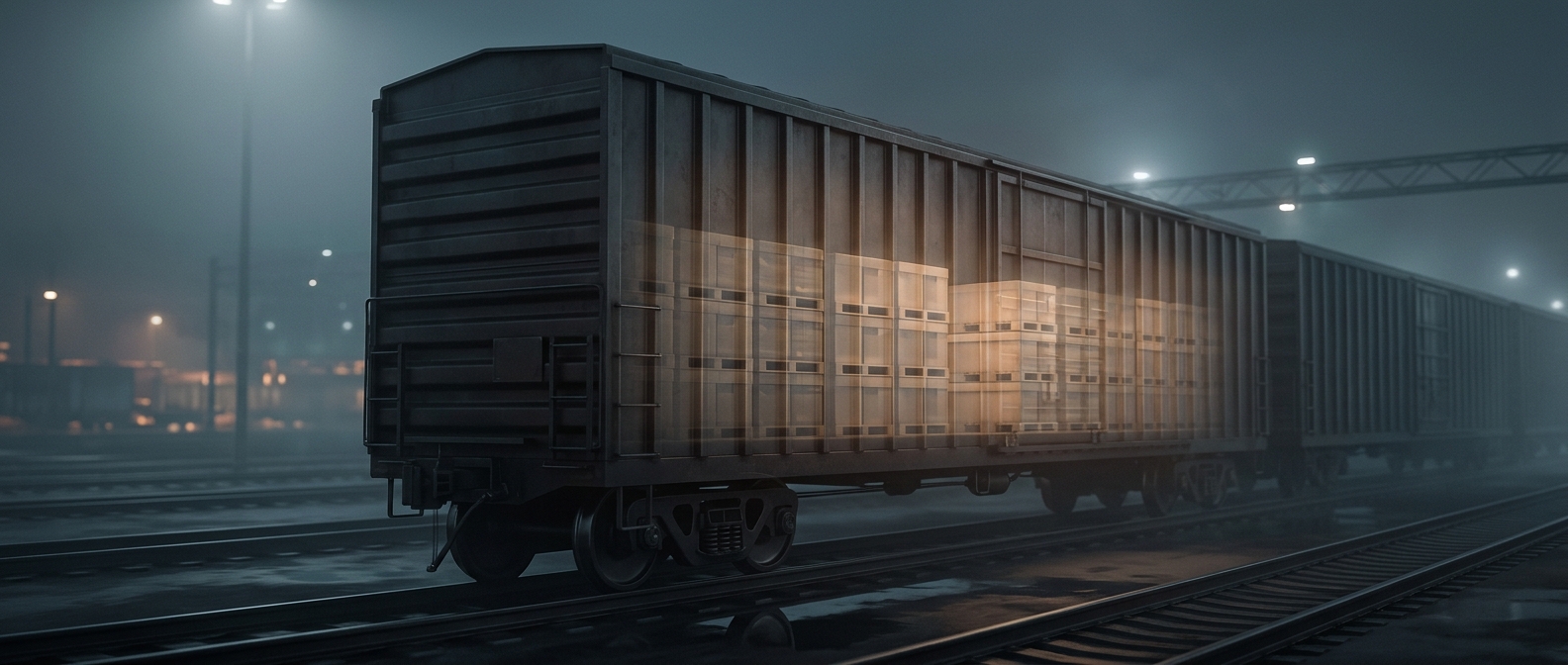
A pallet turns many packages into one load
A pallet is a low platform that gives a forklift access beneath a group of cartons, bags, or other freight. Once the goods are arranged and secured on it, workers can move the whole unit rather than lift and count each package separately. That changes the basic rhythm of loading: the forklift carries a ready-made stack through the boxcar door and places it on the floor.
The advantage depends on compatible dimensions. A pallet must fit through the doorway and into the available floor space, and the load must be stable enough to travel as a unit. Standardized platforms make that easier to plan across warehouses, trucks, and rail facilities—but the pallet and freight still need to suit the equipment and space at each step.
The boxcar protects, but the load still needs restraint
A boxcar’s solid sides and roof shield freight from rain, snow, and much of the dirt encountered in transit. Its enclosed space also lets shippers arrange loads without exposing every package to open-air handling. But walls are not a substitute for securing cargo: rail movement can jostle freight, so loads may need bracing or other restraint to keep them from shifting or collapsing.
That creates a practical balance. Palletizing speeds handling and keeps packages grouped, while careful placement makes the freight fit the car and remain stable on the journey. When the arrangement works, a shipment can move through the rail system as a series of manageable units—not a loose pile that must be rebuilt at every stop.