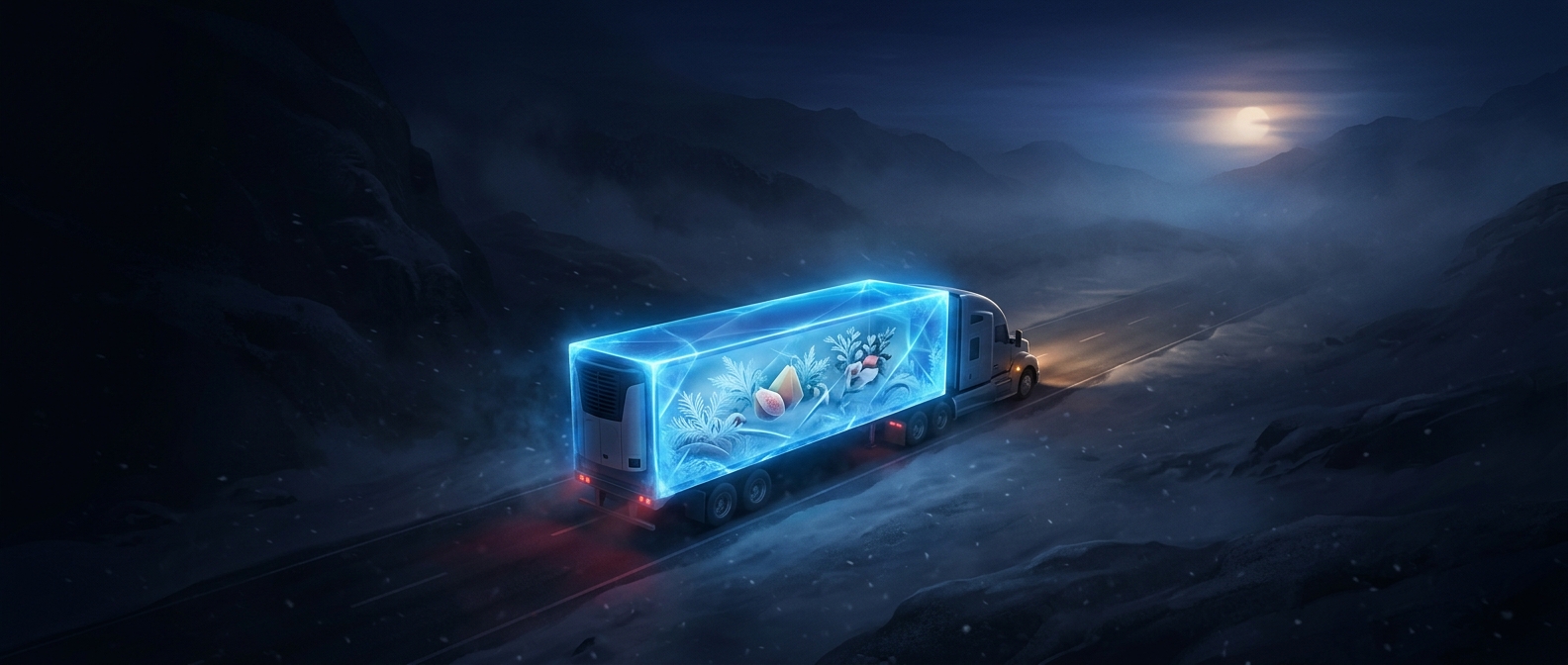
How a Reefer Trailer Holds Its Temperature
A refrigerated trailer, often called a reefer, is a moving insulated room. Its refrigeration unit removes heat from the air inside and releases it outside. Insulation slows heat flowing back through the walls, floor, and roof, so the unit can maintain a chosen temperature rather than constantly fighting the full outdoor conditions.
Cooling the Air Is Only Part of the Job
The unit circulates cooled air through the cargo space, but the trailer’s layout matters too. Air needs room to move around the load; tightly packed freight or blocked air channels can leave warm pockets even while the refrigeration system is running. Drivers and handlers therefore have to load goods in ways that preserve airflow, not just fit the greatest amount inside.
The system also has to manage heat entering through door openings and from the cargo itself. That is why refrigerated freight is generally loaded at the temperature it needs for transport: a reefer is designed mainly to hold conditions steady, not rapidly cool a warm load from the center outward.
Why the Set Temperature Matters
Different goods need different conditions, and the target is chosen for the cargo—not simply set as cold as possible. Fresh produce, for example, can be harmed by temperatures that are too low, while frozen products must remain below freezing. A steady interior helps protect quality across a trip that may cross very different outdoor climates.
The practical consequence is that a reefer’s performance depends on the whole chain: working refrigeration, insulated walls, unobstructed airflow, and careful loading. The trailer creates a controlled environment on the road, but the cargo still depends on people preserving that environment at every stop.