Why a Lowboy Trailer Has Two Deck Drops
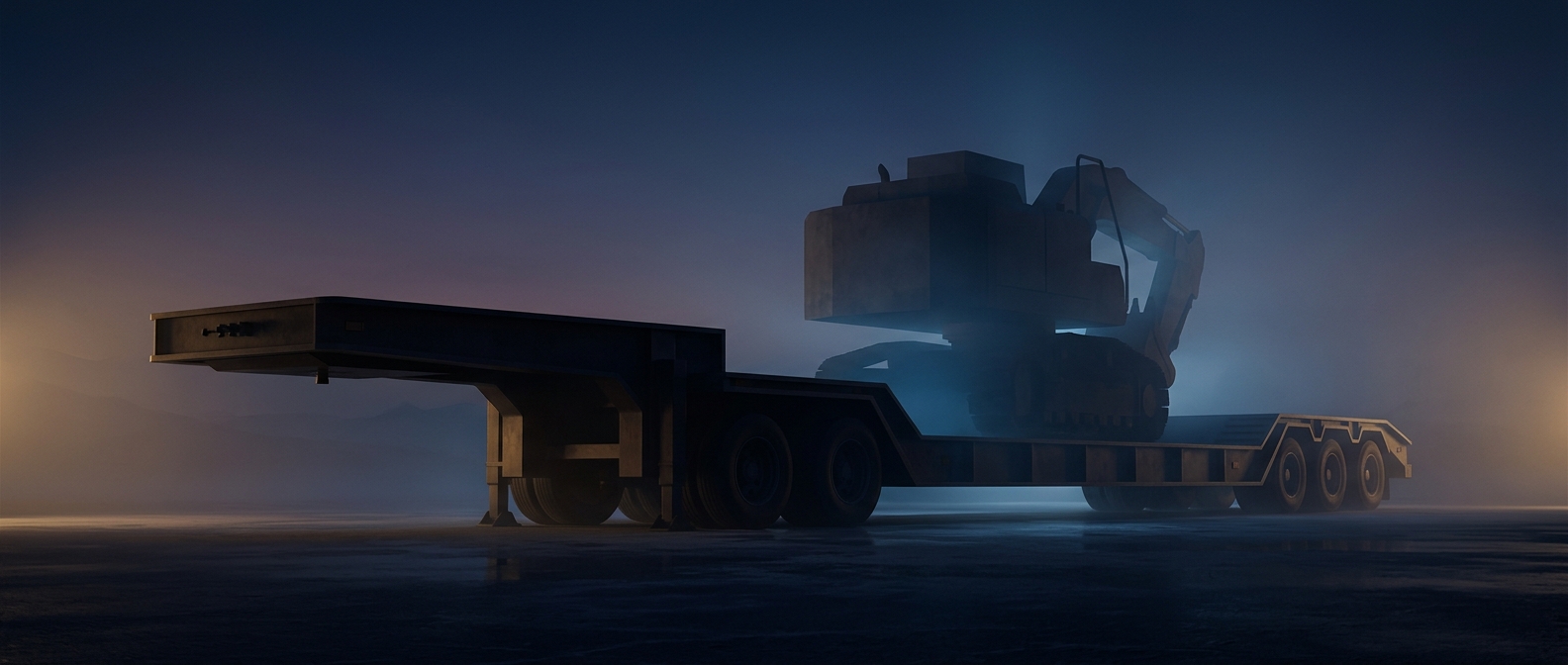
A lowboy’s low center section is a deliberate piece of geometry, not just a loading convenience. The deck drops behind the gooseneck—the raised front section that connects to the towing truck—then rises again above the wheel area. Those two changes in height create a recessed platform between them, where tall machinery or other oversized cargo can sit lower than it would on a flat trailer.
Lower Cargo Means More Clearance
Road clearance is shared by the trailer, its load, and whatever passes overhead. If cargo sits high above the road, a bridge or overhead structure can become an obstacle. Lowering the cargo platform reduces the load’s overall height without requiring the cargo itself to be shorter.
The raised sections have jobs to do: the front must connect to the truck, while the rear must pass over the wheels. The low middle is the space left between those requirements. That makes the deck shape a practical compromise between carrying tall loads and accommodating the trailer’s running gear.
The Shape Also Affects Loading
The low platform can make it easier to drive or position heavy equipment onto the trailer, depending on the trailer’s design and loading setup. But the useful clearance is not unlimited: the load still has to fit beneath route obstacles, and the trailer must carry it safely. The defining benefit is simple: by placing cargo in the dip, a lowboy can move a tall load with less height above the road—and more room beneath bridges.