How a Load Turns Into a Longer Rig
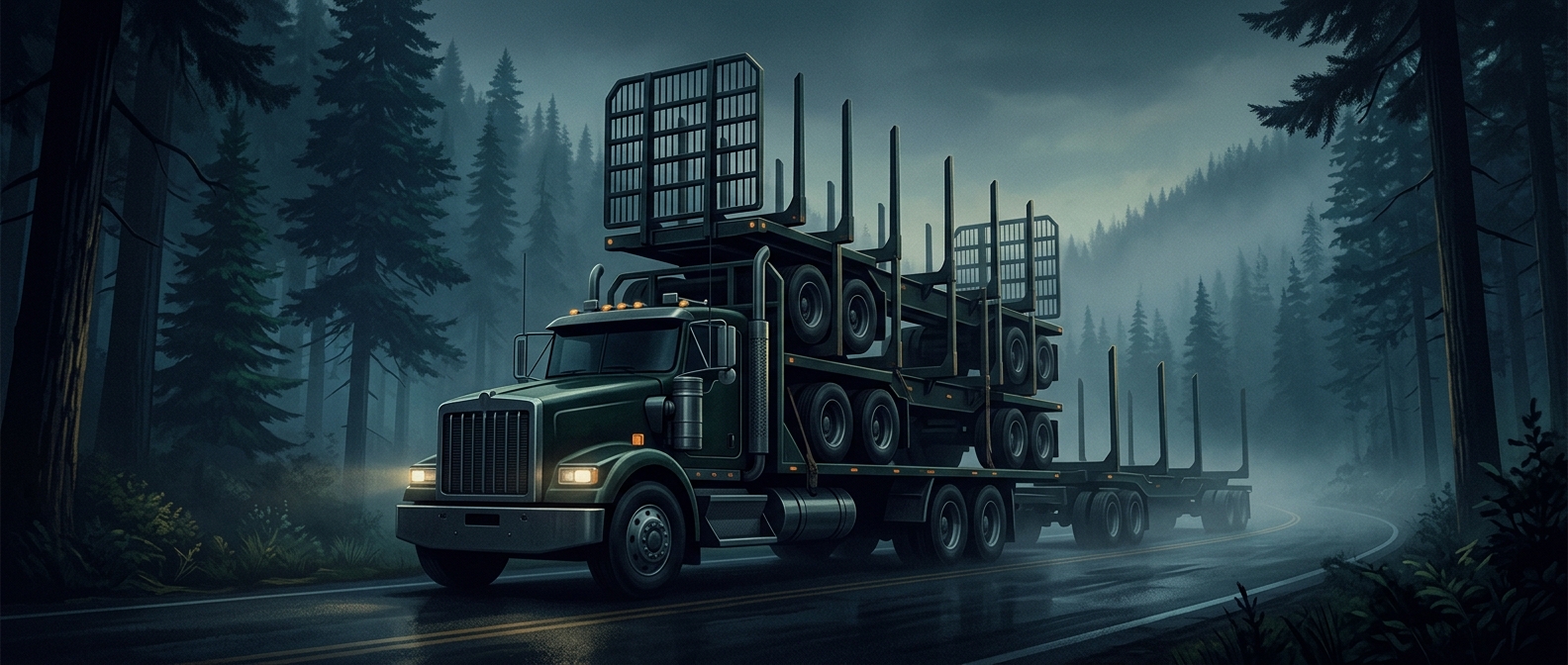
Long logs are awkward cargo: they can extend far beyond a truck’s own frame, and supporting them only at the front would leave the rear ends swinging and bouncing. Logging trucks solve this by using a pole trailer—a lightweight rear support connected to the truck by the logs themselves.
The truck carries the front ends of the logs. Their weight and length keep the trailer aligned behind it, while the trailer’s axle supports the back ends. The logs therefore do double duty: they are cargo, but also the long structural link between the two vehicles. This arrangement lets the rig accommodate timber longer than a conventional fixed trailer could readily handle.
Why the Trailer Folds Away
When the load is delivered, the trailer no longer has logs to connect it to the truck. Its long pole can fold or telescope up, allowing the empty trailer to be carried back rather than towed at full working length. That matters on forest roads, where a long, empty rig would be difficult to maneuver and could take up valuable space.
The design is a practical tradeoff: the truck must carry extra equipment on the return trip, but it avoids hauling a full-length trailer through tight, winding routes when there is no timber aboard. The same logs that demand a longer vehicle combination also provide the connection that makes the combination work.