A curtain turns the trailer’s side into a loading opening
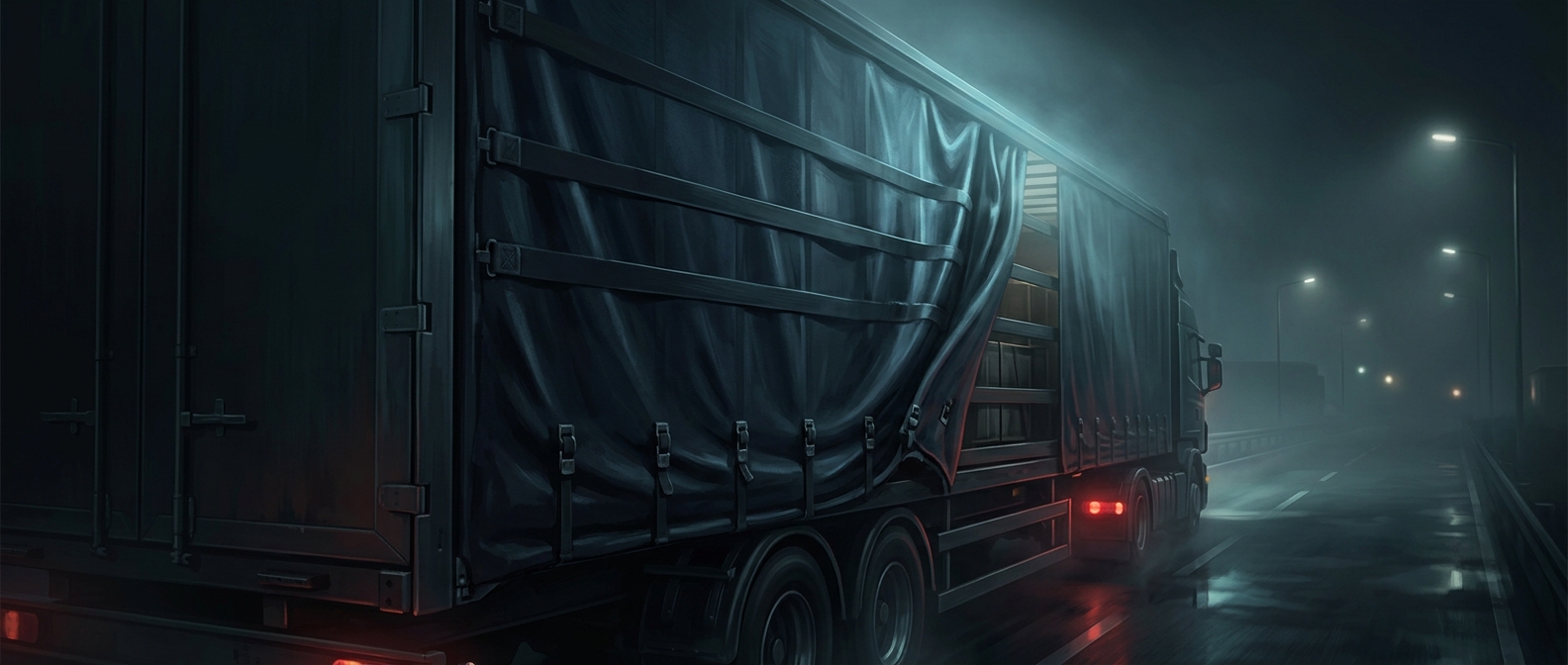
A curtain-sided trailer keeps a fixed roof and floor but replaces much of each rigid side wall with a reinforced, flexible sheet. The curtain runs along an overhead track, so it can be drawn toward the front or rear rather than swung outward. That lets a forklift approach cargo from the side along much of the trailer’s length, useful when a loading bay or yard has little room for a wide-opening door.
The sheet is more than a loose cover. Its edges and vertical straps are tensioned against the trailer frame, helping keep weather out and the curtain taut while the vehicle travels. To load, workers release the fastenings and pull the curtain back; afterward, they close it and tighten it again over the load.
The tarp is not the cargo restraint
The rigid frame carries the trailer’s structure, while the curtain provides a movable enclosure. Cargo still needs to be secured against sliding or shifting with suitable restraints. The curtain’s tension keeps the side closed; it should not be treated as a substitute for tie-downs or other load-securing equipment.
That division of labor is the design’s practical advantage: the trailer keeps the protection of an enclosed vehicle but can expose a broad side opening without requiring a heavy hinged wall and its swing space. A forklift can reach cargo from the side, then the flexible panel can close over the load for the journey.