A Roof That Moves Out of the Way
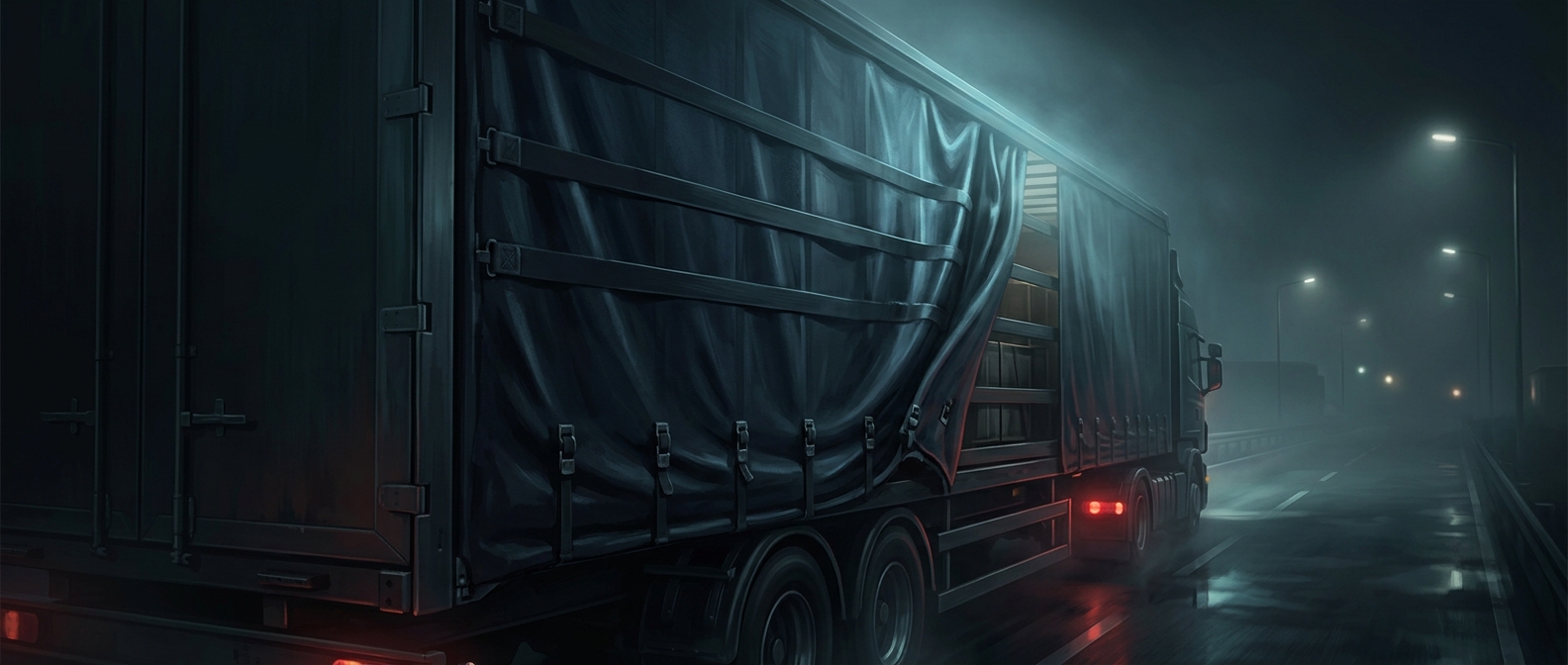
A conventional flatbed puts weather protection on the crew: someone must drape a tarp over the freight, pull it tight, and secure it around the load. A Conestoga shifts that work into the trailer’s structure. Its flexible cover is supported by sliding bows—arched crosspieces that travel along tracks on the trailer’s sides. Move the bows together and the cover gathers; spread them out and they support the tarp over the cargo.
That changes the loading sequence. With the cover retracted, workers can reach the deck from above or from the side, depending on the equipment and the freight. Once loading is finished, the frame carries the tarp across the load. The cover can be opened again when the cargo needs to be reached, rather than removed and handled as a separate sheet.
The Tradeoff: Flexible Access, Not a Hard-Sided Box
The design is useful when freight benefits from flatbed-style access but still needs a cover during transit. A forklift or crane can place cargo without threading it through a fixed trailer doorway, and the sliding frame can accommodate loads that would be awkward to tarp by hand.
The cover is not a rigid wall or roof. It provides a barrier against weather, but it does not make the trailer equivalent to a sealed van, and cargo still needs proper securement on the deck. The practical advantage is the combination: the trailer can expose its full loading space, then cover the freight without turning tarping into a separate manual operation.