Why the wheels are split between tractor and trailer
The layout reflects two different jobs. The tractor’s front axle steers, while its rear drive axles receive power from the engine and push the combination forward. The trailer’s axles carry much of the cargo’s weight and roll behind it; they are not normally driven by the tractor’s engine.
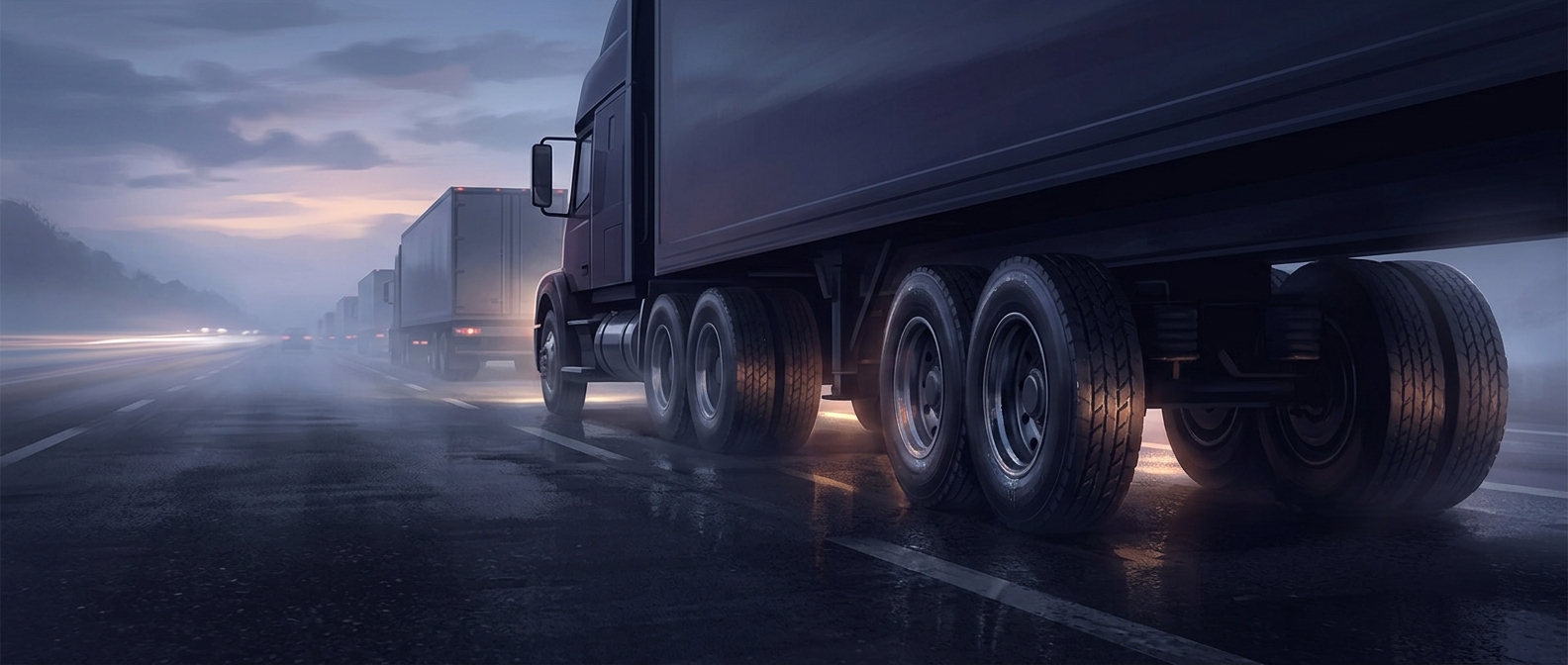
A standard U.S. five-axle rig puts two wheels on the steering axle and four on each of the other four axles. Those four-wheel groups use dual tires: two tires mounted side by side at each end of an axle. That arrangement creates the familiar count of 18.
What the extra tires do
Cargo weight presses down through the trailer frame onto its axles, then through the tires to the road. Spreading that load across more tires and axles reduces the burden on each contact patch—the small area where a tire meets pavement. It also helps the rig stay within limits on how much weight an axle can place on the road.
At the tractor’s drive axles, the paired tires provide more rubber in contact with the pavement. That helps the engine’s turning force reach the road without the tires slipping as easily, especially when the truck is starting or climbing. The steering axle has a different requirement: its two wheels need room to turn, so it does not use the same dual-tire arrangement.
A practical tradeoff
More tires mean more rolling resistance and more parts to inspect and maintain. But a heavy rig needs enough tire capacity and traction to move, stop, and distribute its load safely. The 18-wheel layout is therefore not just a familiar silhouette: it is a division of labor between steering, driving, and carrying freight.