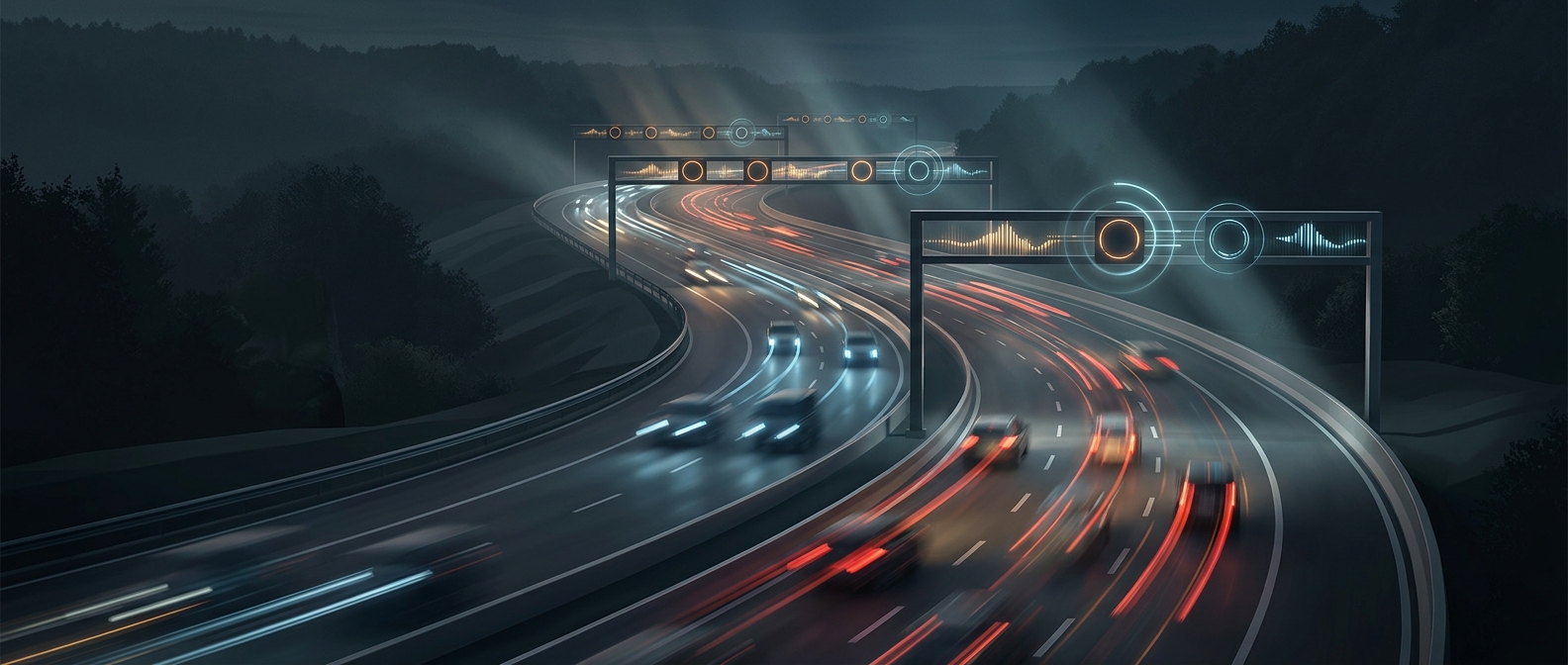
Why a Highway Can Be Posted for 85 mph
A high speed limit depends on more than the strength of the pavement. At highway speed, drivers need time and distance to see trouble, react, and stop. Road designers account for that with features such as long sight lines—the distance ahead that remains visible—and curves gentle enough to navigate without abrupt steering.
Speed also magnifies the consequences of small design choices. The force a vehicle needs to follow a curve rises rapidly with speed, so a broad, sweeping bend is less demanding than a tight one. And because a faster vehicle covers more ground before its driver can react, open views and predictable road geometry matter especially on a road posted for unusually fast travel.
A Design Limit, Not a Guarantee
Those features help explain why the limit can be higher on a purpose-built highway than on a road with frequent intersections, sharp turns, or nearby homes and businesses. They do not make every trip safe at the posted maximum: rain, traffic, visibility, vehicle condition, and driver attention can all change what speed is prudent.
The practical distinction is that a road’s design can make higher speeds more manageable, but it cannot remove the need to adjust to conditions. On this stretch, the open, predictable layout is part of the reason an 85-mph limit is possible; it is not a promise that 85 mph is always the right speed.