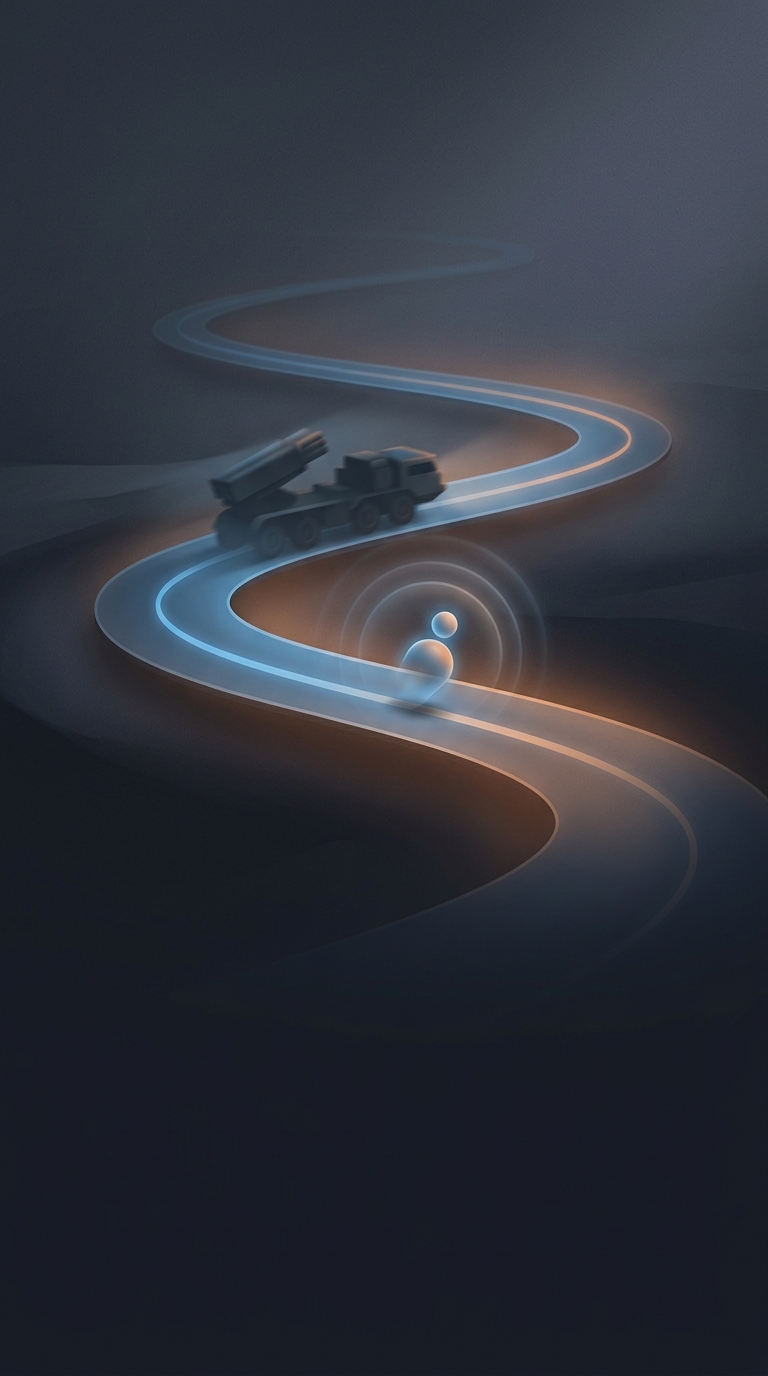
Why a Highway May Bend on Flat Ground
A gentle curve changes more than the direction of the car. It shifts the horizon and roadside landmarks across the windshield, and it calls for a small steering adjustment. That change can give a driver’s attention something new to register instead of the same distant view repeating mile after mile.
Drivers sometimes call a trance-like lapse on a monotonous road “highway hypnosis.” The phrase describes a familiar experience, not a special state that a curve can reliably switch off. A bend may briefly renew attention, but it cannot substitute for rest or careful driving.
Curves Are an Engineering Tradeoff
A highway’s path is shaped by practical constraints: the land, nearby buildings and property, drainage, construction costs, and the speed the road is meant to accommodate. Even flat country can present reasons to adjust the alignment. Engineers also design curves to fit the road’s speed and sight distance—the length of roadway a driver needs to see ahead to respond safely.
That means a bend may add variety to the view, but it is misleading to treat occasional curves on U.S. interstates as a standard feature deliberately inserted to cure boredom. Road geometry has to serve safe, predictable travel first. Curves that are too sharp or unexpected can demand more attention, not less.
The useful distinction is between a road that keeps the view from feeling perfectly static and a road feature that prevents drowsiness. A changing view can prompt a moment of renewed attention; it cannot keep a tired driver alert.