Why a Dragging Frame Can Beat Wheels
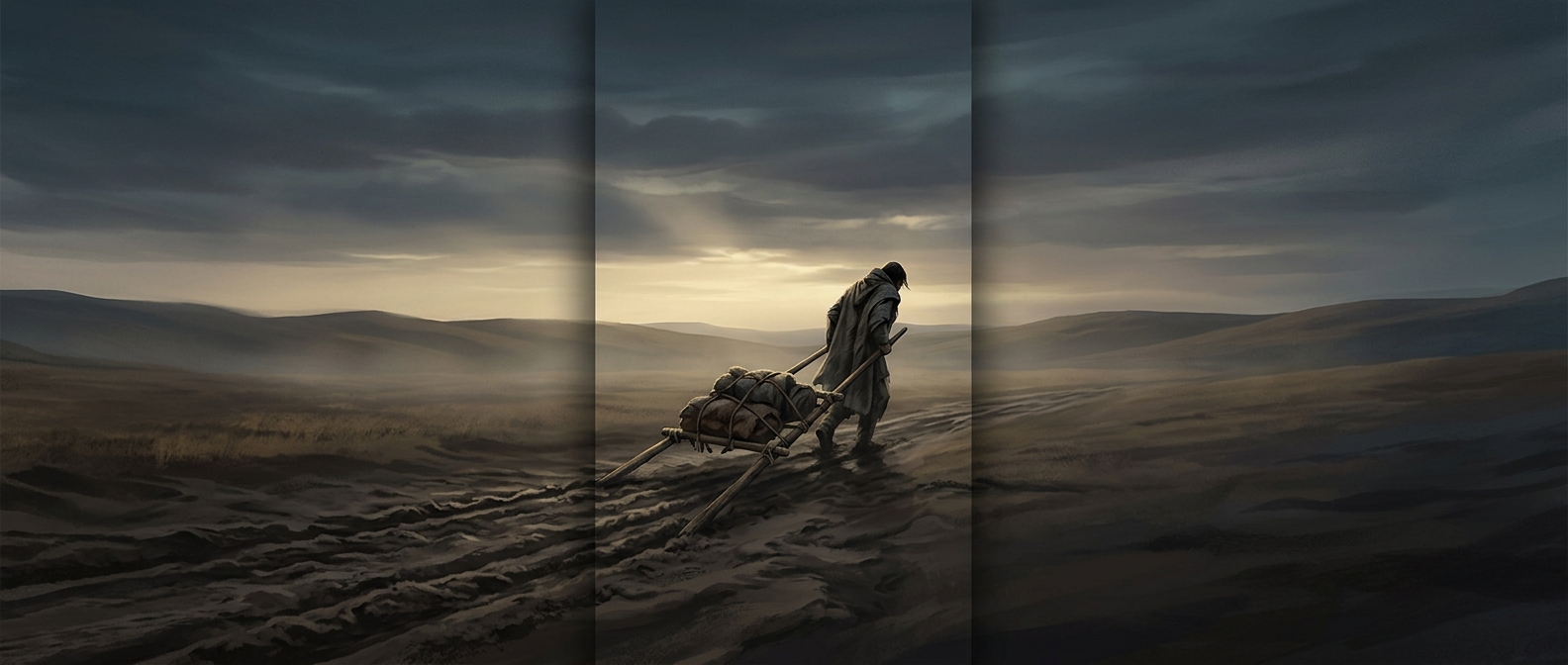
Wheels work best on firm, fairly smooth ground: a wheel must turn freely, and its axle and joints add parts that can break or jam. A travois avoids that machinery. Its long poles act as runners, while crosspieces or a flexible support hold the cargo above the ground. The frame can be pulled over uneven terrain without needing a road or a continuous track beneath it.
The poles also do more than carry weight. They spread the load along a wider footprint, helping keep it from sinking into soft ground, and their length gives the frame a stable shape behind the puller. The tradeoff is friction: dragging takes effort, and the poles can snag on obstacles. On rocky or heavily wooded ground, that can make progress slow.
A Simple Design With Few Failure Points
A travois can be assembled from long poles and bindings rather than a wheel-and-axle system. That makes it adaptable: the frame can be made to suit the load and the materials at hand, and it can be repaired without specialized hardware. Depending on the people and setting, it could be pulled by a person or an animal.
Its advantage was not that sliding is easier than rolling in every circumstance. It was that a dragging frame could carry useful cargo where wheels were impractical, while keeping the load off the ground. The same poles that moved the goods could also serve as structural material when the frame was taken apart.