Why cattle trains are divided into smaller spaces
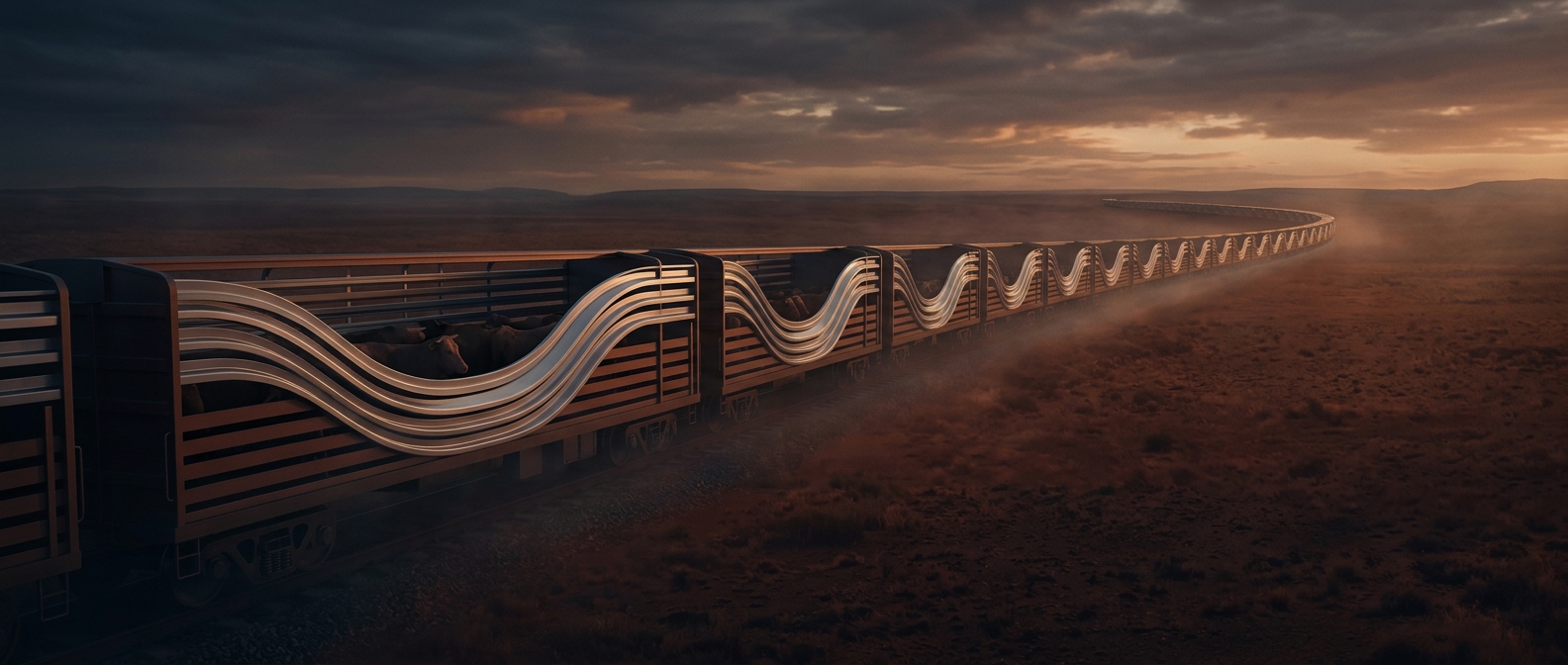
A rail carriage can sway from side to side and lurch as it starts or brakes. In a large, open pen, cattle have room to build up momentum before they hit a wall or one another. Partitions break that space into smaller compartments, limiting how far an animal can be thrown off balance and how much force it can gather in a fall.
The partitions also change how cattle brace themselves. With less open floor to cross, an animal is more likely to find a nearby boundary and steady itself rather than slide across the carriage. The goal is not to eliminate movement—the train and its passengers still move—but to make each jolt less likely to become a collision.
Grip matters as much as space
A partition cannot help much if hooves keep slipping. A non-slip floor gives cattle more traction, helping them stay upright as the carriage sways. That reduces the chance that a stumble turns into a fall, or that one animal falling knocks others off balance.
Together, the smaller compartments and grippier floor address two parts of the same problem: limiting how far cattle can move and helping them resist the movement that remains. The practical measure of a stable cattle car is whether the animals can ride out ordinary rail motion on their feet.