A trailer that changed its running gear
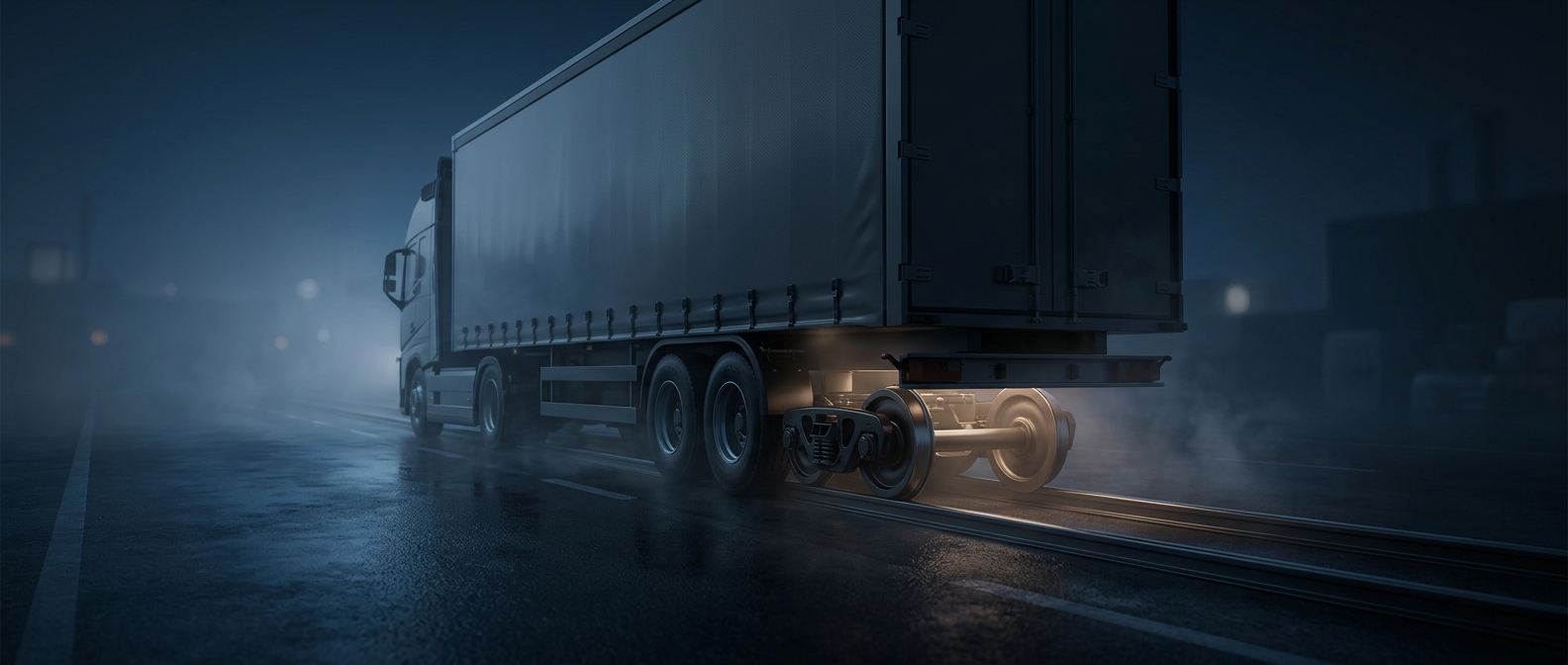
A RoadRailer was built to travel on two very different surfaces without shifting its freight. On a highway, its rubber tires carried the trailer as usual. For rail travel, rail-wheel assemblies were lowered into position so the trailer could roll on tracks; the road wheels were raised or otherwise taken out of service. The trailer itself—not a container lifted off it—made the change.
That distinction mattered at the handoff. In conventional intermodal shipping, a container or trailer must be transferred between a truck chassis and a railcar, usually with specialized lifting equipment. A RoadRailer could avoid that cargo transfer: the trailer was coupled into a train and carried on its own rail wheels. The freight stayed inside throughout.
The tradeoff behind the shortcut
The system saved a handling step, but it did not eliminate the need for rail infrastructure. The trailers still had to be assembled into a train, connected to one another, and moved between highway and rail operations. Their frames and wheel gear also had to do double duty: withstand road use while providing a safe, stable ride on rails.
That made RoadRailer a different answer to the same logistics problem faced by container trains. Instead of lifting freight onto a dedicated railcar, it adapted the road vehicle to the railway. Its cleverness was not that a truck could become a train, but that the load could remain on the same trailer while the wheels—and the route—changed.