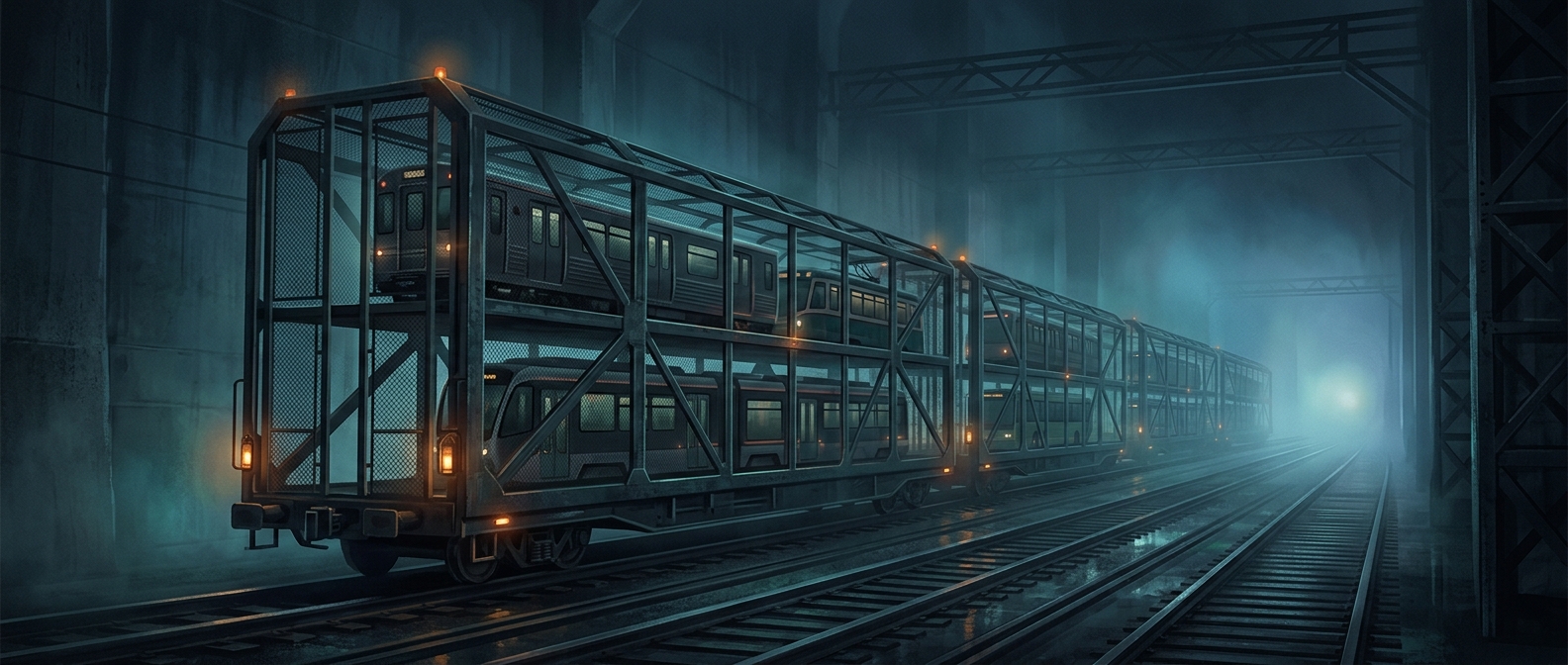
A moving garage built around a loading problem
An autorack has to do two jobs at once: carry vehicles in closely spaced rows and protect them during a long trip exposed to weather, dust, and whatever can be kicked up along the railway. Its height makes room for multiple decks, but that space is useful only if cars can be driven or guided onto the decks and secured for travel. The railcar is therefore designed as a purpose-built carrier, not simply a boxcar with vehicles packed inside.
Why the sides are covered—but not sealed
The outer panels create a barrier between the cars and the outside world. That matters for more than appearance: loose debris can damage paint and glass, while an open-sided load is easier to reach. Yet a fully airtight shell would be an awkward solution for a vehicle carrier. Openings allow air to pass through the car as the train moves, while the panels still block much of the direct exposure.
This balance is the key to the design. The enclosure is protective without being a sealed container, and the interior decks let the train carry several vehicles in the footprint of one railcar. What looks like a simple steel shell is really a compromise between access, protection, and airflow. The result lets a train move cars as a concentrated load while keeping each vehicle tucked out of ordinary view—and out of the path of many things that could strike it along the way.