A railway turned mourning into a public journey
In 1865, a train could carry Lincoln’s coffin across distances that would have made a continuous procession by road extraordinarily slow. The railway did more than transport the body: its route linked communities where people could gather as the funeral passed through their region. At scheduled stops, residents came to pay their respects, turning a long trip into a succession of local memorials.
The train itself became part of the ceremony
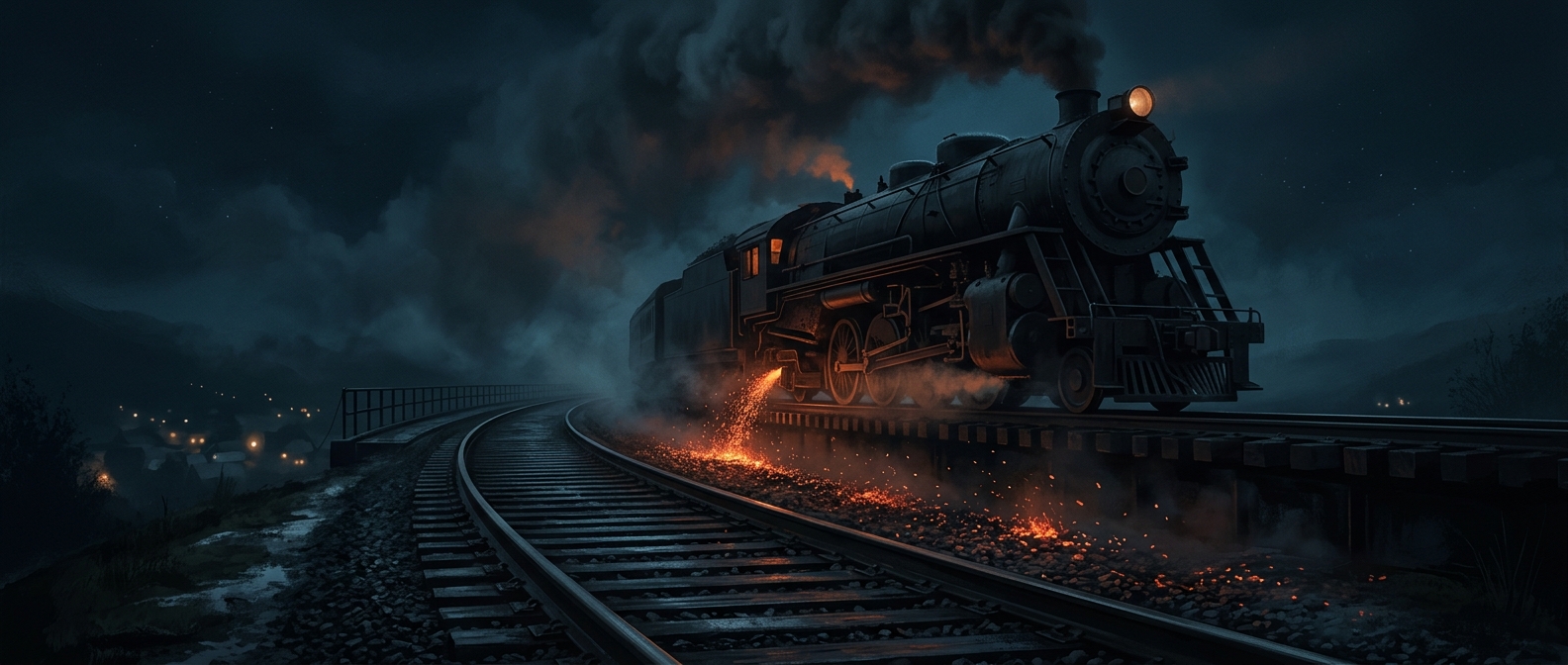
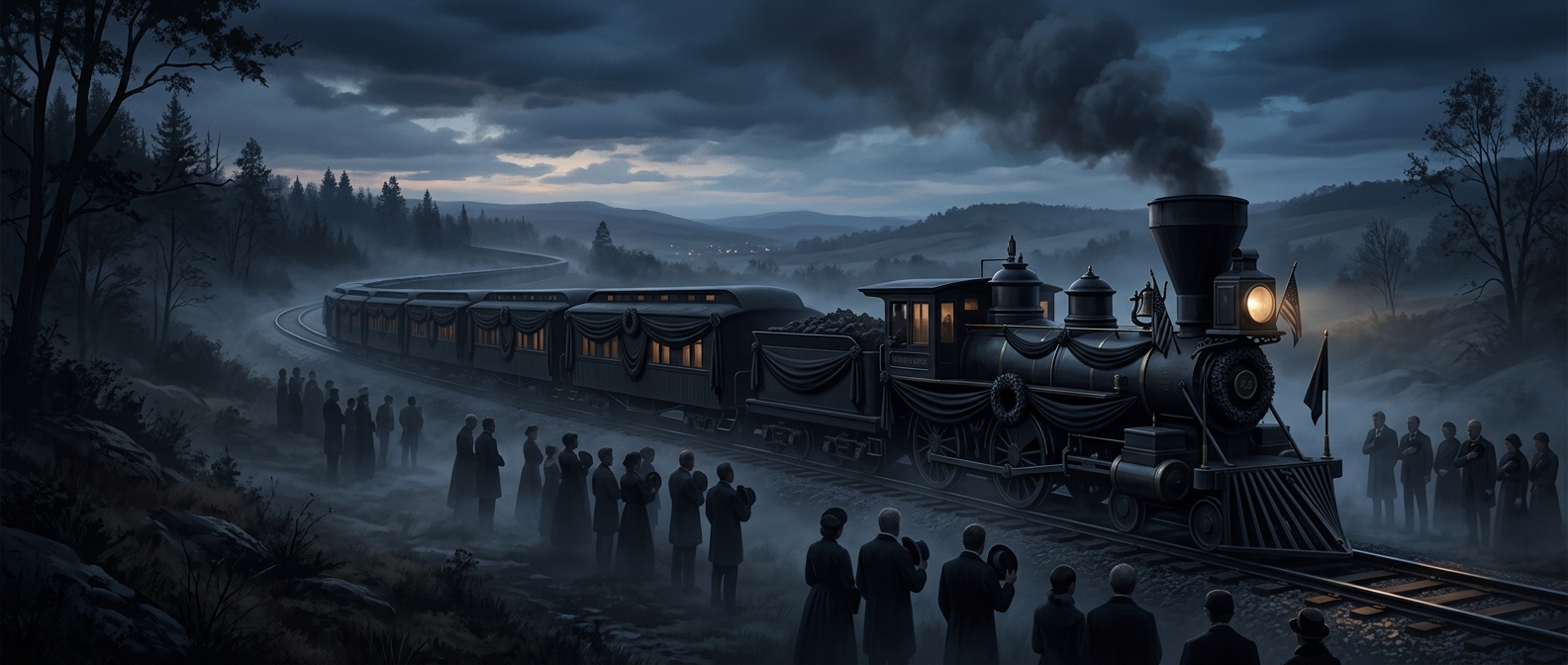
A locomotive was usually understood as working machinery, but draping it in mourning cloth changed how it appeared to people waiting at a station. The black decoration made the engine and its cars legible as a funeral procession, not an ordinary train. Because the locomotive led the way, its appearance announced the purpose of the journey before the coffin car came into view.
The railroad also imposed practical limits on the ceremony. A funeral train had to travel along existing tracks and stop where the route and railway operations allowed. Rather than bringing everyone to one place, the journey brought the memorial through a series of places—and crowds could gather at the points where the train paused.
A memorial measured in miles
That combination of machinery, route, and public stops gave the funeral a distinctive scale. The black train was both a vehicle moving a body toward burial in Springfield and a visible, traveling sign of national grief. For people who could not make the journey to Washington or Springfield, a station along the route offered a chance to witness the procession firsthand.