How Steam Becomes a Whistle
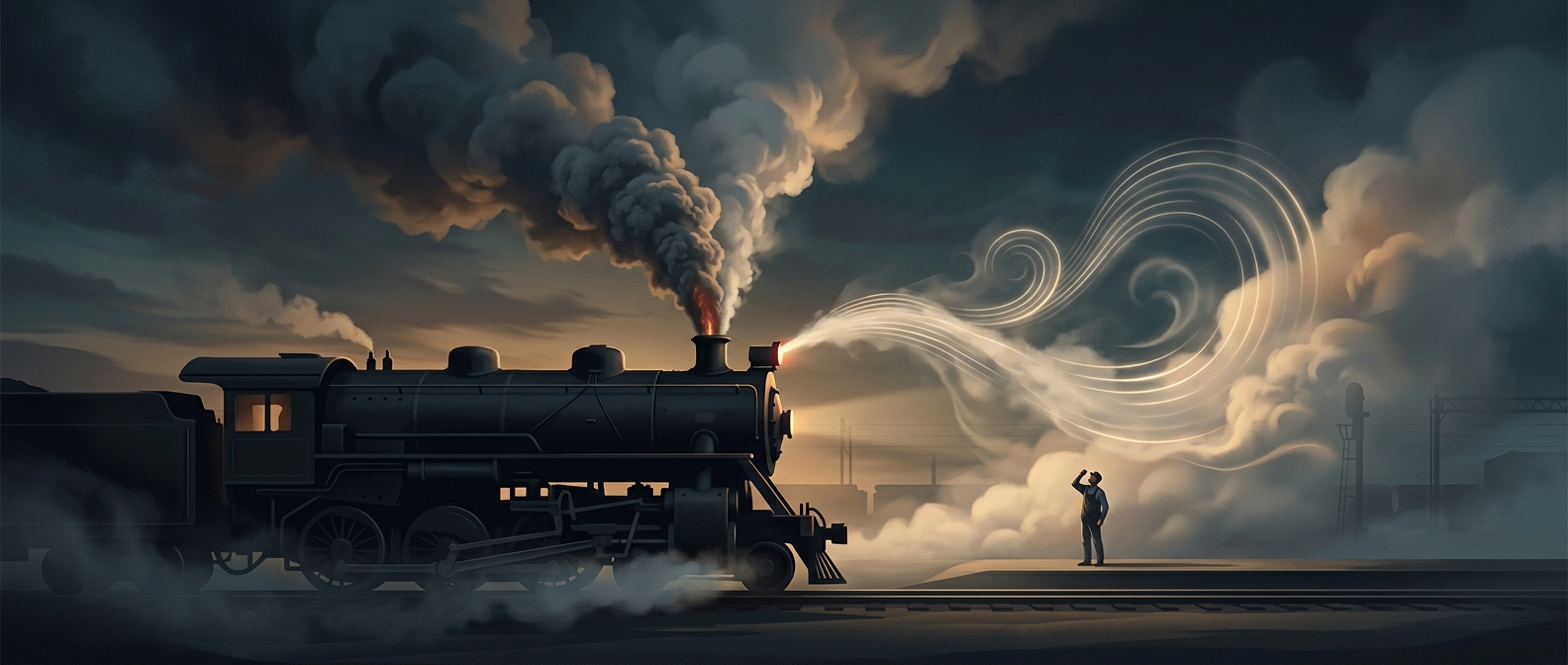
A locomotive whistle is a small sound-making instrument powered by the engine’s steam supply. When the engineer pulls the whistle cord or lever, a valve opens and lets steam rush through a narrow opening into the whistle’s chamber. The fast-moving jet repeatedly sets the air inside that chamber vibrating, producing a sustained tone; the escaping steam carries the sound outward.
The chamber’s shape and size help determine the note, much as the dimensions of a musical instrument affect its pitch. Many locomotive whistles use several chambers to produce a chord rather than a single note. More steam can make the sound stronger, but the whistle’s design—not simply the force of the engine—shapes its character.
A Warning Built Into the Power System
The whistle’s practical advantage is that it draws on a source the locomotive already has: pressurized steam. The engineer can use it to signal people near the tracks or communicate with railway workers, without relying on a separate sound-making machine. Its piercing quality helps the signal carry beyond the cab, even amid the noise of a working train.
That connection between motion and warning is literal: the same steam system that drives the locomotive can also make its presence unmistakable.