A private car had to fit the railroad’s system
A private railcar was more than a lavish room on wheels: it was a passenger vehicle built to run on a railway’s tracks and connect safely to its trains. Its owner could furnish it like a small residence, but the car still had to meet practical demands—clearing tunnels and platforms, coupling to locomotives and other cars, and handling the jolts and motion of a moving train.
That made the railroad part of the arrangement. A car could be attached to a regular passenger train, letting its occupants travel along an established route, or be moved as part of a specially arranged train. Either way, the owner could not simply choose any path or depart whenever convenient. The rail network, operating schedules and railroad’s willingness to haul the car set the limits.
Comfort depended on more than furniture
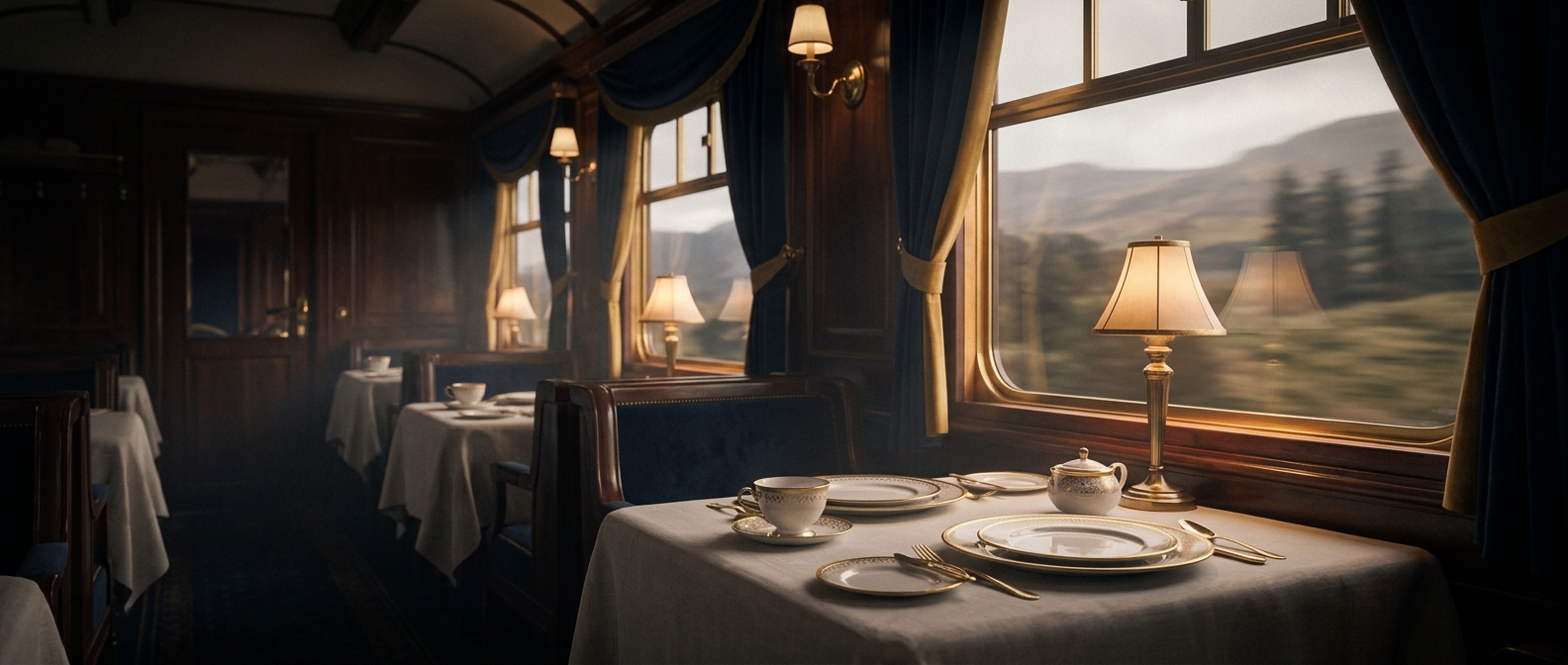
Bedrooms and lounges created private space, while a dining room made meals possible without relying on a station stop. But a home-like interior also had to work while moving: furnishings needed to stay secure, and the car needed practical arrangements for lighting, heating, water and food. The result was a compromise between domestic comfort and the hard requirements of railway travel.
Privacy was a major advantage. Instead of sharing a public coach, passengers could travel together in a controlled space and carry on with conversation, rest or work as the train moved. The car turned the journey itself into a private setting, but not into a self-contained vehicle: it remained dependent on locomotives, tracks, crews and schedules.
That dependence is the telling detail. A private railcar could bring the rooms of a mansion along for the ride, yet its freedom ended where the railroad’s timetable and network began.