How a Locomotive Turned Fuel Into Trackside Fire
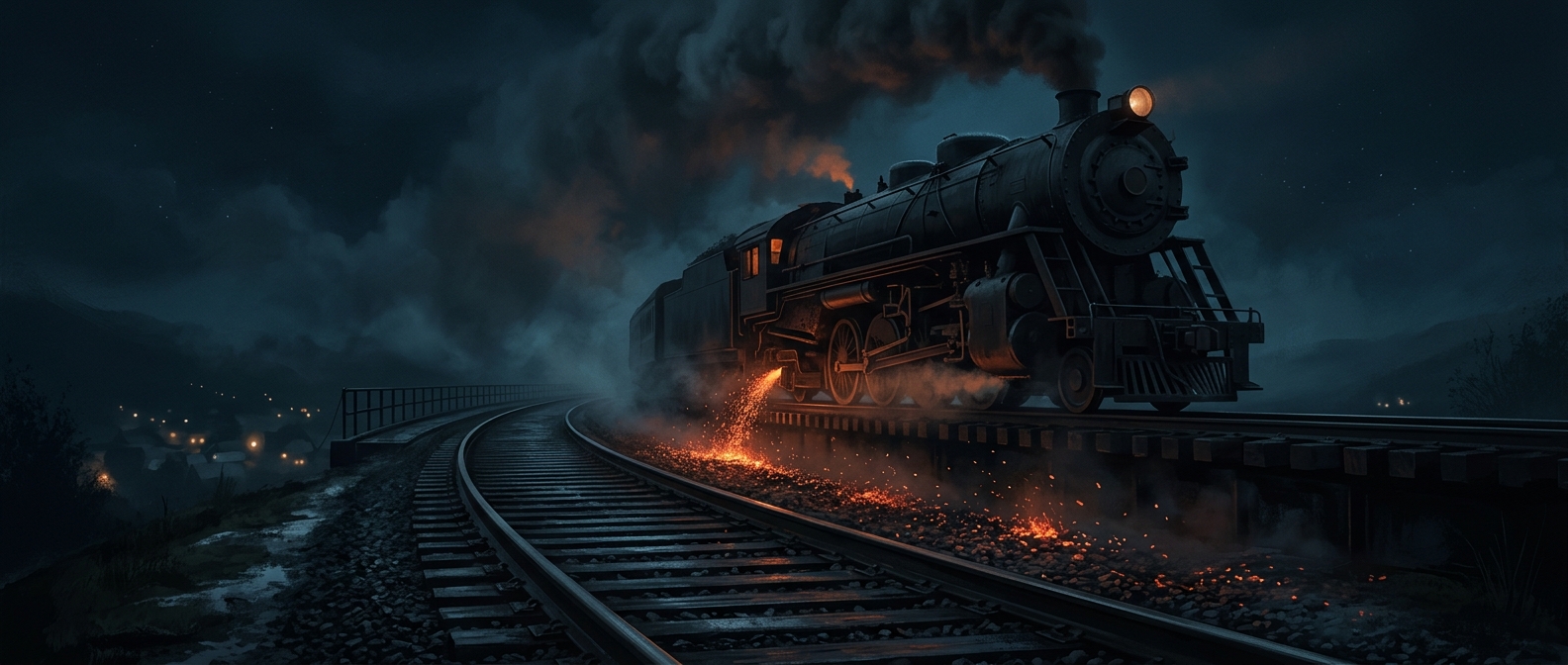
A steam engine’s exhaust did more than carry smoke away. Steam rushing up the chimney created a draft through the firebox, helping pull air through the burning fuel and keep the fire hot. That same flow could sweep tiny burning particles—sparks and cinders—up the stack and out into the open air.
Larger ash followed a different route. As coal or wood burned on the grate, residue fell into the ashpan beneath it. Some could escape when the ashpan was being emptied or if material shook loose as the locomotive moved. The particles did not have to remain visibly glowing for long: a hot cinder landing in dry vegetation could start a smoldering patch that later flared into flame.
The Railway Had to Manage the Fire It Made
Railways used devices such as spark arrestors to catch some of the larger embers before they left the chimney. But no screen could make a coal-fired locomotive entirely free of sparks, and ashpan handling remained another point where hot residue had to be controlled. Keeping grass and brush cut back along the track reduced the fuel available to anything that escaped.
That made fire prevention part of ordinary railway upkeep, not just emergency response. A train could pass in seconds, while a small ember might keep working in the dry ground beside the rails after the engine was gone. A line that looked clear from the cab could therefore still need inspection and maintenance behind the train.