A dining car had to steady more than the table
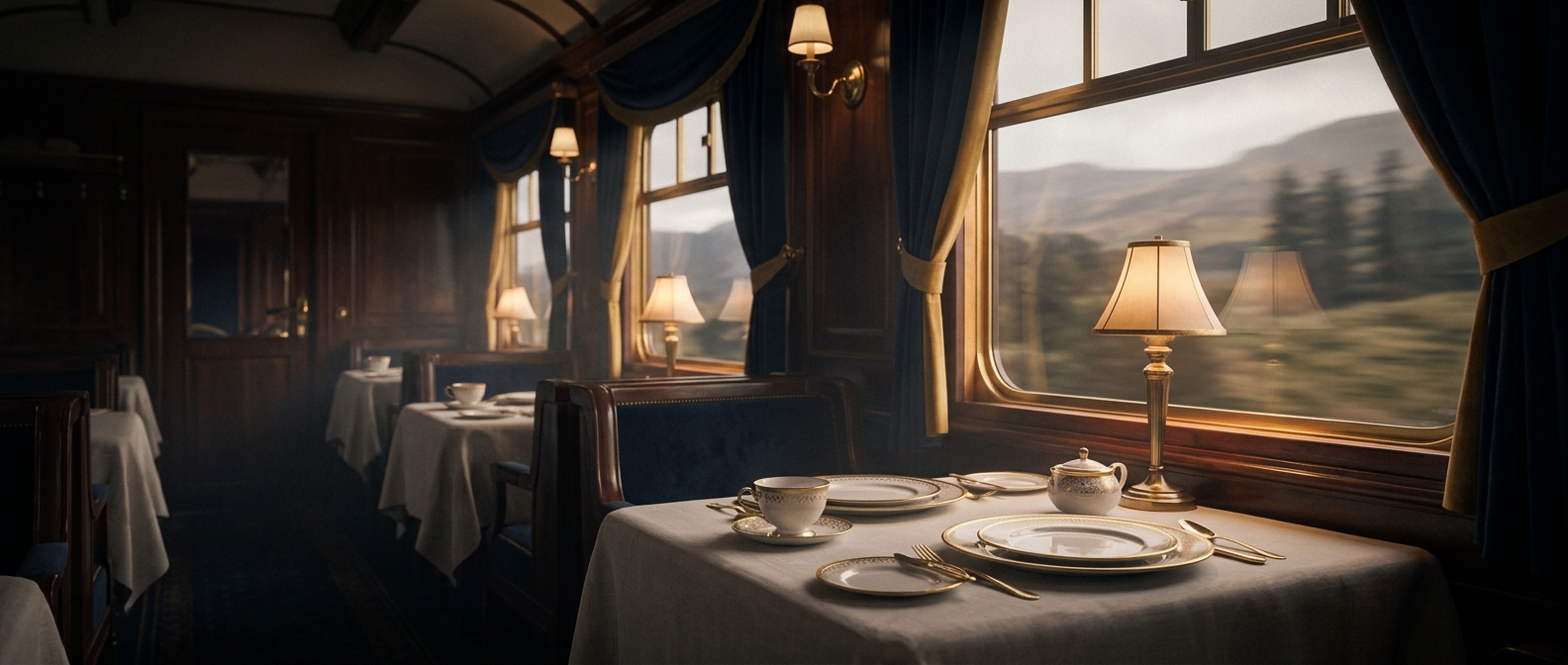
A train’s motion changes the work of serving a meal. Curves, track joints, and vibration can make dishes shift even when a dining car is moving smoothly. Fine china is especially vulnerable: plates that knock together can chip or break, and a loose stack can turn a small jolt into a costly mess.
Storage was part of the service
Padded compartments helped keep plates apart and softened the bumps transmitted through the car. The padding mattered, but so did organization: crockery had to be secured between meals and easy for staff to retrieve when the next course was ready. In a confined kitchen, storage could not simply protect dishes; it also had to keep service moving.
That arrangement reflects a basic railway tradeoff. The dining car offered the atmosphere of a formal restaurant, but it had to do so inside a vehicle that never quite stood still. The china’s protection was part of the infrastructure of the meal, as practical as a table or serving tray.
Luxury had to survive the journey
Fine china signaled care and ceremony, but its presence also created extra work: careful handling, secure storage, and the risk of replacing damaged pieces. The padded rack made that elegance workable in motion. A passenger saw a polished place setting; behind the scenes, the train had to keep each plate from meeting its neighbor at the next jolt.