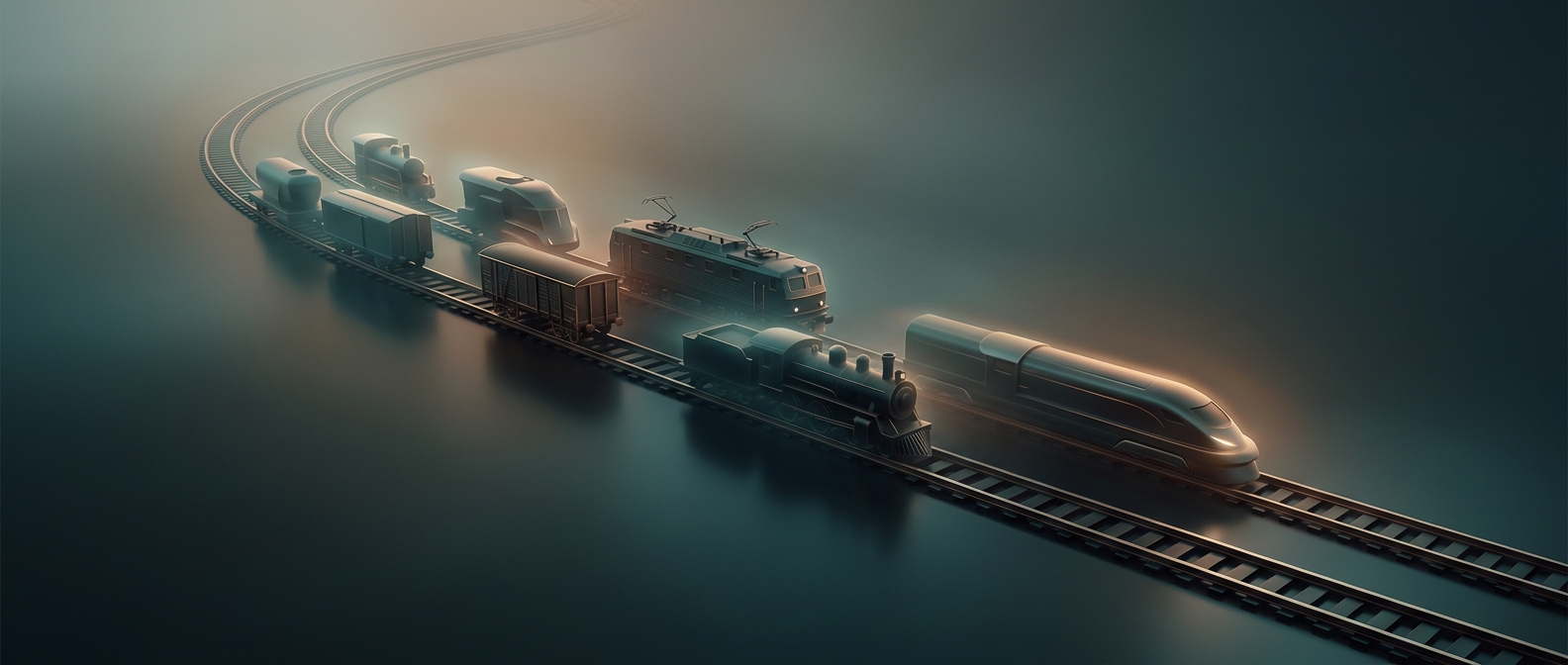
Why Railways Call Their Vehicles “Rolling Stock”
In railway language, stock means the fleet of equipment an operator has available, not shares in a company. “Rolling” distinguishes that fleet from the fixed plant it runs on. The phrase makes a practical division: one set of assets can be moved along the line; the other provides the route and systems that make movement possible.
A Useful Line for Planning and Maintenance
The distinction matters because the two sides pose different operational problems. A railway can have a clear track but still lack enough suitable cars to carry passengers or freight. Conversely, available vehicles cannot do much if the route is closed or its signals are out of service.
Operators therefore manage vehicles as a fleet: they must be assigned to services, inspected, repaired, and returned to use. Infrastructure is managed around the railway’s fixed network. Keeping the categories separate helps identify what is actually limiting a service and which equipment or work needs attention.
The Boundary Follows the Job
“Rolling stock” is a functional label, not simply a synonym for anything with wheels. It points to the vehicles that perform the railway’s transport work, while infrastructure describes the fixed system they depend on. That distinction turns a sprawling railway into two easier questions: What can run, and what can it run on?