A Stove Has to Work While the Car Moves
A wood stove can heat a passenger car because it turns fuel into radiant heat: the fire warms the stove’s metal body, which then warms nearby air and passengers. The flue—a pipe that carries smoke away—runs through the roof. As hot smoke rises inside it, it creates a draft that pulls combustion gases out of the car and helps draw fresh air toward the fire.
That simple arrangement becomes more demanding on a moving train. The stove and its fuel must stay secure through vibration and motion, while the flue must remain clear and safely separated from nearby materials. The car also needs enough airflow for the fire to burn and the smoke to leave rather than spill into the passenger space.
Warmth You Can Feel, Not Just Measure
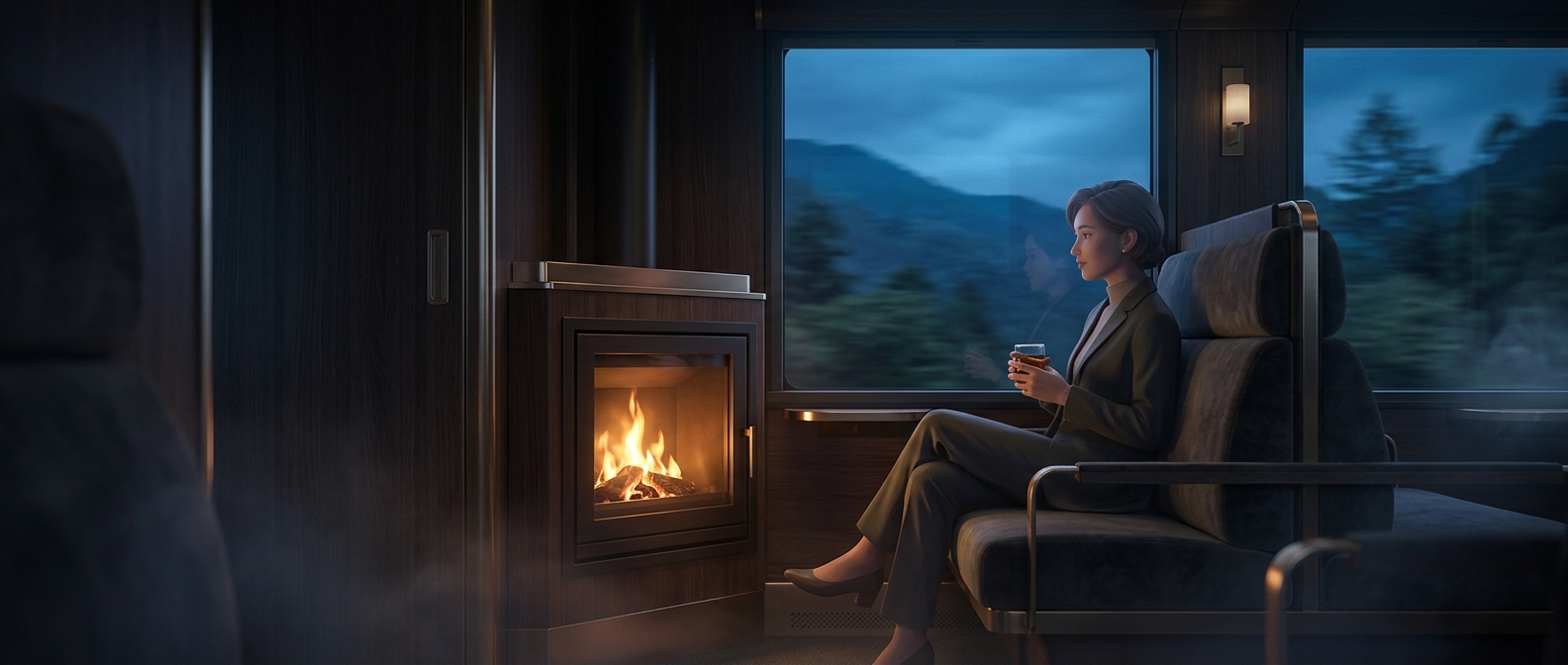
Unlike heat hidden in ducts, a stove gives off warmth directly from its hot surface. Passengers near it can feel that heat immediately, while the rest of the car warms as the air circulates. The result is a distinctive kind of comfort: a familiar household fire enclosed within a vehicle that keeps carrying its occupants through winter.
The striking engineering choice is not simply putting a fire on a train. It is making the stove’s chimney, airflow, and secure placement part of the passenger car itself—so the fire can keep warming riders while the scenery moves past.