Why a railway needs a country-scale workforce
A railway is not simply a collection of trains. It is a tightly connected operating system: trains use shared tracks, signals prevent conflicting movements, stations manage passengers and train handoffs, and maintenance crews keep the infrastructure safe to use. A delay or failure in one place can affect services farther along the line, so the work has to be coordinated across the network.
The work happens everywhere, all the time
Some railway jobs are visible—drivers, guards, station staff. Others happen out of sight: teams inspect rails and bridges, repair signaling equipment, maintain locomotives and carriages, and plan schedules and freight movements. These tasks are spread across a vast geography, but they must fit together. Track repairs, for example, need to be arranged around train movements; signals and operating staff must then handle the route safely when service resumes.
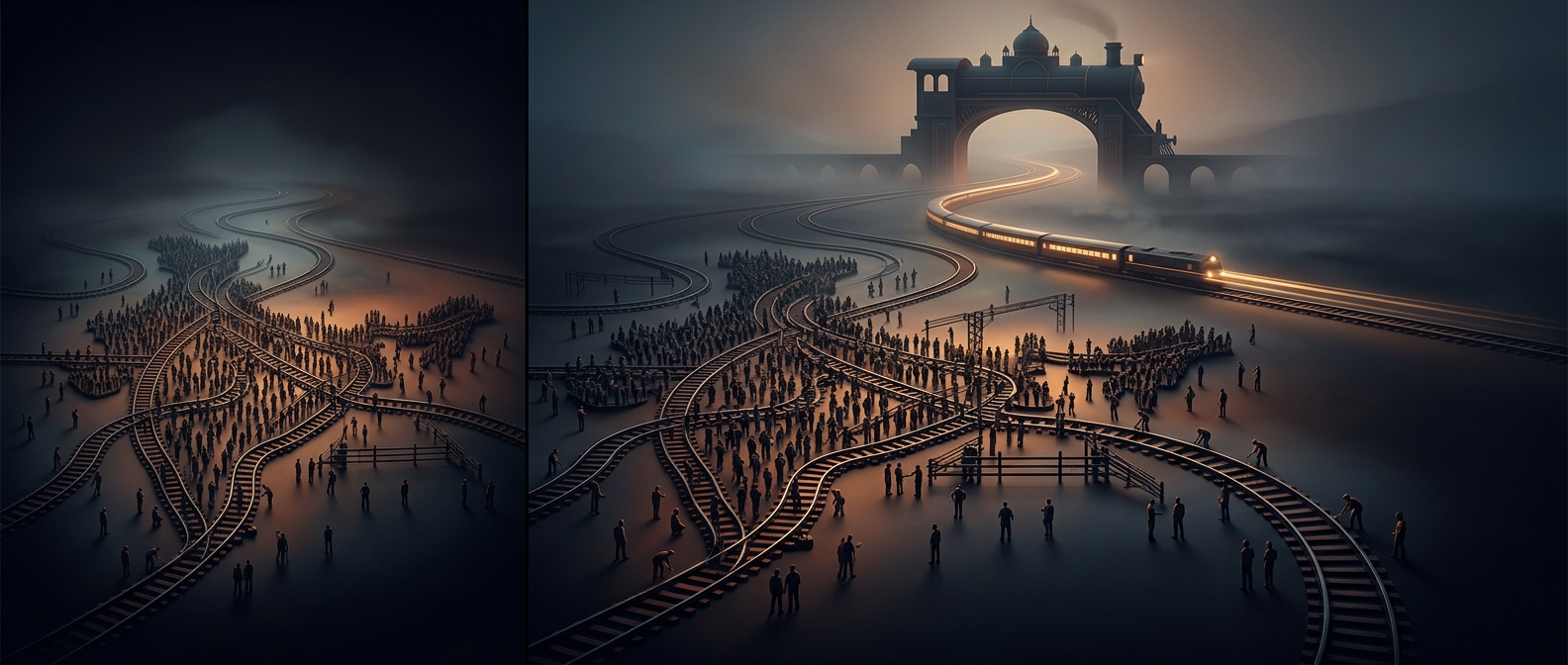
That combination of breadth and constant coordination helps explain why the railway’s workforce can be comparable in scale to the populations of some countries. The number reflects not one kind of job, but the many layers needed to keep trains moving across a national network.
A timetable is a shared commitment
Every scheduled service depends on people in different roles doing their part in sequence. The timetable is therefore more than a list of departure times: it is the plan that connects train crews, stations, signals, track access, and maintenance. When the network is large, keeping that plan workable requires a workforce distributed across the routes—not just at headquarters or in the cab of a train.