Why the Smoke Looked Like a Threat
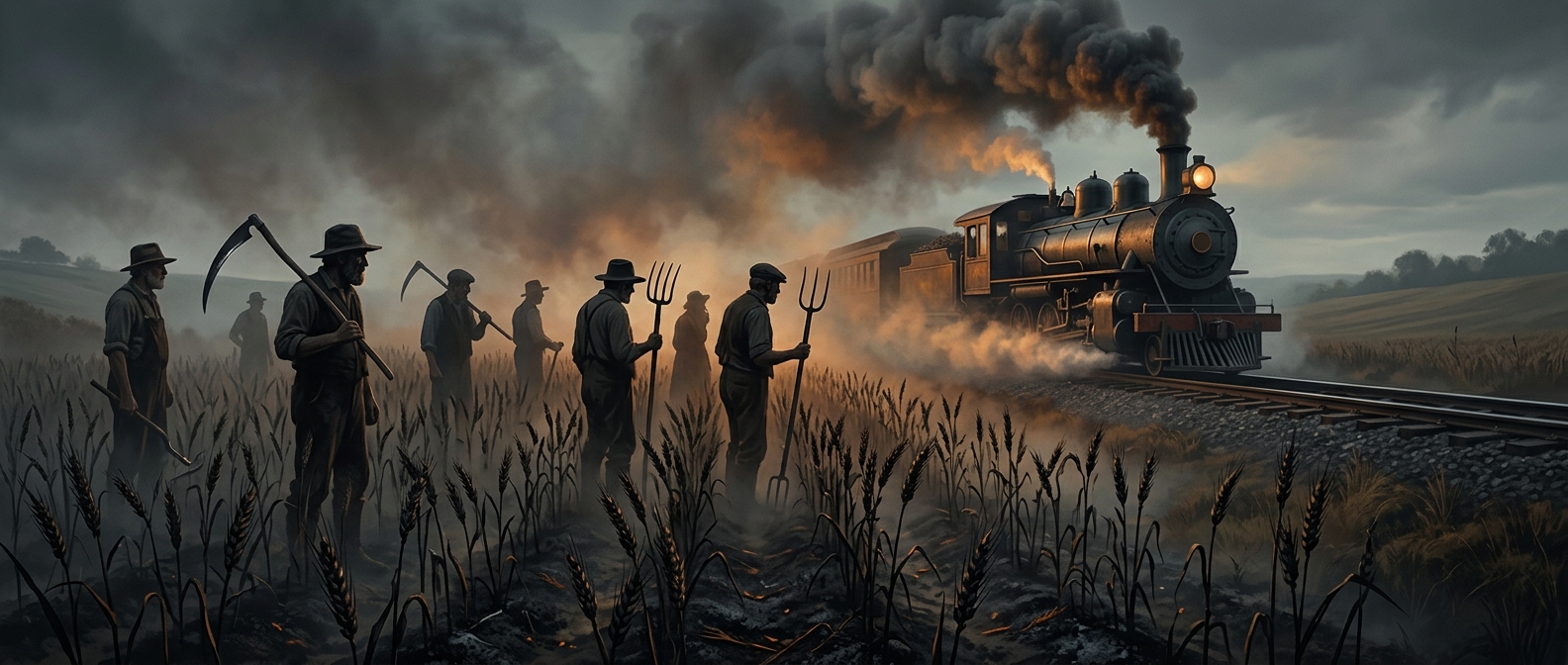
A coal-fired locomotive did not keep its combustion by-products neatly above the tracks. Smoke carried fine soot that could drift onto nearby fields and settle on leaves, fruit, or buildings. A visible coating was an immediate sign of exposure, even when its effect on a particular crop was hard to judge. For farmers whose livelihoods depended on clean, healthy harvests, the railway’s plume made a new industrial risk tangible.
Sparks Were a More Direct Danger
The smoke was only part of the worry. Burning coal could send sparks or hot cinders out of a locomotive, and a small ember landing in dry vegetation could start a fire. Fields near a line therefore faced a hazard that varied with conditions: dry grass and crops made sparks more consequential, while wind could carry both soot and embers beyond the railway boundary.
That made the dispute about more than appearances. Railways offered faster transport for farm goods, but the tracks also brought a machine whose exhaust and fire risk crossed property lines. Farmers had reason to ask who would bear the cost if a crop or field was damaged.
A Plume Became a Public-Relations Problem
Steam locomotives announced themselves with smoke, so their impact was hard to miss. That visibility could make fears spread as quickly as the plume itself, especially when the railway was new and its effects on nearby land were uncertain. The industry faced a practical challenge as well as a reputational one: it had to show that the benefits of rail travel did not come at farmers’ expense.
The striking image of a train passing a field was therefore also a reminder of the bargain railways asked communities to accept—faster connections in exchange for living beside the consequences of burning coal.