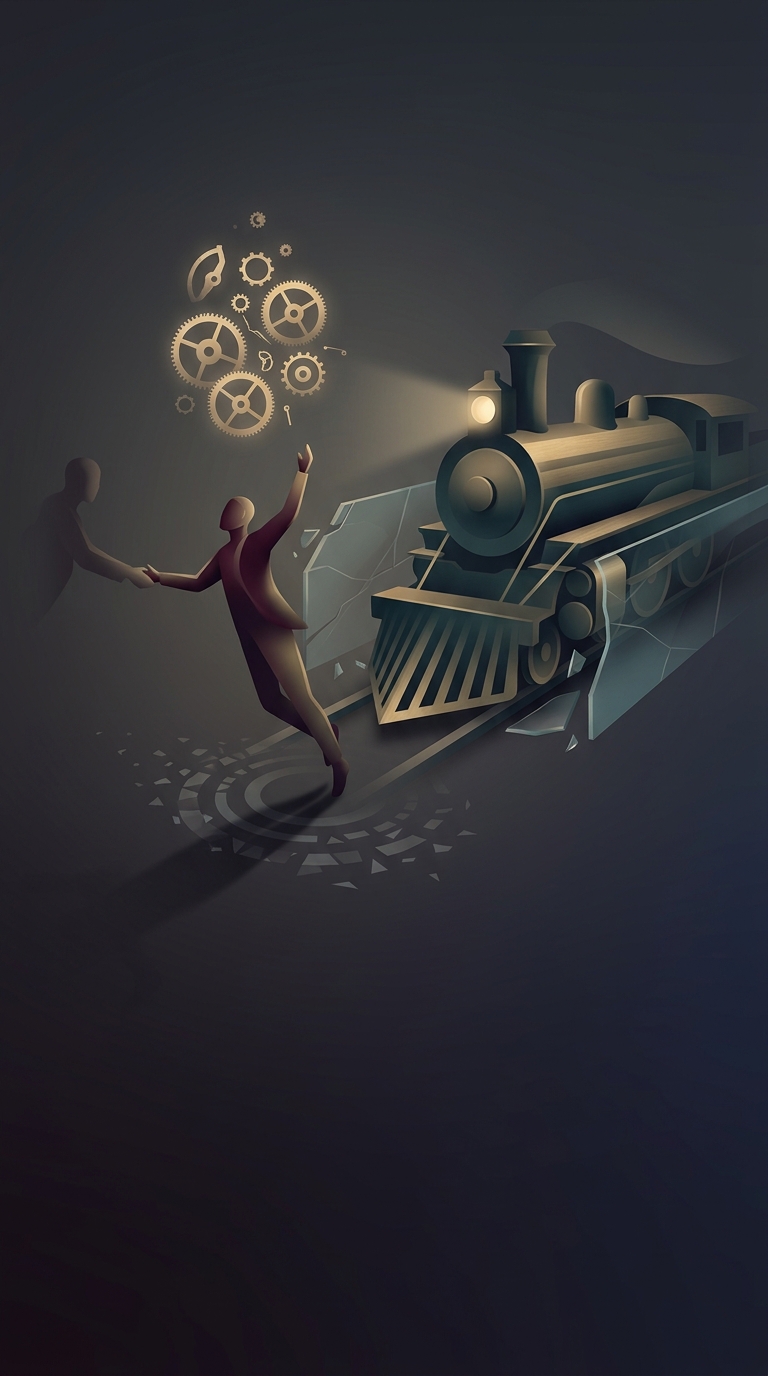
A railway opening where the tracks still felt like public ground
When the Liverpool and Manchester Railway opened in 1830, its tracks were not yet understood by everyone as a sealed-off corridor for fast-moving machines. The ceremony drew dignitaries and spectators close to the line, where people could watch the trains and mingle. That setting brought an old habit—walking across open ground—into conflict with a new danger: a locomotive approaching at speed.
William Huskisson, a member of Parliament, was among the guests. During the ceremony, he stepped onto the track as a locomotive came toward him. He was struck and died later that day. The accident made him the first railway passenger casualty to receive widespread public attention, though railway workers had already been killed in earlier accidents.
The danger was not speed alone
Early railway travel demanded new ways of judging distance and motion. A large locomotive could appear to approach slowly, while its mass and momentum made it impossible to stop as quickly as a person might expect. A track that looked like a place to stand was, in fact, a path a train could not leave and could not instantly clear.
The opening-day crowd also created a problem that later railway operations would have to manage: people near the rails could not safely treat a working line as ordinary public space. Huskisson’s death became a vivid warning of the difference between watching a railway and moving through one. The new technology had arrived; the habits and safeguards needed around it had not yet caught up.