A Warning Has to Reach Beyond the Tracks
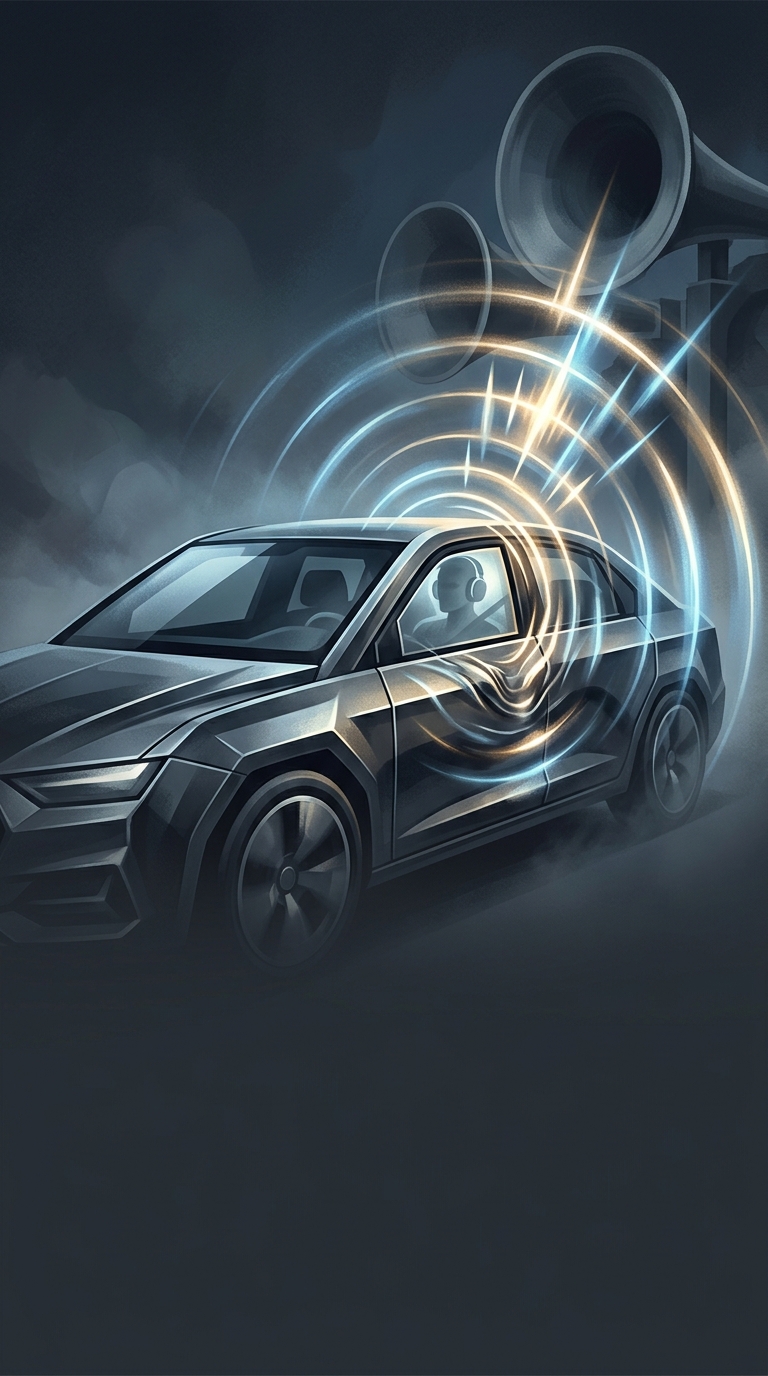
A crossing signal warns people who are already near the road. A train horn has a harder job: its sound must reach drivers who may be approaching, listening to music, or sealed inside a car with the windows closed. Buildings, road noise, and the vehicle itself can all soften a warning before it reaches the person who needs to hear it.
That is why U.S. rules set a minimum loudness for train horns, rather than leaving the choice entirely to each railroad. The sound is intended to carry across the surrounding noise and give a driver another chance to notice the crossing before the train arrives. Federal rules generally require a horn sequence to begin shortly before a train enters a public crossing; the familiar pattern uses long and short blasts, with the final blast continuing until the train reaches the crossing.
The Train Cannot Make a Last-Second Correction
A car can brake sharply or steer around an obstacle. A freight train cannot. Its steel wheels have limited grip on the rails, and its weight is spread across a long line of cars. Even after the engineer applies the brakes, the train needs substantial distance to slow down. By the time a driver sees a train and realizes a crossing is blocked, there may be no way for the engineer to stop in time.
The horn is therefore not a substitute for the gates, bells, and flashing lights. It is a separate warning that can reach farther and may still be heard when a driver has not noticed the signals. Its volume reflects the stakes: the warning must arrive early enough to matter, because the train has almost no ability to dodge.