How a Water Slide Keeps a Rider Moving
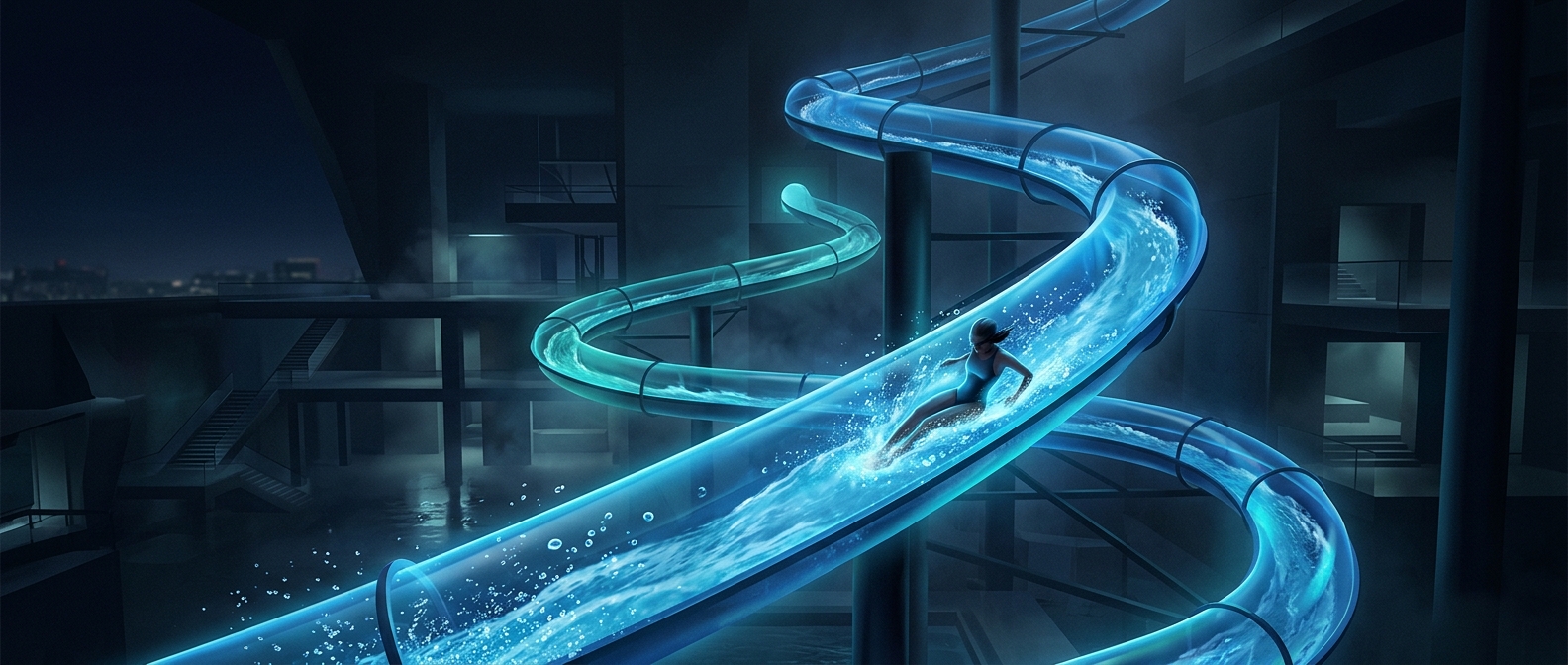
At the top of a slide, a rider has stored gravitational energy: height that can be converted into motion. As the rider descends, gravity pulls them along the sloping tube. A stream of water running beneath and around the rider reduces direct contact with the slide’s surface, so less energy is lost to rubbing and heat.
The water is not simply a lubricant sitting still. It flows downhill with the rider, helping carry them through the course. It cannot erase friction or guarantee a constant speed; the rider still slows when the tube is flatter or when contact with the walls resists motion.
What the Turns Do
A bend redirects the rider rather than providing the force that keeps the ride going. To follow a curve, the rider must be pushed inward. The tube’s wall supplies that push as the rider presses against it, while gravity and the slope continue to drive the descent. A tighter turn demands a stronger change in direction, which is why bends have to be shaped and spaced so riders can pass through them without the tube abruptly stopping their momentum.
The water helps make those changes smoother, but it does not make the ride frictionless. The slide works by balancing a downhill pull, a moving layer of water, and walls that guide the rider around each curve. That balance is what lets a winding tube redirect a person without turning every bend into a sudden stop.