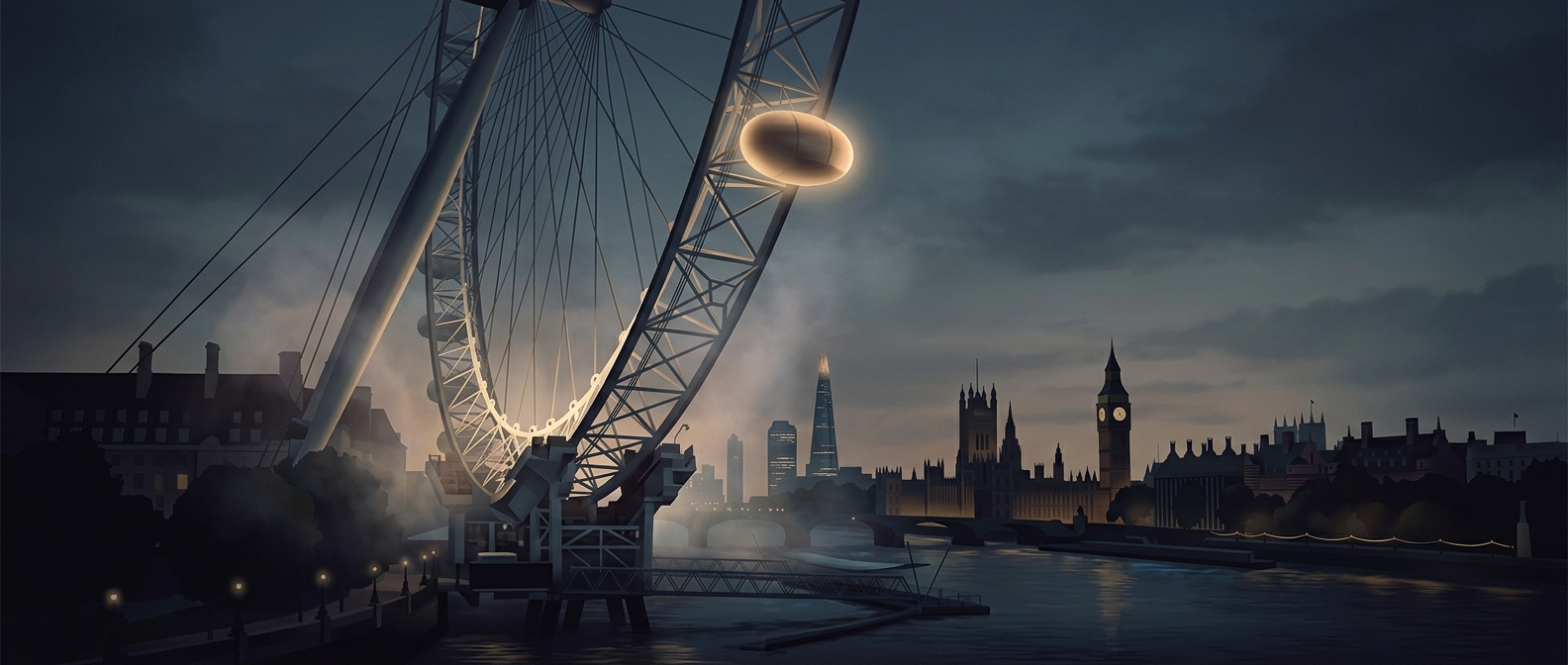
How the London Eye carries its weight from one side
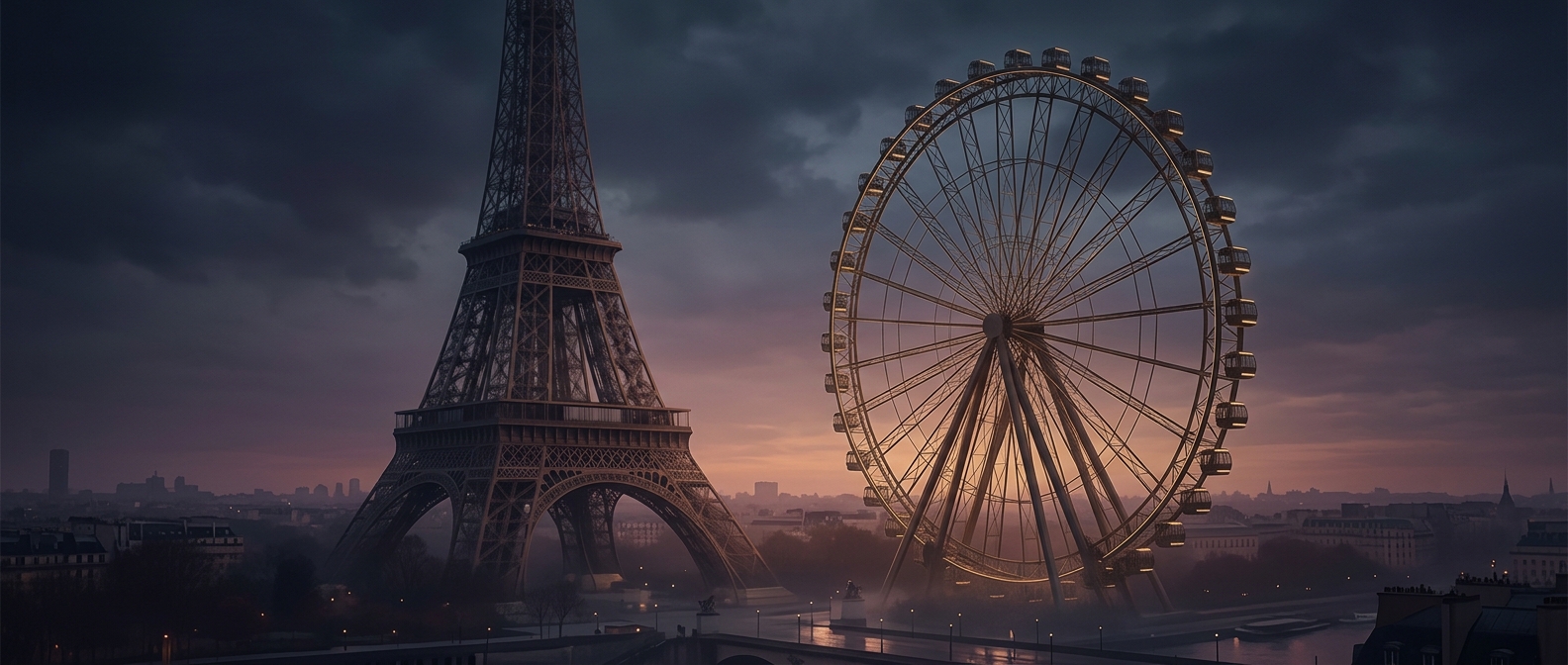
A cantilever is a structure that projects outward while being held up from one side, like a diving board. The London Eye’s wheel extends away from its A-frame support, so the space on the other side remains clear. But the wheel is not simply hanging from the frame: its load travels from the rim through the wheel’s tensioned cables to the central hub, then through the axle and support into the foundations.
Those cables work much like the spokes of a bicycle wheel. Kept under tension, they connect the rim to the hub and help the wheel hold its shape without a solid, heavy disk. The A-frame must carry the resulting forces while also allowing the wheel to turn.
A moving load, not just a static structure
The passenger capsules are spaced around the rim, so their weight changes position as the wheel rotates. A capsule at the top pulls on the structure differently from one near the bottom; the wheel and its supports must handle those changing loads as well as wind and the weight of the wheel itself. The hub and cables spread those forces through the structure rather than leaving one section of rim to bear them alone.
That arrangement makes the open side more than a visual flourish: it is the result of directing the wheel’s loads back to a support concentrated on the other side. The vast circle appears to float beside the frame, but every turn depends on forces being carried through a carefully connected path from rim to foundation.