Why a Park Train Needs Room to Turn
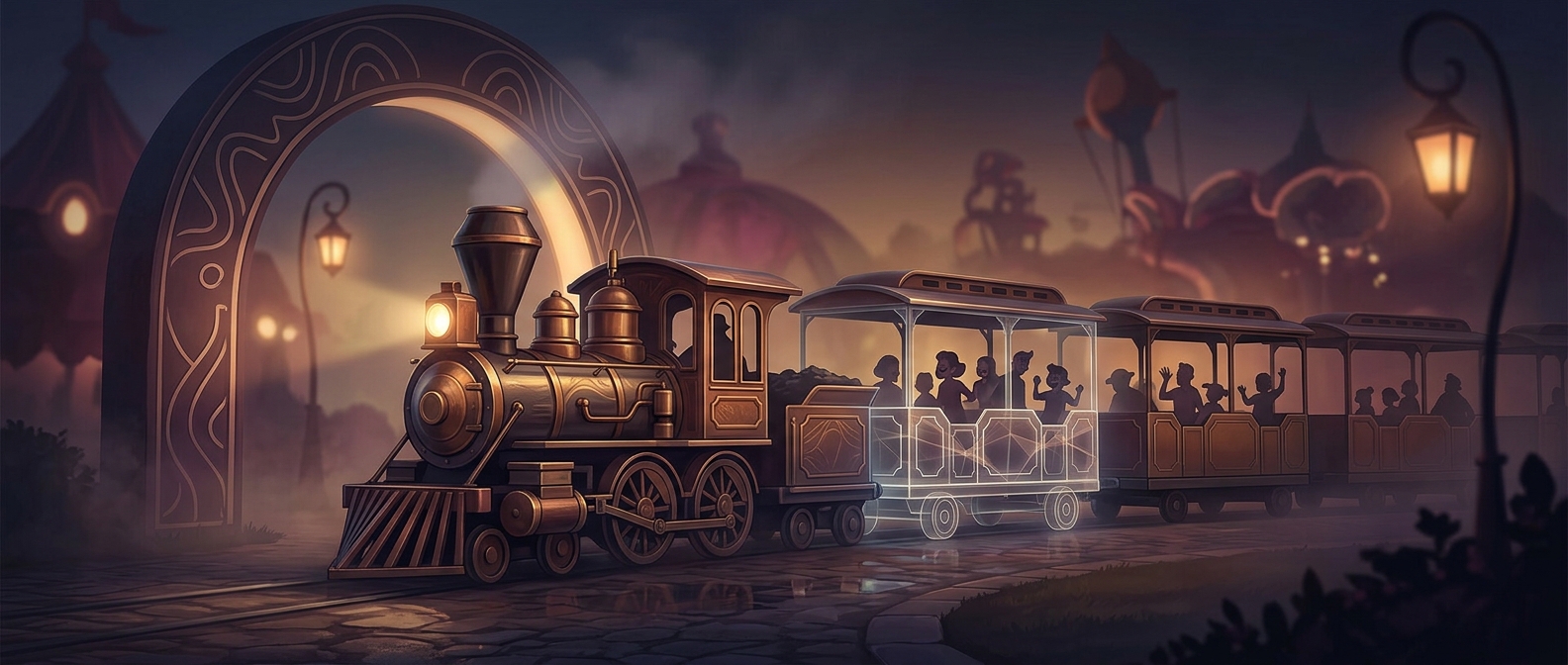
A tire-powered park train borrows the look of a railway train but works more like a small road vehicle towing passenger cars. The driver steers the lead vehicle, and the cars behind it follow through their connections. That makes the route easier to build into an existing paved area than a railway would be—but it also means the train must negotiate ordinary road geometry.
The Rear Cars Take a Different Path
When the lead vehicle turns, each car behind it cuts a little closer to the inside of the bend. This effect, called offtracking, grows more noticeable as the train gets longer or the turn gets tighter. A lane wide enough for the front vehicle may not be wide enough for the whole train to clear a corner.
Park routes therefore need turns, clearances, and stopping areas suited to the full vehicle, not just its lead section. Drivers also have to account for the train’s length when approaching crossings or crowded paths. The route can be paved and flexible, but it still has to guide the entire train safely.
A Roadway Instead of a Railway
Rubber tires let the train travel on pavement shared with other park traffic, and the route does not need rails, switches, or a dedicated rail bed. In exchange, the vehicle depends on a suitable paved surface and must be steered and operated like a road vehicle. Its apparent freedom from tracks is really a different kind of constraint: the pavement is the route, and every trailing car has to fit through it.