A wardrobe was a travel system
For a wealthy woman, dressing for a journey was not simply a matter of choosing clothes from a suitcase. Formal garments could be layered, structured, and fastened in ways that were difficult to manage alone. They also needed careful handling: folding or crushing the wrong parts could leave a dress wrinkled or misshapen, while small accessories had to stay with the outfits they belonged to.
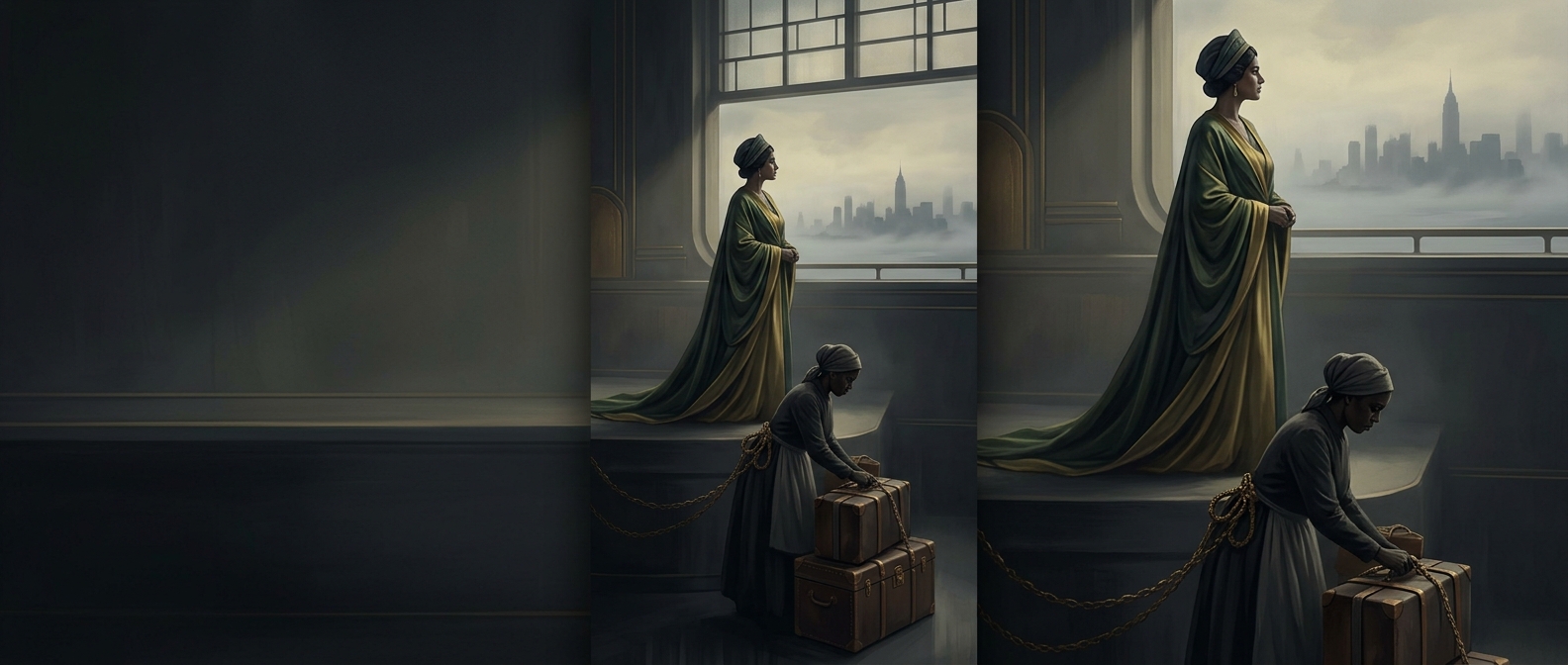
A maid made the wardrobe usable on the road. She could sort clothes as they came out of trunks, help with fastenings, and keep garments presentable as the traveler moved between stops. The trunk was therefore more than storage; it was a portable closet whose contents had to be unpacked, cared for, and arranged again at each destination.
The cost of looking ready
Clothing carried social meaning, especially when a traveler was expected to appear appropriately dressed at visits or formal occasions. Bringing a maid allowed that standard to travel with her. It also meant that the convenience depended on another person’s labor: the maid had to accompany the party, manage the clothes, and adapt the wardrobe to the journey’s changing needs.
That is why personal help belonged in the travel plan alongside trunks and outfits. The clothes did not merely take up space—they created work at every stage, from packing to dressing to keeping them fit to wear.