A railway turned into a moving catalogue
A locomotive’s number made it more than a passing sight. It let an enthusiast identify one engine among many, write it down, and later compare the record with sightings from other days or places. The railway’s numbering system—created to help operators distinguish and manage their equipment—also gave hobbyists a ready-made way to organize what they saw.
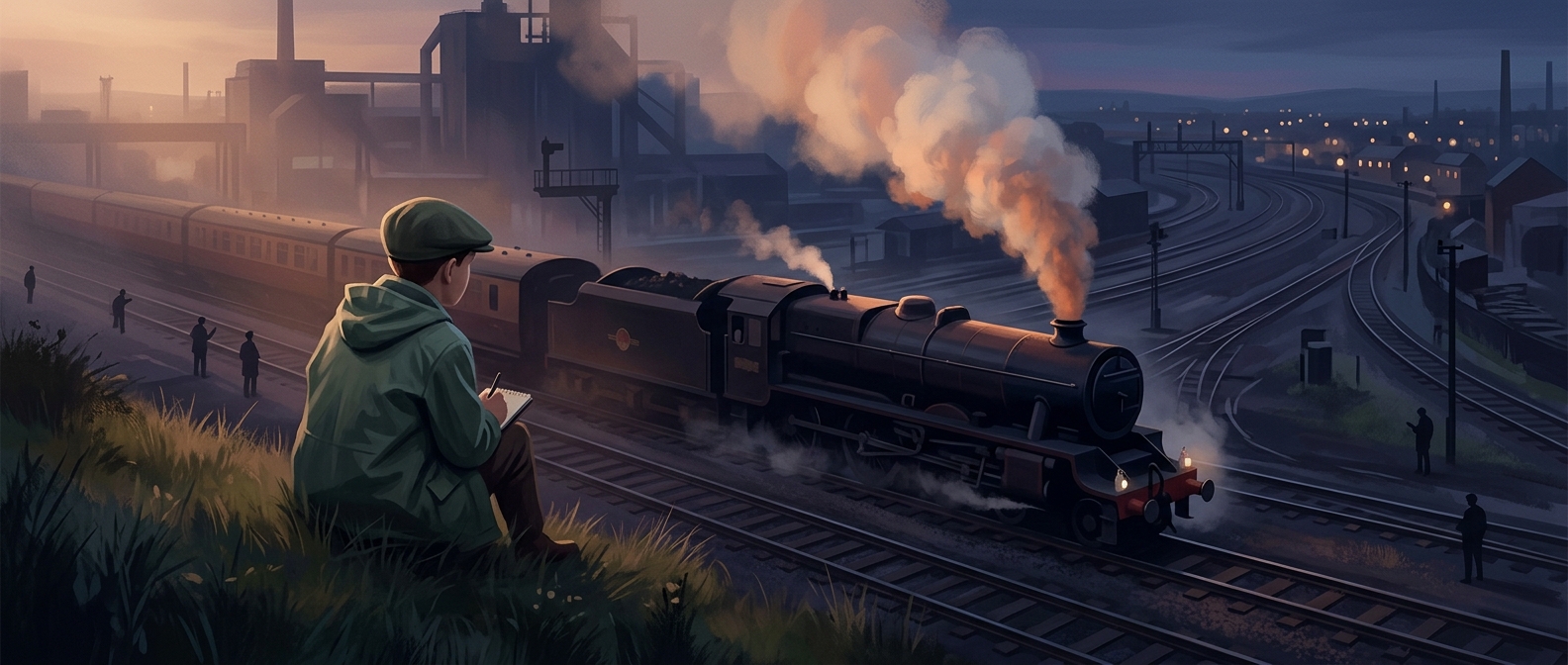
That changed an ordinary wait beside the tracks into a collecting exercise. Each train brought a chance to add a new entry, check a number against a list, or spot an engine that had been missed before. A notebook made the experience cumulative: the pleasure was not only in seeing trains, but in building a record of them.
Why the hobby could become absorbing
Railways offered an unusually large, changing collection in public view. Engines moved between routes and stations, so a familiar stretch of track could still produce a different sighting. The system also rewarded attention: recognizing an engine’s number quickly mattered when it was visible only briefly, and keeping accurate notes made later comparisons possible.
Enthusiasts could pursue the same interest in different ways—watching from a regular vantage point, traveling to see particular engines, or comparing records with other spotters. The shared numbering system made those observations legible to one another. The hobby’s central trick was to turn fleeting motion into a durable personal collection.
From traffic to personal history
Trainspotting did not require owning a locomotive or entering a railway yard. The trains came past; the observer supplied patience, identification, and a means of keeping score. As engines were replaced, reassigned, or withdrawn, a notebook could also preserve encounters with machines that might not pass that way again.
That is why the activity could feel bigger than simply watching trains. Every entry connected a brief view from the platform or trackside to a growing history of what the enthusiast had seen.