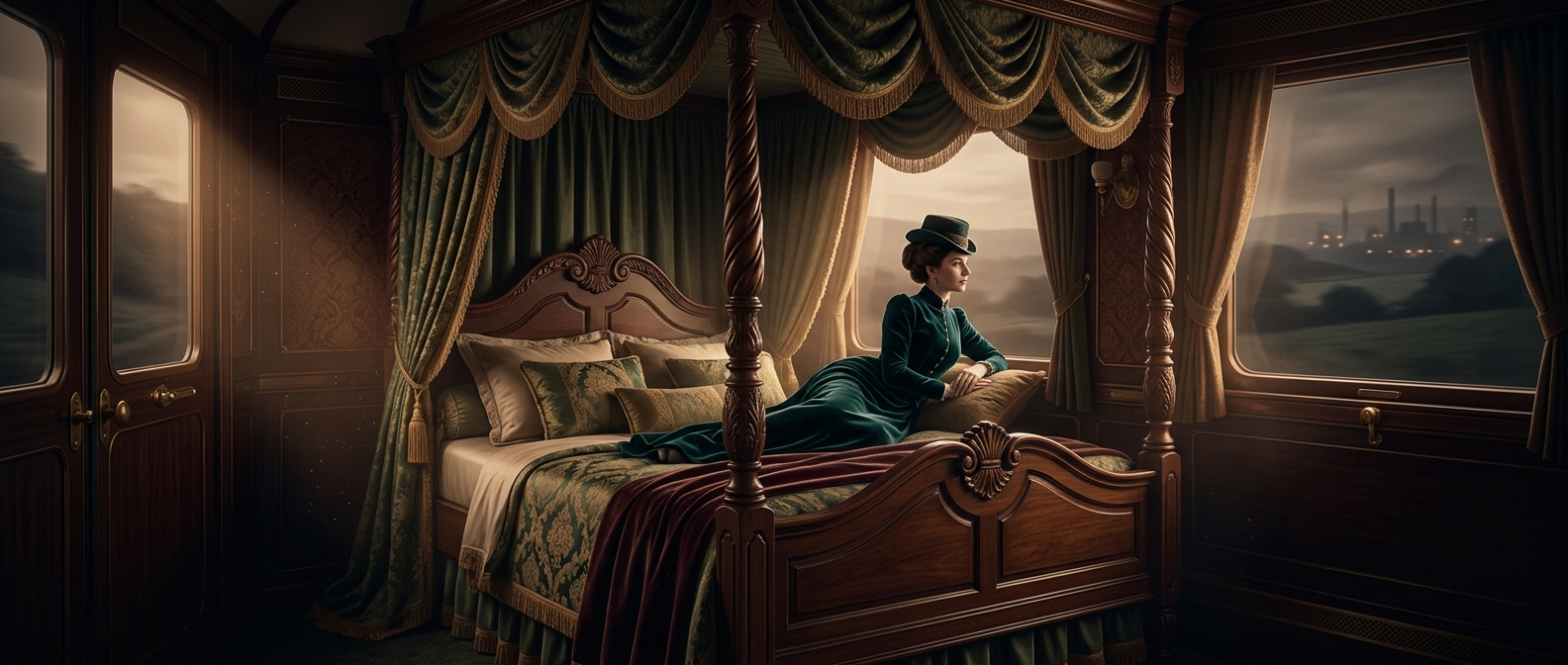
The berth was sized around the car, not the passenger
A railway carriage could not simply be made wider to accommodate a bed for every traveler. Its width had to fit the tracks, and its length was divided among seating, passageways, and the machinery and structure of the car. A sleeping car therefore had to fit nighttime beds into much the same narrow space used for daytime travel.
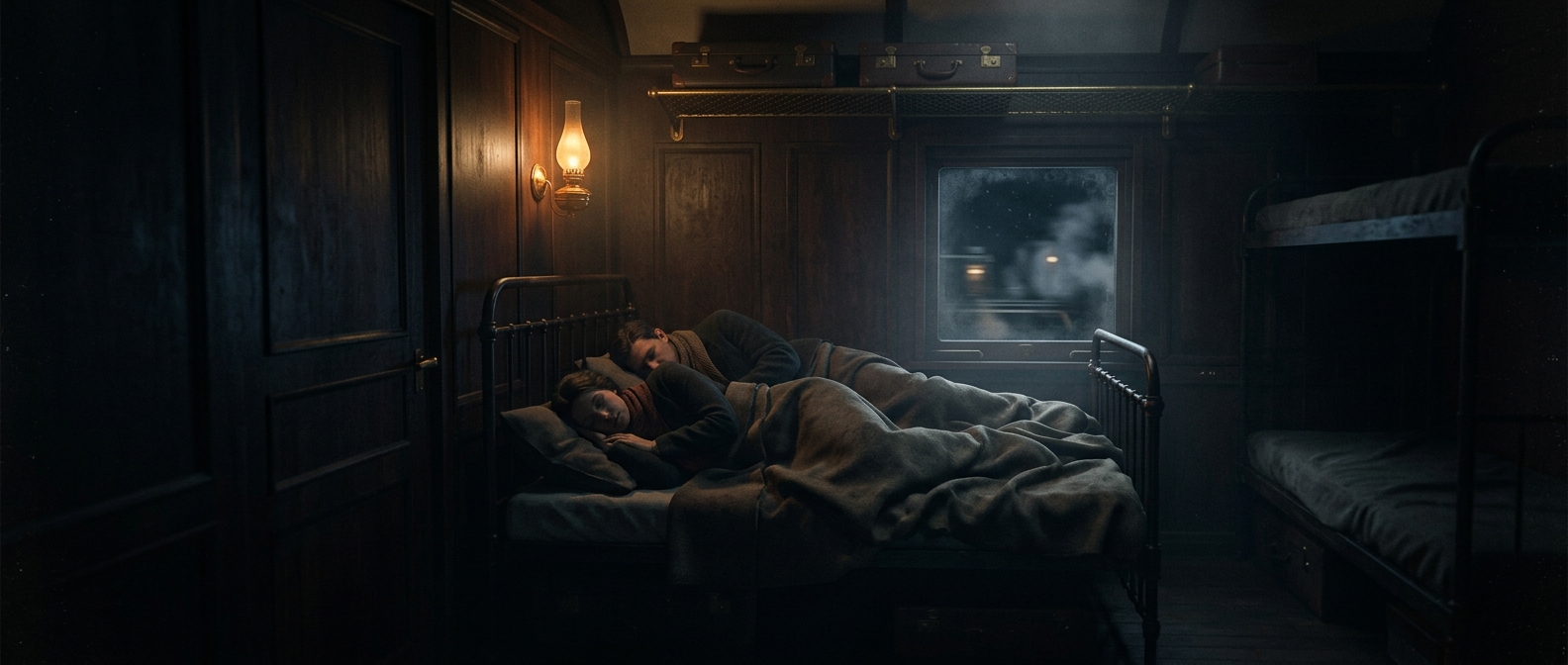
One solution was a shared berth: a sleeping space intended for two passengers. Instead of giving each traveler a private room, the railway used the car’s footprint more intensively, turning a limited number of compartments into places for more people to sleep.
More beds meant less privacy
Sharing was not just a matter of dividing a room. Two people had to settle into the same sleeping space, often without the separation that a private compartment could provide. For travelers accustomed to treating a bed as personal space, the arrangement made the economics of rail travel uncomfortably visible: the company could carry more passengers, but each person gave up privacy.
The arrangement also made overnight travel accessible to people who could not or would not pay for more space. A private room offered a different level of separation, but it used more of the scarce area inside the car. The railway’s design choice was therefore practical and social at once: more passengers could lie down, but strangers had to negotiate the boundaries of a bed together.