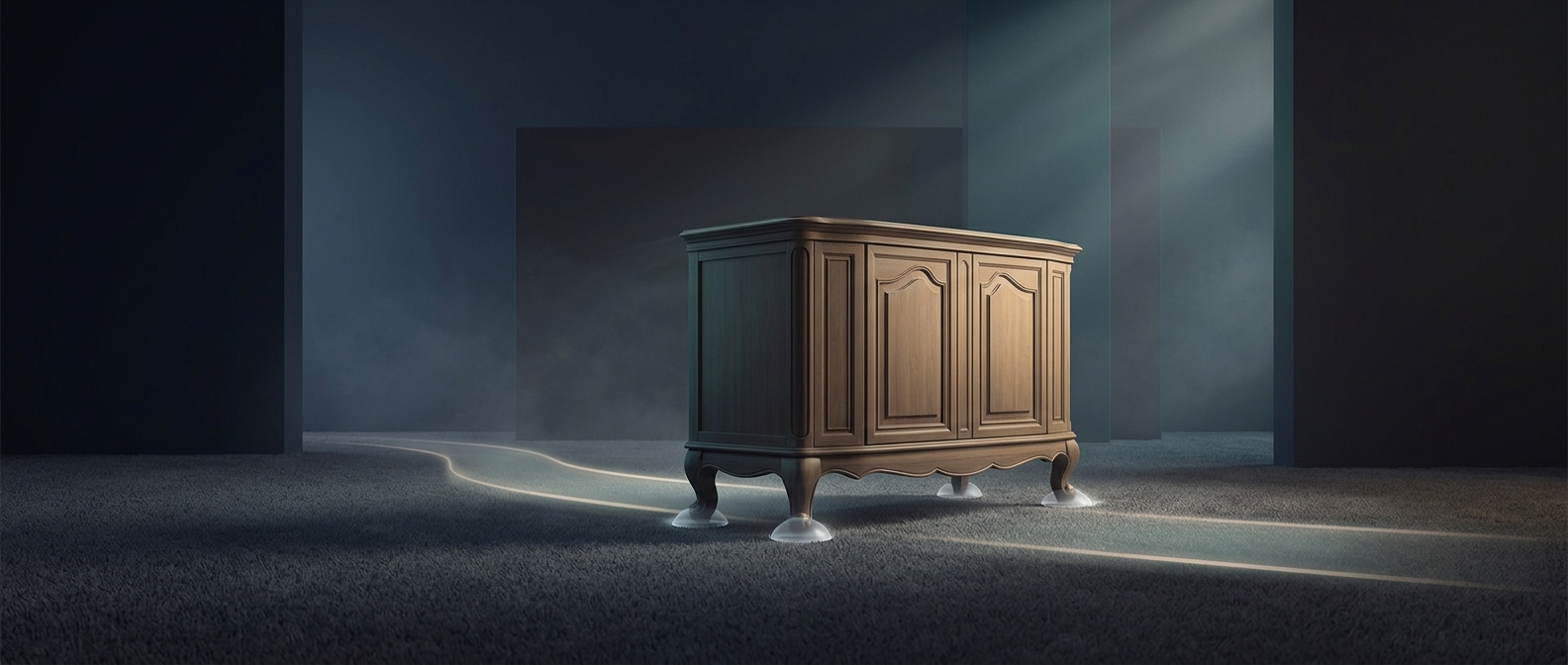
Why a heavy couch can move more easily
Carpet fibers bend and bunch beneath a furniture leg. As the couch moves, the leg presses those fibers sideways and catches against them, so the carpet resists the movement. A plastic slider gives the leg a smoother surface to travel on: instead of dragging the leg directly through the pile, the couch slides across the carpet on the plastic.
The load stays; the snagging changes
The slider does not make the furniture lighter or remove the force pressing it into the carpet. It changes the contact at the bottom. A slick, rounded underside is less likely than a rough leg to catch individual fibers, reducing the resistance that makes a couch feel stuck. Some sliders also provide a broader base, spreading the leg’s pressure over more carpet rather than concentrating it at a small point.
That distinction matters: the furniture is still being pushed, but less of that effort goes into bending and snagging carpet fibers. A slider that is too small, misplaced, or rough underneath may still catch, and the right shape depends on the furniture leg and carpet.
A small change at the point of contact
Sliders are useful because they alter the surface where the resistance begins, not because they overcome the couch’s weight. With a slick base under each leg, the carpet no longer has to give way directly to a hard furniture edge—so a move that once felt like hauling the couch over a ridge can become a controlled glide.