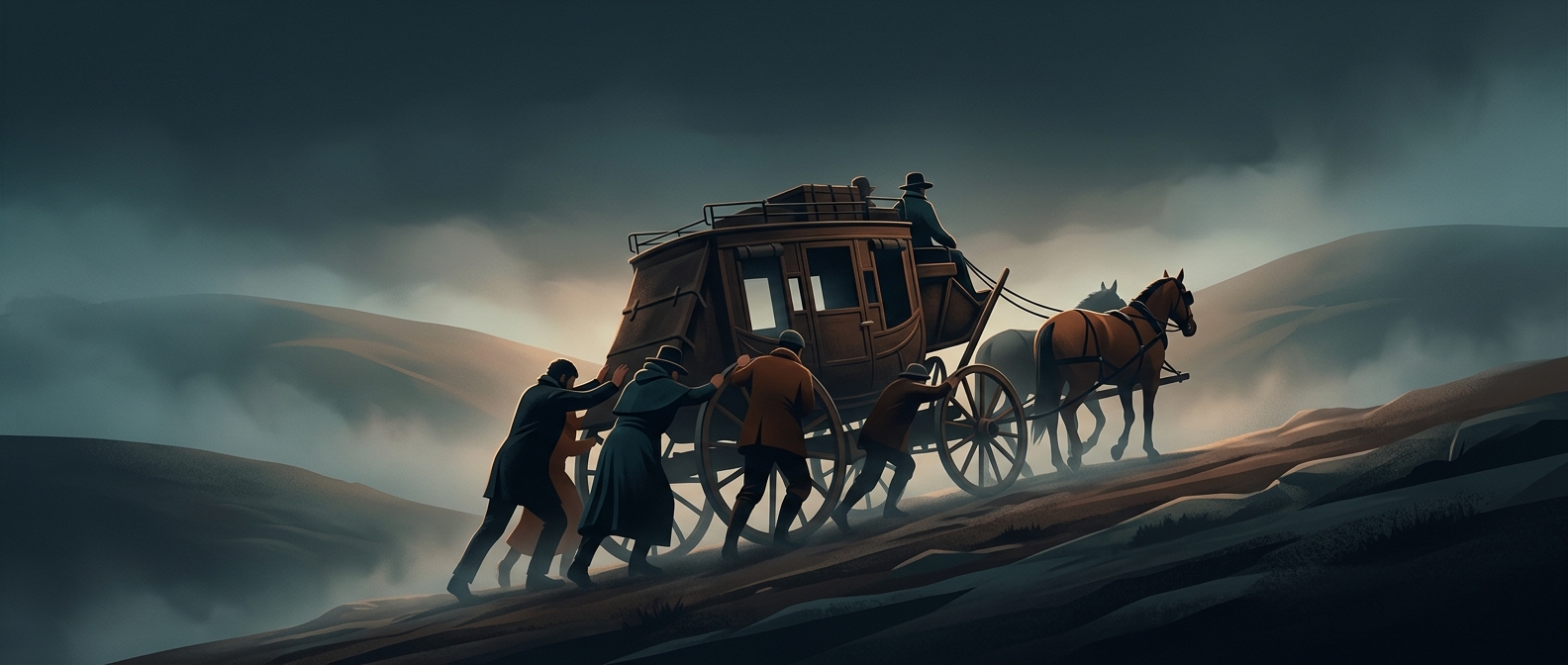
Why a hill could turn passengers into extra horsepower
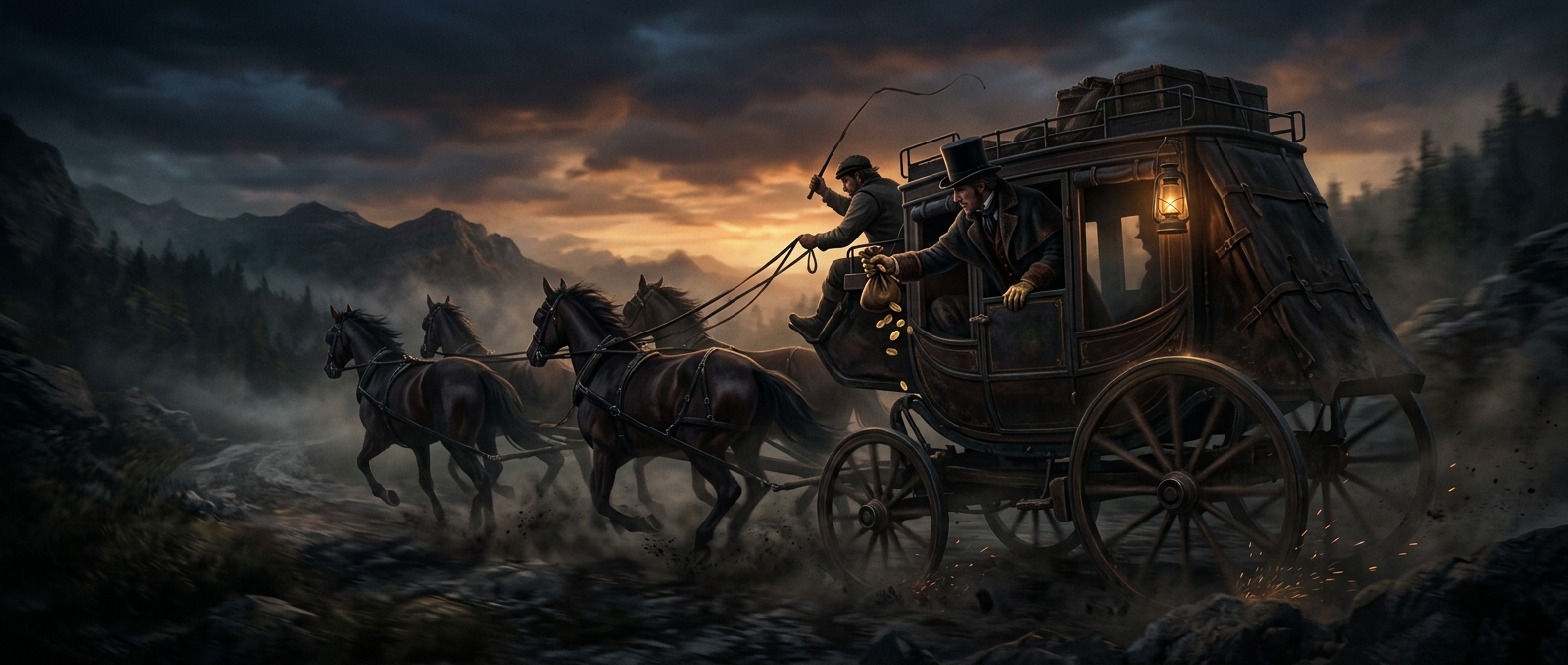
A stagecoach was a heavy vehicle even before its passengers and luggage were aboard. On level ground, the horses mainly had to overcome rolling resistance—the drag where the wheels meet the road. On a steep slope, gravity added a harder task: the team had to keep the coach from slowing or rolling backward while hauling its weight uphill.
Getting passengers out helped in two ways. Their weight no longer pressed down on the coach, and those able to push could add force directly to it. That assistance mattered most on rough, steep stretches, where wheels could bog down and a horse team had less room to build momentum.
A small change in weight, a big change in effort
The benefit was not simply that each passenger was one less load for the horses. Pushing transferred some of the climb’s work to the people who had been riding. The horses still had to pull the coach, but the passengers’ effort could help move it through the steepest part rather than making the team provide every bit of forward force.
This was a practical response to roads that were not engineered for smooth, uninterrupted travel. A coach could manage an ordinary stretch and still struggle at a sharp grade, especially when carrying a full load. Asking passengers to walk—or put their shoulders to the vehicle—was a temporary way to get past the obstacle without changing the horses or the road.
The fare came with a physical condition
The arrangement made a coach journey less like a modern ride with a fixed level of service. Passengers could be part of the vehicle’s operating effort when terrain demanded it. A hill did not merely slow the trip; it could briefly change the passenger’s job from riding to helping the coach climb.